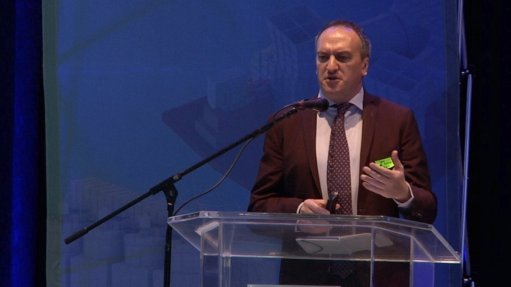
"They have realised that to get a return on their investment in land and infrastructure, the complex needs an electronic nervous system that supports efficient management and facilitates a better customer experience," explains Electrical Engineering Solutions CEO Bradley Hemphill.
He says the 2010 FIFA World Cup has given impetus to the adoption of smart stadiums strategies to comply with the governing body's stringent standards required for staging the world's premier sports event. Some stadiums are being revamped, while others are being built from scratch to incorporate the latest in information and communication technology (ICT) infrastructure.
Electrical Engineering Solutions is working on two of these stadiums, namely Green Point stadium, in Cape Town, and the Nelson Mandela Bay stadium, in Port Elizabeth. The latter needs to be ready for the 2009 FIFA Confederations Cup.
"The Nelson Mandela Bay stadium will be the first intelligent stadium in South Africa because it is being purpose-built to meet FIFA's standards. As a multipurpose stadium it needs to quickly be transformed from a sporting pitch to a rock-concert stage, for example, without reorganising the lighting, sound, ticketing, safety and management systems," says Hemphill.
He adds, "To integrate all these needs is a major undertaking if the intelligent infrastructure is not built into the structure at the start of construction. Unfortunately most South African stadiums are existing and were not built to be smart."
Hemphill adds that because stadiums cost billions of rands to build there is tremendous pressure on the stadium owners, sporting bodies or municipalities, for example, to view them as revenue generators, rather than loss-making amenities.
"By building an intelligent backbone into the stadium complex at the outset we have, at Nelson Mandela Bay, realised a saving of about 12% on the capital cost of ICT installation. Because all the management system applications that run on this backbone are integrated we are able to give management the tools with which to more easily manage events and streamline stadium maintenance."
These applications include managing the advertising screens around the stadium, access control at turnstiles, ticketing systems, lighting and sound management, concession stand management, plumbing and electrical maintenance and other operational procedures.
"To better manage operations and effectively deploy staff, an integrated management system is a benefit to stadium management. They can identify potential problems and deal with them before they become an issue. All this reduces operating costs, contributing to a better bottom line."
Recurring revenue generation needs positive customer experiences and stadium management need to put in place systems that streamline, rather than hinder, the customer's use of the facility. Sports fans who are the customers, for example, need to have turnstile systems that ensure ease of access to the correct area and concession stand vendors, for example, need to have the necessary facilities to access power and install cashless vending systems.
At the Green Point stadium, a focus of the smart stadium is the safety and evacuation systems. The sound system must be able to serve as an intelligible voice evacuation system so sports fans are able to easily hear and act on information relayed through the loudspeakers.
"Not knowing what to do and where to go is aggravated in a crisis by a voice communications that cannot properly be heard above the ambient noise. The systems we are putting in place will enable a crisis to be managed from a single point. Cameras and computerised graphic representations will pinpoint potential evacuation problems, such as doors that have not opened, and alternative routes can quickly and clearly be broadcast throughout the stadium."
Further Hemphill states that the noise could be negative for neighbouring residences and companies. One of the major objections to the siting of the World Cup venue at Cape Town's Green Point stadium was the noise that would be generated by the event.
"Sound systems for smart stadia are designed to keep the noise within the stadium. Those outside will hear that something is going on, but they will not be able to hear, for example, the stadium announcements. Only if the announcement is broadcast outside the stadium, will the neighbours hear it. The audio systems are designed to lower noise breakout," says Hemphill.
He concludes that events at these venues must be profitable for their owners for the next 20 years, and this is only feasible if intelligence is built in to support operational efficiency.