Creamer Media’s Engineering News Online
Advanced Search


We have detected that the browser you are using is no longer supported. As a result, some content may not display correctly.
We suggest that you upgrade to the latest version of any of the following browsers:
         
close notification
powered by
GOLD 1386.60 $/ozChange: -0.70
PLATINUM 1452.50 $/ozChange: -1.00
R/$ exchange 9.58Change: -0.03
R/€ exchange 12.38Change: -0.05
 
INFRASTRUCTURE
 
Integrated approach key to successful infrastructure development
 
31st July 2012
TEXT SIZE
Text Smaller Disabled Text Bigger
 

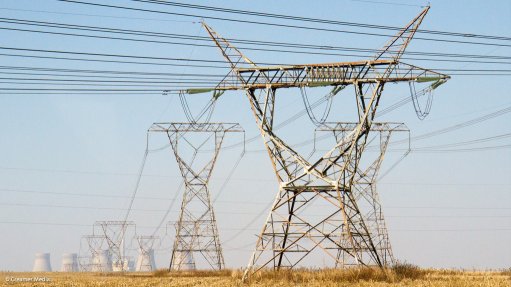
The growing number of infrastructure projects in South Africa, and the rest of Africa, as well as the need to attract investment have increased the pressure for timely and cost-effective delivery of projects.

But, with over 40% of global capital projects running over budget and past deadline, capital construction project owners needed to develop a more “owner-educated” and integrated approach to developing successful projects, advisory firm Deloitte construction advisory services director Alan Richard said on Tuesday.

Deloitte partner Andrew Mackie added that the interests and risk ratios of the project driver and appointed contractor should be fully aligned. He pointed to an example in which the owner placed significant risk on the contractor, but also offered significant gain share should the project be successful.

Richard believed that the development of the project owner’s understanding and involvement in the process could be the key to delivering successful projects.

The National Planning Commission, which is responsible for strategic planning for the country, also noted earlier this year that an integrated approach to infrastructure would achieve better outcomes.

In April, Economic Development Minister Ebrahim Patel commented that future public-private partnerships (PPPs) required an "equitable risk transfer" to the private sector, instead of previous models that placed the bulk of the risk on the public sector.

He called for dialogue on the appropriate structuring of PPPs, adding that there was an opportunity for the private sector to be integrated into the 17 strategic infrastructure projects contained in the Presidential Infrastrucutre Plan.

South Africa has earmarked public-sector projects totalling R844.5-billion in its medium-term framework, and R3.2-trillion infrastructure projects are under consideration for between 2012 and 2020. Only the most cost-effective projects providing long-term optimal benefits would be selected.

Deloitte director Andre Pottas commented that there continued to be a level of distrust between the public and private sectors. There was a lack of fully transparent PPP approaches as both parties held mutual suspicions.

Greater collaboration was required between government and the private sector as South Africa’s competiveness, even against other African countries, was decreasing, stressed Deloitte consulting director Michael Vincent.

Pottas noted that the country’s PPP model was evolving and that the National Treasury was taking larger risks with loosening its funding guidelines to increase projects’ attractiveness to potential funders.

He also suggested a “central oversight unit” should be established to coordinate, oversee and streamline all PPP projects.

Meanwhile, Pottas said that, with governments across the continent committing billions of dollars to infrastructure, Africa was at the start of a 20- to 30-year infrastructure development boom.

However, to overhaul sub-Saharan Africa’s infrastructure, about $93-billion a year was needed for the next ten years, compared with the current expenditure of $25-billion a year.

But, he noted, more private sector investment would be seen in Africa.

Richard pointed out that major investors were increasingly attracted to Africa, as Europe and the US failed to gain sufficient returns in their own market.

Despite global economy instability, major capital project players were still investing about 85% of their capital expenditure investment.

Besides a number of funding banks and investment firms taking up the challenge of infrastructure project investment, China-based companies and contractors either owned or were directly involved in 28% of the projects currently under way in Africa.

Further, newswire Reuters reported in April that the Brics group, comprising Brazil, Russia, India, China and South Africa, would establish a bank committed to funding infrastructure and acting as an alternate lender to the World Bank and other development finance bodies.

Private equity firm Actis also stated that it was aiming to invest $300-million a year in Africa, with the bulk of that in the continent's biggest economies, South Africa, Egypt and Nigeria.

It was also reported that South Africa's government pension fund Public Investment Corporation could invest up to $3.8-billion in private equity to boost its Africa exposure.
 

Edited by: Mariaan Webb


To subscribe to Engineering News's print magazine email subscriptions@creamermedia.co.za or buy now.

FULL Access to Mining Weekly and Engineering News - Subscribe Now!
Subscribe Now Login


Picture by: Reuters