Creamer Media’s Engineering News Online
Advanced Search


We have detected that the browser you are using is no longer supported. As a result, some content may not display correctly.
We suggest that you upgrade to the latest version of any of the following browsers:
         
close notification
powered by
GOLD 1360.10 $/ozChange: -5.72
PLATINUM 1455.00 $/ozChange: -6.70
R/$ exchange 9.40Change: -0.09
R/€ exchange 12.07Change: -0.07
 
 
Institute to introduce new welding safety course
 
14th September 2012
TEXT SIZE
Text Smaller Disabled Text Bigger
 

The Southern African Institute of Welding (SAIW) plans to introduce a new training course by year-end, which is aimed at improving welding safety in many industries, including the mining sector, says SAIW executive director Jim Guild.

Although the course has not yet been named officially, Guild says Health and Safety in Welding is an appropriate title for the course.

“The course will not be for welders only. It will provide welders, supervisors and other engineering personnel with useful information about safe working practices related to welding activities in a variety of industries,” he says.

Guild adds that, although all the SAIW’s courses contain safety-related content, this course is the first to focus specifically on safety.

The course will include a two-day optional component providing basic information on the common oxyfuel, arc cutting and welding processes used in industry, as well as information about semiautomated and automated welding processes.

The three-day compulsory component will deal specifically with safety issues, such as regulatory requirements, applicable codes and standards, safety equipment and safe practices related to explosions, fires, fumes and gases, as well as electric shock and light radiation.

“It will look at the influence of the materials being welded, as well as the processes and consumables used for welding. It will also address the threshold-limit values and time-weighted averages,” says Guild.

The training will be presented at the SAIW’s Johannesburg facility. Guild notes that the course is also suitable for in-house training for companies that want to train large numbers of personnel.

Individuals who would like to enrol for the course have to be literate, and experience in welding or engineering will be helpful.

Welding in Mining
Meanwhile, Guild emphasises the importance of welding safety in the mining industry.

“There is pressure on the mining indus- try to improve its safety record. Accidents and hazards related to cutting and welding can be avoided, so welding personnel are expected to improve the integrity of their working practices.

“This course is intended to provide welding and engineering personnel with information to assist them in achieving a zero accident rate and to limit health risks,” he says.

Guild adds that a welding professional who wishes to take up welding in the mining industry has to be aware of the complications and pressures of welding underground.

“Welding sparks can travel up to 5 m and spatter can bounce off the floor and fall through openings. Risks include fires, explosions because of flammable gases, radiation, heat burns, electric shocks, and asphyxiation and illness as a result of the inhalation of toxic fumes from gases used and created in the process.

“In South Africa, the legendary Kinross disaster was caused by a welding accident,” he states.

Guild notes that sound training is the starting point in educating welders and supervisors about the possible hazards and how to guard against them.

“When welders are aware of the safety risks, they are forewarned to take the necessary precautions,” he says.

Such precautions include the removal of combustible material before welding, cleaning all flammable substances from the surface and the use of fire hazard equipment like extinguishers, protective clothing and face shields.

Further, respirators can protect the welder against the inhalation of fumes and gases.

“Other safety precautions include having equipment checked regularly, turning off welding equipment before touching electrical parts and avoiding any moisture while welding,” he notes.

“Clear guidelines to ensure safety in mining are included in various Acts, and the Chamber of Mines has produced a comprehensive guide for safe welding operations in mining,” Guild tells Engineer- ing News.

“The recommendations in the guidelines include doing a risk assessment before any welding is undertaken underground and keeping records of all aspects of cutting and welding operations.

“Cutting and welding underground must be performed only when the necessary safety permits have been issued by opera- tional personnel. Training should include the safe operation, inspection and checking of equipment, as well as the maintenance and repair of equipment,” he says.

Importance of the Course
Guild emphasises that welding is an important and integral part of mining operations and many other industries. The quality of welding is pivotal and because the risks associated with welding are ever-present, being aware of these is important.

SAIW training services manager Etienne Nell is preparing the new course and notes that the most important aspect of creating a career in welding in the mining and general industry, while ensuring safety, is training.

“The right training can be the difference between life and death,” he concludes.

Edited by: Chanel de Bruyn


To subscribe to Engineering News's print magazine email subscriptions@creamermedia.co.za or buy now.

FULL Access to Mining Weekly and Engineering News - Subscribe Now!
Subscribe Now Login
 
 
WELDING IN MINING Guild says welders who take up positions in the mining industry must be aware of the complications and pressures of welding underground
 

WELDING IN MINING Guild says welders who take up positions in the mining industry must be aware of the complications and pressures of welding underground
 
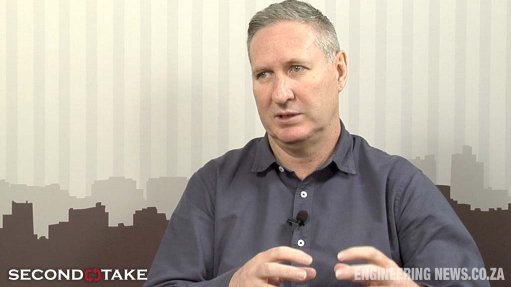
JIM GUILD The new course will provide welders, supervisors and other engineering personnel with useful information about safe working practices for welding in a variety of industries
 

JIM GUILD The new course will provide welders, supervisors and other engineering personnel with useful information about safe working practices for welding in a variety of industries
 
 
Previous Play Next