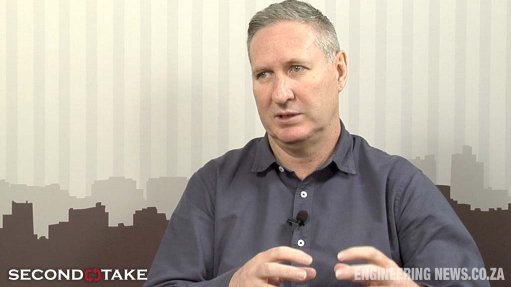
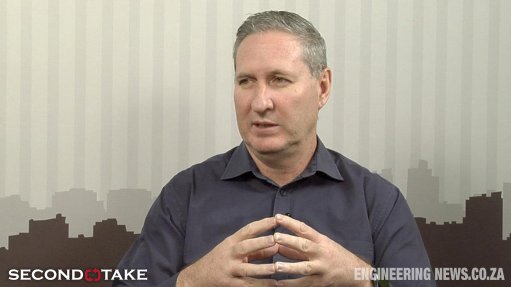
Newly appointed president of the Institute of Waste Management of Southern Africa (IWMSA) Deidre Nxumalo-Freeman is positive about the current state and the future of the waste management industry in South Africa.
Nxumalo-Freeman, who was previously IWMSA VP, was appointed president on July 1.
She plans to ensure the continuous provision of waste-management education to all IWMSA members.
“For the last two years, the institute has focused on providing its members with quality waste-management education. Ensuring that we capacitate municipalities and industries with quality education will continue to be the main driver of the institute,” she says.
Nxumalo-Freeman adds that a high degree of awareness is being created about waste management.
“In recent years, a lot of awareness has been created through events like the seventeenth Conference of the Parties, which was held in Durban in 2011.
“Communities are also becoming more aware of environmental issues, owing to this publicity. People are starting to view waste not simply as waste, but rather as a resource. This is spurring positive results, like the generation of electricity from methane gas at landfill sites.
“People are also separating their waste at home, which is important, as it means we can recycle more and send less waste to landfill. Additionally, municipalities are realising the important role they have to play in waste management. That is why it is key for the IWMSA to provide capacity building for municipalities and industry stakeholders,” she says.
The institute provides this capacity building through specialist accredited and nonaccredited training courses.
The Local Government Sector Education and Training Authority-accredited training courses include three levels of waste-management training comprising various unit standards.
Level one deals with the handling and disposal of waste; level two with the separation, handling, storage, treatment and transport of waste; and level three with operating specialised vehicles and complex static or mobile waste- management machinery and equipment.
The unaccredited training courses are presented over five sessions.
Session one deals with an orientation to, as well as an introduction and background on, waste and waste management, while the second deals with the integrated planning of waste operations and systems.
The third session entails the collection, transfer and transport of waste; the fourth looks at waste reduction, as well as the treatment and disposal of waste; and the final session covers the evaluation and implementation of service delivery relating to waste management.
The institute also offers a nonaccredited hazardous-waste training programme, which is aimed at enabling learners to identify, classify, handle, transport, treat and dispose of hazard- ous waste in accordance with legislation.
“We also have regular networking sessions, where we bring all waste-management stakeholders together to share their experiences,” says Nxumalo-Freeman.
The biggest challenges facing the South African waste-management industry are those of illegal dumping and population growth, she highlights.
“Population growth results in more waste being generated in the country, which is one of the key factors the IWMSA has to deal with in the future. It is important for us to manage our waste more effectively, as we are running out of landfill space at all the municipalities,” she adds.
To mitigate this challenge, Nxumalo-Freeman believes waste-management education should start at school.
“We need to get waste-management education into the curriculum to ensure that children are educated on what it is they have to do to achieve a positive outcome with regard to waste management, like separating their waste at home, which is important for recycling.
“It is important that they are taught the hierarchy of waste management – reduce, reuse, recycle,” she emphasises.
Meanwhile, the IWMSA is preparing for its twenty-first biennial flagship national Waste Conference (WasteCon) from October 9 to 12 at the East London International Conference Centre.
WasteCon 2012 is expected to be the institute’s biggest and most comprehensive waste conference and exhibition to date, says Nxumalo-Freeman.
“This year is the first time the conference will be held in East London. The conference and exhibition will host the biggest outdoor exhibition area in the history of the event, which is another positive aspect,” she explains.
The theme for WasteCon 2012 is ‘Wresting with Waste’ and the conference will focus on employment, the environment and engineering.
Wrestling is associated with difficulty and struggle, which are also applicable to the challenges experienced when managing waste and related issues, especially in the case of municipalities and communities with limited resources at their disposal.
“WasteCon 2012 intends to examine these issues more closely to find solutions to these problems and challenges by engaging all stakeholders and conference attendees,” Nxumalo-Freeman says.
She notes that WasteCon attracts more than 600 delegates from different spheres of the industry, as well as exhibitors.
The external exhibition area will host about 16 stands, which Nxumalo-Freeman says will mainly be occupied by large companies, which will have vehicles or specialised waste- management machinery on display.
The internal exhibition area, comprising 66 stands, will be occupied by exhibitors displaying waste-management marketing material, educational material, as well as products and services.
“This year, we are also catering for smaller organisations that would like to have a presence at the conference but cannot afford to pay for a stand. We will offer them table-top exhibitions, which is another first for WasteCon,” says Nxumalo-Freeman.
She states that the aim of WasteCon has always been to provide a networking platform.
“It is important that we look to the future, identify the main challenges and address them as best we can. We want to initiate discussion during the conference in dealing with these issues.
“We have received many papers that aptly deal with these issues. They were written by academics and people who are active in the industry. We hope the delegates will find it challenging and thought provoking in coming up with solutions,” she states.
She adds that learning from experience is an important part of this year’s WasteCon.
“We have case studies from municipalities and industries that have faced and overcome these challenges. We do not have to reinvent the wheel; we simply have to work together and WasteCon is the perfect platform for this,” says Nxumalo-Freeman.
To subscribe to Engineering News's print magazine email subscriptions@creamermedia.co.za or buy now.