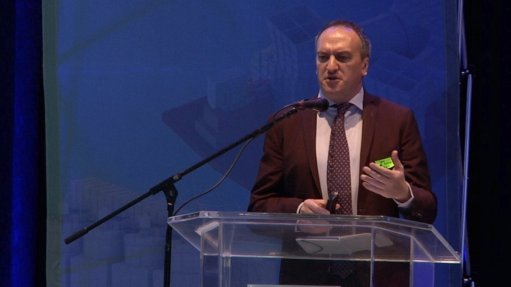
Good acquisitions and contract gains have offset the impact of stagnant manufacturing numbers and price competitiveness in Imperial Holdings’ regional logistics business, CEO Hubert Brody said on Wednesday.
The diversified industrial services and retail group’s Southern African logistics business won more contracts from existing and new clients during the year ending June, despite a challenging trading environment.
“Some of the subdivisions, like the tankers business and the general transport and warehousing business actually performed very well. But this is owing to good contract gains, while the markets were difficult,” Brody noted.
The Southern Africa logistics business recorded a 19% growth in revenue to R16.46-billion and 16% growth in operating profit to R910-million for the year ended June.
However, operating margins for the period declined by 0.2% to 5.5%, owing to the acquisition of consumer goods service provider CIC Holdings at the beginning of 2011.
Acquisitions during the reporting period included German logistics firm Lehnkering, 74.9% of dry-bulk shipping business Dettmer Bulk Reederei operating on the Rhine river; 70% of Datadot, a business that uses microdots as a security identification system to protect, among others, motor vehicles and motorcycles; as well as 75% of vehicle accessories and outdoor equipment business Safari Centre.
Brody indicated that manufacturing volumes had been flat in South Africa, making clients more price-sensitive. He added that some of the company’s manufacturing clients had been affected by industrial action at the beginning of the year, especially in the steel, fuel, paper and food sectors.
Meanwhile, Imperial’s construction clients had also been impacted by the slow start of the South African government’s infrastructure development plans, announced by President Jacob Zuma in his State of the Nation Address in February.
Looking north of South Africa’s borders, Brody said the company found that its transport volumes were under some pressure, particularly in Namibia.
“Some of the other transport corridors to other ports in Africa are becoming more reliable…there, is maybe, less reliance on South Africa, which has impacted on certain of the transport routes,” he explained.
However, Brody insisted that notwithstanding increased competition in the Southern Africa space, the company achieved good numbers.
GROUP RESULTS
Imperial achieved a 25% growth in revenue at R80.8-billion and operating profit increased by 25% to R5.6-billion with the group achieving a return on equity of 23% and core earnings a share rising 32%.
The group’s parts, components and industrial equipment businesses increased turnover by 16% to R7-billion. Operating profit was up 23% to R503-million, 9% of group operating profit.
Logistics revenue grew by 34% and operating profit increased by 33%, while the combined distributorship, retail and financial services revenue and operating profit was up 22% and 23% respectively.
Imperial attributed the growth to strong growth in the South African motor vehicle market, strengthening of the market positions of the group’s imported brands and lower interest rates.
The group sold 114 754 new vehicles in the financial year, 19% higher than the prior period, outperforming the South Africa new vehicle market, which grew by about 13% during the reporting period.
The company’s car rental and tourism revenue grew by 15% and operating profit increased by 8%.
“We saw growth across the group; particularly positive is that growth in the logistics business exceeded that of the other businesses because this is the area we want to put particular emphasis on, in terms of expanding our portfolio,” Brody stated.
PROSPECTS
In the short term, Imperial expected trading conditions in the Southern African logistics division to remain challenging. “But many of our good contract gains will start kicking in even more now and make a good contribution,” Brody noted.
The growth rate of new vehicle sales in South Africa was also anticipated to slow, as the base was currently substantially higher. However, the recent reduction in interest rates was expected to support demand.
“Under current conditions, we expect growth in 2013, albeit at a slower rate than what it was in the past year,” Brody said.
To subscribe to Engineering News's print magazine email subscriptions@creamermedia.co.za or buy now.


lr1_2.gif)