An energy-efficient building integrated photovoltaic (BIPV) house has been constructed at the University of Fort Hare's Alice campus, in the Easten Cape, and is now fully operational and being monitored and studied.
The house took three months to construct and was completed in December 2008, while the electrical system and data-capture systems were installed in January this year.
The project is being spearheaded by Fort Hare Institute of Technology (FHIT) director Professor Edson Meyer and PhD student Sosten Ziuku, and aims to show that the use of renewable-energy resources and energy-efficient measures, complementing fossil fuels, can result in uninterrupted power supply and a reduction in gaseous pollutants.
The study is part of an initiative to boost the use of renewable energies and showcase solar energy as an alternative to fossil fuel use in households.
All electrical devices in the house are powered by electricity from the photovoltaic system, and hot water is supplied by a solar water heater and geyser.
“We are monitoring the performance of the system – initial results are showing that we have excess power from the BIPV system. At present, we are not supplying the excess power to Eskom, but this is something we are going to pursue in the immediate future,” Ziuku tells Engineering News.
Indeed, the second phase of the study is to sell excess power generated to the national utility grid.
“There is a postgraduate student living in the house, – he has been there since the beginning of March. The house is fully furnished and the student is using the available facilities like he would do in any other house,” notes Ziuku.
Passive Solar Design
The concept of the sustainable-energy house design is based on the use of renewable-energy resources in place of fossil fuels. This entails the use of climatic conditions to design a climate-sensitive building, which discourages energy use processes that cause greenhouse-gas emissions.
In South Africa, the sun passes almost directly overhead at noon in summer, while, in winter, its path is low in the northern sky. With large windows and clerestory windows located on the north-facing side of the house, the lower winter sun is allowed to heat both the front and rear of the inside of the house, explain the project leaders.
Further, sufficient window overhangs protect the north-facing windows from the high summer sun to enhance cooling through natural ventilation. Previous studies employing passive solar heating and cooling proved that this technique has great potential to provide a safe, healthy and thermally comfortable indoor environment.
Building-Integrated Photovoltaics
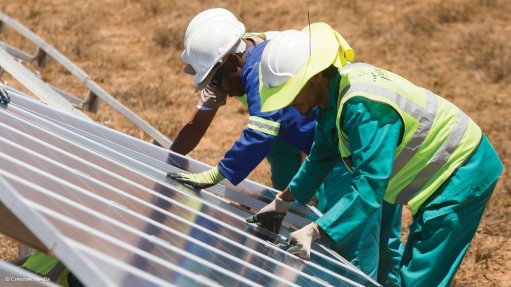
Photovoltaic (PV) panels are mounted on the north-facing roof in such a way that they replace conventional roofing material. The PV panels then act as a building envelope and also supply the electrical energy requirements of the house.
The PV solar system has a maximum power output of 3 800 W, viewed as adequate to meet all the electrical energy requirements of the building. Energy-efficient electrical appliances are also used in the house. This implies that the efficient BIPV house can be completely independent of the national utility grid.
For this experiment, a 200-l solar water heater is used to meet all the hot water requirements.
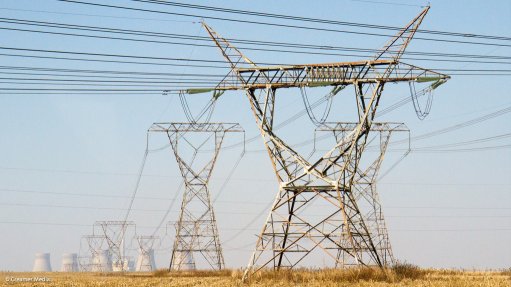
The residential sector in South Africa is estimated to consume 17% of the country’s electrical energy. More than 70% of this electricity is generated using fossil fuels, which contribute immensely to environmental pollution and global warming.
The South African government, through the passing of the Energy Bill, the Renewable Energy White Paper and the Energy Consumption Management, Measurement and Reporting Regulation under the Energy Act of 2008, has become increasingly active in tackling the issues of power outages and the more efficient use of existing resources.
Solar energy is one of the renewable-energy resources that is increasingly being used to supply household thermal and electrical energy, and the project aims to showcase how domestic electricity demands could be met independently of the existing electricity grid.
To subscribe to Engineering News's print magazine email subscriptions@creamermedia.co.za or buy now.