Creamer Media’s Engineering News Online
Advanced Search


We have detected that the browser you are using is no longer supported. As a result, some content may not display correctly.
We suggest that you upgrade to the latest version of any of the following browsers:
         
close notification
powered by
GOLD 1390.64 $/ozChange: 2.39
PLATINUM 1461.50 $/ozChange: 3.00
R/$ exchange 9.54Change: 0.04
R/€ exchange 12.32Change: -0.02
 
ECONOMY
 
High wage increases put brakes on employment growth
 
27th May 2011
TEXT SIZE
Text Smaller Disabled Text Bigger
 

South Africa was set for gross domestic product (GDP) growth of above 4% for the next three years, but the growth story did not support the necessary employment expansion, a senior economist said on Friday.

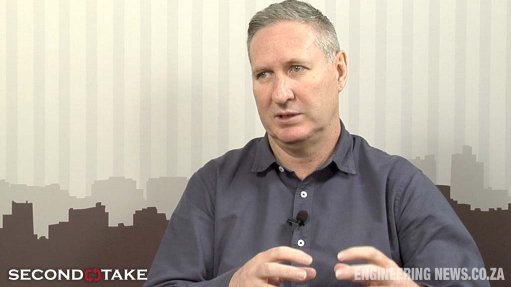
Bureau for Economic Research (BER) economist Hugo Pienaar said that economic growth was mainly driven by an increase in consumer spending, fuelled by excessive wage increases, rather than employment growth.

The New Growth Path aims to create five-million jobs within the next decade, but Pienaar said above-inflation wage hikes would make achieving the target unlikely. “Looking at the early stages of wage negotiations this year, it seems that this trend could continue, which will do nothing for employment growth in the country.”

As a result of high wage increases, South Africa is spending a significant slice of its budget on wages instead of real capital spend.

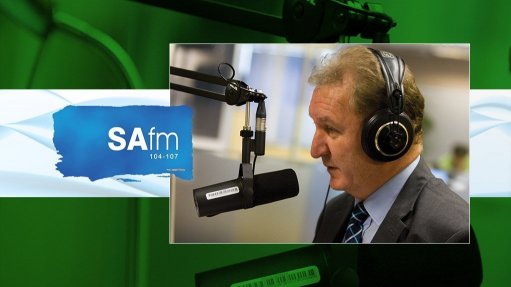
The South African Institute of International Affairs deputy chairperson Moeletsi Mbeki agreed, saying that private consumer spending contributed 72% to South Africa’s GDP, compared with China, where consumer spending contributed about 35% of GDP.

Pienaar pointed out that owing to structural challenges and skills shortages within government, even the money that was being allocated to capital spending, like the R800-billion allocated to infrastructure spend, was not flowing through to project level.

In addition, he said that the continuing trend of implementing high wage increases was also contributing to rising inflation risks, already fuelled by higher fuel and food prices, which had to some extent been alleviated by the stronger rand.

BER’s forecast for the rand is a somewhat weaker R7,30 to the dollar by the end of 2011, as the US starts to normalise monetary policy. Pienaar expected the unit to weaken more to R7,77 to the dollar by the end of 2012.

Pienaar also said that the South African Reserve Bank (SARB) could start tightening rates as early as September, with a 50 basis points (bps) increase, ahead of an expected November increase.

BER forecasted that this expected September hike would be followed by a further 50 bps increase in November and another 110 bps during the first quarter of 2012. In total, the repo rate is projected to rise by a cumulative 200 bps through 2012.

“This may seem like somewhat of an aggressive outlook, but we believe that this would just take us to a more normalised level as input costs such as wages, electricity and other services costs rise and drive inflation,” said Pienaar.

SARB has left its repo rate unchanged at 5,5% at its three policy meetings this year, after slashing them by 650 basis points between December 2008 and December 2010 to help the struggling economy.

BER expected that the interest rate cycle would peak by the second quarter of 2012.

Edited by: Mariaan Webb


To subscribe to Engineering News's print magazine email subscriptions@creamermedia.co.za or buy now.

FULL Access to Mining Weekly and Engineering News - Subscribe Now!
Subscribe Now Login


BER senior economist Hugo Pienaar discusses the South African economy. Camera work and editing: Darlene Creamer
China is producing 400 000 new engineers a year while South Africa is living increasingly on imports, says Moeletsi Mbeki, who spoke at the Bureau for Economic Research conference in Johannesburg on Friday May 27. Mbeki, the entrepreneur brother of former South African President Thabo Mbeki, observes that this is enabling the Chinese to build 1 000 km of new trail network a year as well as their own high-speed trains. Camera Work and Video Editing: Darlene Creamer.
This video is licensed under a Creative Commons License
GET SELECTED VIDEO
Embed
Selected Video Download (9.13mb)
Selected Video Download (4.51mb)