Creamer Media’s Engineering News Online
Advanced Search


We have detected that the browser you are using is no longer supported. As a result, some content may not display correctly.
We suggest that you upgrade to the latest version of any of the following browsers:
         
close notification
powered by
GOLD 1748.55 $/ozChange: 11.78
PLATINUM 1655.00 $/ozChange: 9.00
R/$ exchange 7.57Change: -0.01
R/€ exchange 10.04Change: -0.13
 
GREEN ECONOMY
Green energy sector could create 300 000 jobs – Patel
 
18th May 2010
TEXT SIZE
Text Smaller Disabled Text Bigger
 

South Africa's green economy role players must move with speed, as there were many other countries competing to get a slice of the global green economy, Economic Development Minister Ebrahim Patel said on Tuesday.

The green economy played a key role in South Africa's shift to a "new growth path", with the government focusing on more labour-absorbing industries.

Preliminary results from a recently commissioned study showed that 300 000 jobs could be created in South Africa's renewable energy sector over the next ten years, of which 20 000 is achievable in the next two years, Patel said at the ‘Green Economy Summit' in Johannesburg.

These jobs would be in energy generation and in the construction, manufacturing, operation and maintenance of power plants in solar, biofuels, small hydro and pyrolysis.

In China, where the government has strongly backed the renewable energy industry, some 1,12-million jobs had already been created, and this number would increase by 100 000 jobs a year.

Patel noted that in South Africa, the Industrial Development Corporation (IDC) had set aside R11,7-billion in funding in the next five years for green industries. Of this, some R8,5-billion was earmarked for renewable energy and bioethanol projects.

He reiterated that South Africa must scale up, moving from small-scale projects to large ones with broad impacts.

Patel said that the Economic Development Department was focusing on a number of issues. Firstly, it would soon be finalising the percentage target of how much renewable energy would be delivered through the renewable energy feed in tariff.

Then it would focus on speeding up the local manufacture of components for the green economy, by focusing on local skills development programmes.

It would also seek to mobilise financial resources to back the shift to the green economy, through institutions like the IDC, as well as a potential ‘green bond', and private capital markets.

Strengthening coordination between government departments, and including engagement with public enterprises such as Eskom, and building partnerships with the private sector were also on Patel's department's list of green-economy priorities.

Patel emphasised the need for adequate investment in research and development capabilities to sustain the green economy.

He noted that, in addition to renewable energy initiatives, international experience has shown that programmes directed at the built environment can have a big impact, and thus the greening of South Africa's construction industry was important.

The Minister said that the government was getting ready to take up the challenge to find economic and industrial opportunities in the global green economy, and invited the private sector and labour to join the government on this venture.

Patel emphasised that a cross-departmental effort to seize opportunities in the green economy would be undertaken.


Edited by: Mariaan Webb
FULL Access to Mining Weekly and Engineering News - Subscribe Now!
Subscribe Now Login


Hide Comments  
 
Readers Comments
 
image image
utter nonsense try applying to the idc for funding maybe after the whole of southafrica has been lit you would get a response from them .even a snail moves faster than they work
image image 
image
ROHIT BRIDGELALL on 27 May 10
image image
It sound like a great idea, we hope that the contracts are going to South Africans not Chinese, since everything in SA is now developed by China which is not helping SA citizens. Please let South Africans develop their own country and stop giving contracts to china because is cheap and they don't care about quality.
image image 
image
Anonymous on 19 May 10
image image
We hear you Patel. Green energy is the flavour of the moment as the governemnt and other ANC cadre have a finger in those pies. Try introducing a sustainable work creation model using the manufacture of rainwater harvesting and rural water purification products that works hand in Hand with current job creation packages and water programs, one is told to do it yourself. The irony is that if you had to do it yourself one would battle to sell the product as it has not been polically approved.
image image 
image
Xen on 19 May 10
image image
Is it wise to protection and subsidise more expensive energy sources? Whenever a more expensive route is followed to produce an essential good it simply adds to the friction loss of society. In effect the direct gain of new jobs will simply become another drain on the fiscus. And what of the jobs that will be lost due to the higher energy cost? I am also deeply concerned that an undisclosed portion of this R8.5 billion expenditure is earmarked for bio ethanol production. We desperately need food security and are already facing acute water shortage, but now another arm of Government blithely intends to squander more of our precious water resources and take up prime agricultural land to support biofuels! By the way, if China, with a population pushing 1.2 billion people, expects to produce 100 000 jobs per year, is it realistic for us to produce 30 000 jobs per year with only 4% of their population? (Or are we factoring in lower productivity?)
image image 
image
Chris Herold on 19 May 10
image image
This is complete rubbish....it is now a well established fact that for every green job two normal jobs are lost....here is a report on this from Spain,......a leaked internal assessment produced by Spain’s Zapatero administration. The assessment confirms the key charges previously made by non-governmental Spanish experts in a damning report exposing the catastrophic economic failure of Spain’s green economy initiatives. Unsurprisingly for a governmental take on a flagship program, the report takes pains to minimize the extent of the economic harm. Yet despite the soft-pedaling, the document reveals exactly why electricity rates necessarily skyrocketed in Spain, as did the public debt needed to underwrite the disaster. This internal assessment preceded the Zapatero administration’s recent acknowledgement that the green economy stunt must be abandoned, lest the experiment risk Spain becoming Greece. The full report can be read here... http://pajamasmedia.com/blog/spains-green-policies-an-economic-disaster/?singlepage=true
image image 
image
Snowmaneasy on 19 May 10
 
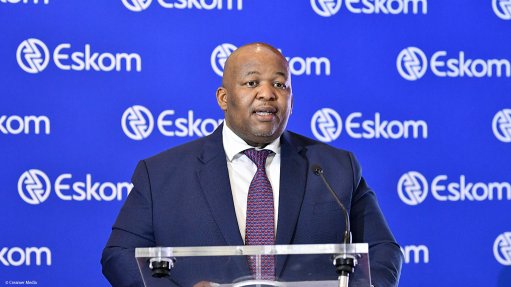
Economic Development Minister Ebrahim Patel
 
Picture by: Duane Daws
Economic Development Minister Ebrahim Patel