Perplexing messages and actions from government and senior politicians are negatively affecting the steel construction industry.
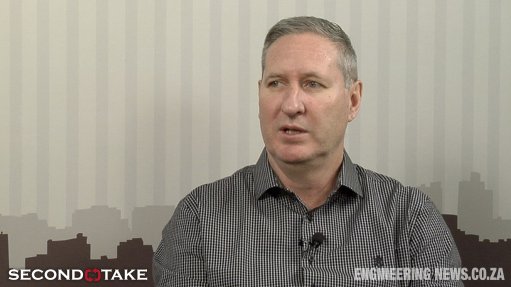
This is the view of Southern African Institute of Steel Con- struction (SAISC) executive director Dr Hennie de Clercq, who says that, while a number of the larger companies in the steel construction industry are heavily involved in State-owned power utility Eskom’s power stations and a fair amount of demand emanates from the mining industry, the SAISC is concerned that the industry, especially mining, is not as active in terms of new projects as it could be.
“Many more new projects, all consuming significant volumes of structural steel, could have started or, at least, been put on the drawing board if there had been greater clarity from the corridors of power.
“Talk of the nationalisation of mines, for example, hardly instils confidence in potential investors who must decide whether to invest in a new mine in Chile or in South Africa. Also, the handling of the Sishen mining rights issue and prospecting licences certainly did not contribute to the confidence levels of potential investors in not only the South African mining industry, but also in South African industry as a whole,” he states.
De Clercq adds that it is crucial for politicians to understand that their words and actions have a much more far-reaching effect than just party politics. “What one says and does may have positive short-term results in terms of the next election but disastrous ramifications for the industry and the country in the long term. I call on the government to take heed of this and to ensure that our interconnectedness with the economies of the world is taken into account before statements are made in the name of parochial issues of self-interest.”
Regarding the outlook for the South African steel construction industry, he notes that it, along with the rest of the construction industry, is certainly feeling the after effects of the worldwide economic recession.
“However, there is a lot we can do to stimulate a recovery. Firstly, we need clear, well thought-out and transparent policy from the government in terms of future plans, and we need to stick to it.”
“Secondly, we need to protect our local industry wherever possible. The power pylon industry is a good example. Local companies, who used to do all the power pylon work with local steel, have lost a lot of this business to foreign competitors mainly because exports from certain countries are subsidised, while, since the 1990s, basic steel products and raw steel could be imported duty free.
“Even though we have fought for an import duty, which has now been gazetted, we need to work hard to rebuild this segment, which will use some 420 000 t of steel by the end of the decade and has considerable export potential into African markets,” De Clercq says.
He adds that the urgency of protecting the local indus- try is highlighted by the multiplier effect, which, in essence, is the positive knock-on effect experienced by the entire country when local suppliers are used.
“In terms of the structural steel industry, for every R1-billion spent, R1.43-billion worth of economic activity is generated, with the tax man receiving a R369-million slice of this pie, which flows back into the economy.”
When it comes to the effect on employment, the figures are even more impressive. A typical structural steel company employs 60 people for every 1 000 t/y produced. The steel construction industry produces about 720 000 t/y of fabricated and erected structural steel, which represents about 43 200 direct jobs. The multiplier exercise shows that 68 400 additional indirect and induced jobs are created in the steel construction supporting industries, as well as in the economy as a whole, providing the country with a total of 111 720 jobs.
De Clercq says, even if a project were as much as 25% more expensive if locally sourced, it would still be of net benefit to the country.
“The problem, of course, is that the client is not prepared to pay more than is necessary. The challenge here is twofold. Firstly, South Africa has to become internationally competitive to promote the buying of local products and, secondly, ways to quantify the knock-on benefits for the country and the clients, in the form of tax relief or some other method, need to be identified,” he states.
Ultimately, he says, the solu- tion is for the public and private sectors to work together for the good of the whole. “These factors are too important to ignore and the SAISC will continue to try to bring these two important factions together in facing future challenges.”
Environmental Sustainability
De Clercq says he has recently been fielding an unusual amount of questions regarding the environmental sustainability of the steel construction industry and feels it is important to put the record straight.
The industry’s sensitivity to this issue is demonstrated by the 40% reduction in carbon dioxide (CO2) emitted for every ton of steel produced over the past 30 years, he states.
“Currently, about 2 t of CO2 is generated for every ton of steel produced and, while we can say that the cement industry worldwide produces more CO2 than the steel industry, steel’s contribution to greenhouse gases is still significant.
“The target is to reduce carbon emissions by another 50% over the next 20 years, which is an extremely demanding task requiring a significant investment in research and new technologies.
“For example, steelmaker ArcelorMittal spends about R2-billion a year, worldwide, on research. Local steel producers are also investing heavily to reduce their impact on the environment,” he notes.
He adds that, importantly, it has also been proven that steel is environment friendly. “This is largely owing to the strength of steel relative to, say, concrete, and the fact that much less material is required to perform a job. Further, steel can be endlessly recycled without loss of quality.
“In essence, the steel industry, as regards environmental issues, is much maligned, often with no justification. It’s important to get to grips with the facts,” De Clercq concludes.
To subscribe to Engineering News's print magazine email subscriptions@creamermedia.co.za or buy now.