Creamer Media’s Engineering News Online
Advanced Search


We have detected that the browser you are using is no longer supported. As a result, some content may not display correctly.
We suggest that you upgrade to the latest version of any of the following browsers:
         
close notification
powered by
GOLD 1388.31 $/ozChange: 0.06
PLATINUM 1458.00 $/ozChange: -0.50
R/$ exchange 9.55Change: 0.03
R/€ exchange 12.37Change: -0.07
 
RENEWABLE ENERGY
 
Govt reiterates commitment to renewable energy
 
23rd September 2009
TEXT SIZE
Text Smaller Disabled Text Bigger
 

Department of Energy clean energy division acting chief director David Mahuma on Wednesday reiterated that renewable energy was “the way to go”, particularly with the financial and environmental cost of coal-based electricity generation increasing.

“I hear the concern that the uptake seems to be slow, but we were not expecting linear growth, we are expecting S-curve growth,” said Mahuma.

He further explained that “all the enablers need to be put in place, such as standards and regulations”, which was why it may seem as if South Africa sat at the base of the S-curve currently.

“But, once it starts moving, we will see big changes,” he emphasised, adding that stakeholders would be “surprised” with the growth in the industry, which the department expected in the near future.

Mahuma was addressing concerns raised over South Africa lagging behind in renewable energy uptake, from delegates gathered at the Concentrated Solar Power (CSP) workshop in Midrand, which was hosted by the Development Bank of Southern Africa’s (DBSA’s) Renewable Energy Market Transformation unit, and the World Wide Fund for Nature.

In 1998, the South African White Paper on Energy Policy was published, and in 2003 a supplementary White Paper was published, which outlined the target of 10 000 GWh of renewable energy generation by 2013. South Africa had only achieved about 1% of this target, and renewable energy generation projects had been slow to materialise.

In March, a Renewable Energy summit, reviewing the policy was held and dealt with what the targets should be beyond 2013, and how barriers to implementation could be removed.

Mahuma stressed that the policy, and regulation environment should be in tune with targets that the country was trying to achieve.

He also said that South Africa’s irradiation potential should not be underestimated, and “for it to go to waste is really an injustice to our people”, he emphasised.

RENEWABLE ENERGY INDUSTRY CAPABILITIES

The aim of the workshop was to identify ways in which an industrial manufacturing base for renewable energy technologies, and components could be established.

Mahuma said that South Africa had a good and mature transmission industry, as well as a well-established manufacturing capability, which he added could be “tweaked to support the renewable energy industry, which would be better than if we try and establish the industry from zero”.

“Let us look beyond demonstration models,” he said, alluding to the Dish Stirling demonstration model at the DBSA offices, which was spoken about at the World Summit on Sustainable Development in Johannesburg in 2002.

He further said that CSP should be enhanced and supported, so as to improve and reduce the costs of components through local production.

Abengoa Solar South Africa GM Dr Louis van Heerden, who was previously with Eskom, addressed manufacturing requirements for building CSP plants in South Africa, and emphasised that large-scale production or developments, in the Gigawatt region, would be required to ensure the economies of scale vital to support development of renewable energy projects.

“Gigawatt-committed agreements will enable suppliers to interact with both Eskom and the Ministry of Water and Environmental Affairs, to ensure adequate long-term infrastructure,” he said, adding that if 1 000 MW of energy from CSP was on the cards, then proper planning could be done, to construct a substation, and get water supplies.

If smaller projects were the order of the day, they would be situated wherever it was convenient and close to substation, without addressing long-term infrastructure planning.

However, Van Heerden added that if large projects were not possible, all effort should be made to facilitate smaller projects, such as making funding easier.

He further outlined the required components for parabolic trough CSP plants, which included: evacuated absorber tubes; mirror facets; frames; drives; controls; pylons; heat transfer oil; oil-to-water steam generators; oil-to-salt thermal storage; conventional rankine cycle power blocks; heliostat systems; receivers; towers; heat transfer liquid; and thermal storage systems.

Of these, key components, Van Heerden said that frames and mirrors could be manufactured in South Africa, but volumes drove those decisions. He also said that local supply options existed for the storage system, the steam generator, and the cooling system.

He explained that collector tubes were specialised components made by only two international suppliers. Heliostat drives were not standard products, and the molten salt was currently sourced only from Chile and Israel.

Edited by: Mariaan Webb


To subscribe to Engineering News's print magazine email subscriptions@creamermedia.co.za or buy now.

FULL Access to Mining Weekly and Engineering News - Subscribe Now!
Subscribe Now Login
 
 
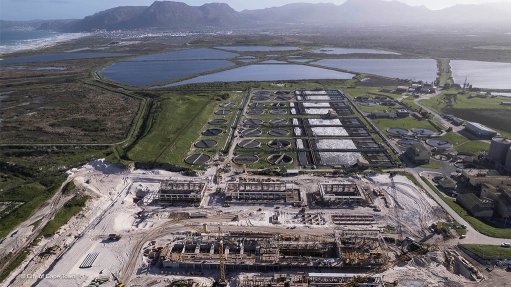
A CSP plant in California
 

A CSP plant in California