Creamer Media’s Engineering News Online
Advanced Search


We have detected that the browser you are using is no longer supported. As a result, some content may not display correctly.
We suggest that you upgrade to the latest version of any of the following browsers:
         
close notification
powered by
GOLD 1381.03 $/ozChange: -4.90
PLATINUM 1462.00 $/ozChange: -24.50
R/$ exchange 9.52Change: -0.11
R/€ exchange 12.30Change: -0.22
 
CLIMATE CHANGE
 
Gigaba unveils climate change policy framework for State firms
 
5th July 2012
TEXT SIZE
Text Smaller Disabled Text Bigger
 

The Department of Public Enterprises (DPE) on Thursday launched the Climate Change Policy Framework for State-owned companies (SOCs), a move which Water and Environmental Affairs Minister Edna Molewa hailed as an “important step” in transitioning to a greener economy.

Public Enterprises Minister Malusi Gigaba said the overarching objective of the framework was to optimise the impact of SOCs on the reduction of carbon emissions and development of a green economy without compromising the financial viability of SOCs.

The policy did not set emission reduction targets, and Gigaba said that SOCs would be required to set their own targets on what they believed they could achieve. “This way, we can demand a high level of accountability,” he said at a media briefing in Centurion.

The framework aimed at supporting SOCs in achieving the right balance between competing commercial, economic, developmental and environmental objectives, while enabling them to leverage off climate-related incentives.

The framework outlined four key design principles informing the policy. Firstly, SOCs needed to focus on optimising the overlap between commercial, economic, developmental and environmental objectives, while carefully managing areas where these objectives conflict.

Secondly, it was expected that over time, climate change and broader environmental and green economy considerations would be integrated into the heart of SOC planning, procurement and operational processes.

Thirdly, each SOC would require flexibility in the way it responded to the challenges of climate change given the diversity of sectors within which it operated.

And finally, the development of the green economy required a high level of collaboration across all SOCs, as well as between SOCs and government. The framework set out that the DPE would identify and foster synergies between SOCs around strategic mitigation and adaptation initiatives, as well as collaboration in terms of research.

Commenting on adaptation initiatives, Molewa said water, agriculture and forestry, health, biodiversity and human settlements were identified as sectors that needed particular attention.

“To give effect to this policy directive, one of the key steps is to strengthen our adaptation planning capacity. We are therefore embarking on a process to develop long-term adaptation scenarios for South Africa, in order to inform national, provincial and local adaptation strategies,” she stated.

Molewa said that the State-owned enterprises’ climate change policy framework presented an opportunity for government to work with the relevant SOCs to commit to action that would result in emission reductions, while recognising the importance of balancing the climate outcome, with economic growth, job creation and poverty alleviation.

Further, she said South Africa’s launch of the Climate Change Response Policy late last year was an expression of its commitment to finding sustainable solutions to the climate-change challenge.

“This framework also represents part of our commitment to supporting our national effort to transition towards a greener economy,” Molewa said.

South Africa, which is ranked as one of the 30 largest emitters of greenhouse gases globally, has committed to reduce its emissions by 34% below the ‘business as usual’ trajectory by 2020 and by 42% by 2025. This is conditional on developed countries providing resources to support the mitigation efforts.

Meanwhile, the SOCs also pledged their commitment to a greener global economy by signing the United Nations Global Compact (UNGC).

The UNGC is a strategic policy initiative for businesses that are committed to aligning their operations and strategies with ten universally accepted principles in the areas of human rights, labour, the environment and anticorruption, thereby advancing sustainable development.
 

Edited by: Mariaan Webb


To subscribe to Engineering News's print magazine email subscriptions@creamermedia.co.za or buy now.

FULL Access to Mining Weekly and Engineering News - Subscribe Now!
Subscribe Now Login
 
 
Topics in this article
 
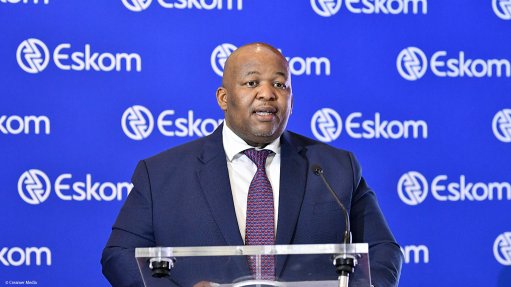
Public Enterprises Minister Malusi Gigaba
 
Picture by: Duane Daws
Public Enterprises Minister Malusi Gigaba