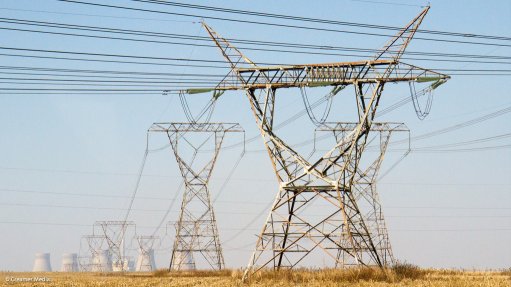
In a milieu of increasing demand for electricity and large-scale power shortages, power utility Eskom is pursuing a number of projects to boost its capacity, and plans to spend R343-billion over the next five years, and R1,3-trillion between now and 2025, mostly on generation-related investments.
The company’s project pipeline includes new coal-fired baseload facilities, gas-fired and pumped-storage peaking facilities, nuclear and renewable possibilities, as well as the refurbishment and recommissioning of existing plants.
For years South Africa’s electricity production capacity was in excess of the country’s requirements, owing to a period of overinvestment by Eskom, which eliminated the need to build new power plants, and also saw the company achieving the position of the world’s lowest-cost electricity producer.
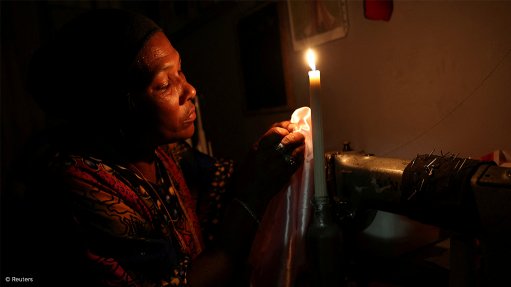
However, the time of possessing excess generating capacity has passed, and South Africa is in urgent need of additional power generating capacity. Already, the country has faced large-scale power outages and load-shedding events, and forecasts indicate that South Africa’s power situation will remain tight for the next five to eight years if immediate interventions are not made.
Nevertheless, owing to long lead times for new baseload capacity, many of Eskom’s investments will only start contributing to the national grid in the longer term and, as a result, a number of alternative solutions to the energy crisis are also being pursued.
One such alternative is the involvement of independent power producers (IPPs). In an effort to facilitate such involvement, the Department of Minerals and Energy (DME) is spearheading an IPP project, and Eskom has invited tenders for small-scale IPP projects and is expected to issue a tender for large-scale IPP capacity in the coming months. Cross-border IPP oppor- tunities are also under investigation, and Eskom is pursuing the development of independent cogeneration facilities. Additionally, power group Independent Power South Africa (Ipsa) is investi- gating the development of additional power generation projects.
While Eskom is the source of about 95% of the electricity used in the country, and about 60% of the electricity consumed on the African continent, the private sector is set to play an increasingly important role in the generation of electricity in South Africa in coming years. IPPs are expected to generate 30% of the additional power capacity required by the country going forward.
South Africa already has several licensed IPPs, the most substantial of which is Gauteng’s Kelvin power station, which has a 600-MW capacity, although currently less than 150 MW of this capacity is available. Other licensed IPPs include the Darling Independent Power Producer (Darlipp), which is in the process of establishing a commercial wind farm, which will ultimately have a capacity of 13 MW, to be developed over two phases, with first production starting in 2008; and Bethlehem Hydro, which is installing 7 MW of hydropower capacity, in the Free State. Power produced by Darlipp will be sold to the City of Cape Town, in terms of a power purchase agreement (PPA), while the power produced by Bethlehem Hydro will be sold to the town of Bethlehem, also under a PPA.
There are also several IPPs operating in South Africa in the production of power for particular private companies. For example, the first IPP licensed in South Africa was intended to develop a small power station in KwaZulu-Natal to supply power to paper company Mondi’s Durban paper mill, and Ipsa supplies power to rubber manufacturer Karbochem.
Other companies that make use of privately generated power are Sasol, Tongaat Hulett, Friedenheim and TSB Sugar.
In addition, South Africa has about 16 municipal power generators, with a combined capacity of 1 841 MW.
The availability of significant IPP capacity, however, is a number of years away, and it seems that, in the short term, one of the best options for alleviating the electricity crisis lies not in the supply of additional generation capacity but in limiting the demand for existing capacity.
As a result, Eskom has rolled out a demand-side management and energy efficiency programme, including the pursuit of significant demand- reduction targets through strategies such as power rationing and the development of regulations to prohibit wasteful practices. In addition, Eskom has indicated that it will delay the signing of new electricity supply contracts for projects over a certain size for a period of four to six months from March this year.
The South African government has long been cognisant of the fact that the country would face an electricity supply shortage. Policy uncertainty and planning confusion contributed to the fact that the situation was not avoided.
Despite the fact that government was aware of the impending situation, the extent and timing of the problem that unfolded in early 2008 was unexpected, and was largely a consequence of the fact that a large percentage of Eskom’s existing capacity was unavailable for supply, owing to planned maintenance, unplanned breakdowns and reduced output linked to coal- supply problems.
The crisis has also been attributed to demand growth, and, certainly, gross domestic product (GDP) growth has been higher than the 4% on which many of Eskom’s expansion plans were based. However, the fact that government was aware of the problem as far back as 1998 shows that demand growth alone has not caused the crisis.
The potential impact of the crisis on the South African economy is significant, with the situation having the ability to damage consumer, business and foreign investor confidence, with implications for GDP growth, employment, capital formation, capital inflows, the rand, inflation and interest rates.
To subscribe to Engineering News's print magazine email subscriptions@creamermedia.co.za or buy now.


.jpg)


lr1_2.gif)