The Department of Higher Education and Training (DHET) was heeding the call to reconsider the funding model pertaining to engineering faculties, which were underfunded and largely supported by cross-subsidisation by other faculties, DHET director for higher education academic planning, Dr Engela van Staden, said on Tuesday.
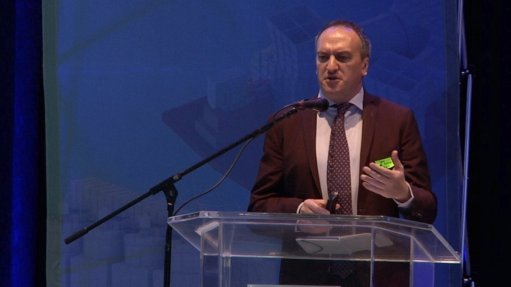
She was speaking on behalf of Higher Education and Training Minister Blade Nzimande at the 2012 Engineering Skills Summit, in Kempton Park.
For the 2012/13 to 2014/15 infrastructure and efficiency cycle, the total funding requested by universities for engineering faculties amounted to R1.3-billion. The DHET could only provide R510-million, while universities contributed R186-million, leaving a funding gap of over R600-million.
For the 2011/ 2012 cycle, R349-million was requested, while the DHET had R316-million available.
Van Staden said there was a need for proper support mechanisms and clear systemic changes to increase the required numbers and types of engineers, engineering technologists, technicians and technical assistants in South Africa.
She added that South Africa’s basic education and school system, particularly the availability of matriculants with the appropriate level of achievement and subject choices to study engineering sciences, would have to be considered.
The enrolment planning process for 2011/12 to 2013/14 set the target of increasing the number of engineering graduates to 15 000 by 2014.
A proposal submitted to the Minister’s office from eight universities offering engineering programmes suggested that the expertise at existing, well-functioning engineering faculties be used to increase engineering graduate numbers.
The proposal outlined a projected human resources budget of R2.6-billion from 2012 to 2020 for the eight universities, of which engineering science bursaries would account for R900-million.
“We now have the opportunity to revisit our approach towards determining the realistic expansion of engineering graduates needed in specific specialisation areas,” Van Staden said.
South Africa lagged far behind in the number of engineers proportionate to population, compared with the UK, Australia and Chile, having one engineer per 3 100 persons in the population.
Engineering Council of South Africa (ECSA) CEO Dr Oswald Franks said it was crucial to determine the supply and demand for engineers in the specific disciplines, especially in light of President Jacob Zuma’s announcement of the R845-billion in infrastructure projects aimed at driving economic growth and development.
“The engineering skills shortage does not pertain to all the spheres of engineering and is not specific to engineering disciplines. It is not currently felt in the construction sector, but in the manufacturing industry it has become quite apparent,” he noted.
Franks added that South Africa was paying for its engineering skills deficit through its loss of global competitiveness.
"Our industries are not deliverying products, we are not developing new technologies."
ECSA council member Dr Allyson Lawless, who warned that a latent skills shortage could creep in as companies and departments get used to not having required skills, also said inefficiency in the higher education system had to be resolved, as the enrolment rate at universities was significantly higher than the rate of graduation.
In 2010, about 14 500 engineering students enrolled, but only about 2 000 graduated. At universities of technology, over 40 000 students enrolled in 2010, but less than 5 000 graduated.
Lawless raised concern about deficiencies in South Africa’s maths, science and languages education, as well students’ readiness for higher education study and independent learning.
At higher education level, she said lines of race and educational disadvantage were dictating differential throughput rates. “Improving throughputs, especially for black students, is key to increasing graduate outputs, especially given the slow pace of school reform.”
Lawless said developing skills and filling posts would require, a short-, medium- and long-term approach.
In the short term (2012 to 2014), the aim must be to harness the private sector, retired engineers and overseas capacity to get government’s major infrastructure projects off the ground, and set training conditions to all projects to ensure current graduates were adequately trained.
In the medium term (2012 to 2017), the technical structures and systems required in the public sector organisations must be redeveloped and populated with available skills.
In the long term (2012 to 2022), the country would have to start training towards fully populating the structures designed in the medium term. This would require the issuing of bursaries and major training programmes in all public sectors structures, workplace training, mentoring and coaching.
ECSA president Gwebinkundla Qonde highlighted the importance of the one-day skills summit in solving the country’s engineering skills shortage.
“Engineering and technical education is the key to the development of any nation. Infrastructure development is the foundation for eradicating poverty and inequality. It is a catalyst for meaningful direct foreign investment.
To subscribe to Engineering News's print magazine email subscriptions@creamermedia.co.za or buy now.


lr1.gif)