Creamer Media’s Engineering News Online
Advanced Search


We have detected that the browser you are using is no longer supported. As a result, some content may not display correctly.
We suggest that you upgrade to the latest version of any of the following browsers:
         
close notification
powered by
GOLD 1384.03 $/ozChange: -4.22
PLATINUM 1454.00 $/ozChange: -4.50
R/$ exchange 9.59Change: -0.01
R/€ exchange 12.40Change: -0.10
 
 
Electricity costs remain a concern despite lower 2012/13 tariff increase
 
13th April 2012
TEXT SIZE
Text Smaller Disabled Text Bigger
 

The electricity-intensive foundry industry still has a lot of obstacles to overcome despite the National Energy Regulator of South Africa’s (Nersa’s) downward revision of State-owned power utility Eskom’s tariff increase for 2012/13, says South African Insti- tute of Foundrymen (Saif) CEO John Davies.

The nonprofit organisation, together with the National Foundry Technology Network (NFTN), the Department of Trade and Indus- try (DTI) and industry representatives led by NFTN energy management working group champion David Mertens, who is also cast iron operations and group technical executive director of automotive component supplier Autocast, met with the energy regulator in February to discuss their concerns about the state of the foundry industry as a whole, espe- cially the 25.9% electricity tariff increase, which was scheduled to take effect on April 1.

On March 9, Nersa announced that it was revising the electricity tariff increases for 2012/13 downwards to 16%.

“We’d like to think that we held at least a small measure of persuasion in that,” says Davies, adding, however, that the lower increase will by no means solve the many problems facing the domestic foundry industry.

“What one needs to recognise is that the foundry industry is a fairly high energy user, particularly in the ferrous foundries,” says Davies. “It’s a higher melting point material so more energy is needed to melt the metal.”

He explains that the energy used by foundries can range between 5% and 21% of total costs. Applying a 16% increase to that, in addition to future yearly increases, can, therefore, become a significant cost element.

Davies adds that the 16% increase in Eskom’s tariff is also not necessarily the increase that will be applied by the municipalities.

In 2010, the foundry industry saw energy price increases of up to 49% in the winter months. There have since been numerous forced closures as a result of these steep increases. Four foundries in the Ekurhuleni area alone closed shop in August 2010, he points out.

At the time, Saif’s plan of action was to engage with the Ekurhuleni city council to discuss tariff implementation. “From having been quite combative at first, we ended up understanding the needs of the industry and also the needs of the council,” says Davies.

He states that Saif now understands there are sociopolitical elements involved in the way municipalities collect electricity debt. It is their main revenue for funding other services that they otherwise would not be able to cover. Similarly, the capital expenditure programme dictates that the bulk of the municipalities’ capital is dedicated to households – an area that generates the least revenue.

“It’s a sociopolitical decision and we need to put effect to that. There’s no way we can carry on in South Africa with some homes having no electricity – it’s indefensible. But to do that means you’re taking funding away from other necessary capital and infrastructure renewal and upgrading expenditure.

“That means, effectively, that the service quality to the industrial users, which are subsidising the programme for a low- or no-revenue stream sector of the council, is in decline.”

Another factor that the foundry industry needs to consider is the municipal tariff structure. It has been suggested the municipalities could offer foundries an off-peak tariff rating. Alternatively, the foundry industry could search for opportunities to significantly reduce costs without necessarily reducing the income of the municipality.

“We’ve got to be quite inventive in considering how we can cut electricity costs without impacting on the income of the municipalities,” says Davies. “If they receive less income, they’re not going to balance their books.”

Another important issue is the fact that electricity tariffs set by municipalities differ from region to region.

As one of the outcomes of its meeting with Nersa, the NFTN met with the South African Local Government Association on April 4 to discuss the incon- sistency of tariffs between municipalities. The NFTN is also collaborating with the Energy Intensive User Group, which is in the process of conducting a survey to find out what the various municipalities are charging for electricity.

“This would be very informative for us,” says NFTN project leader Adrie El Mohamadi. “If we are to come up with some form of a foundry solution, we have to understand the municipalities’ tariff structure.”

The role of the DTI in coordinating the various other depart- ments’ impact on the speed at which the foundry industry grows was also discussed at the Nersa meeting as part of the solution to the foundry industry’s problems. It was established that nine different departments within government should each have an understanding of one another when it comes to the foundry industry, as well as the manufacturing sector as a whole.

“The idea was for us to develop a discussion document for the DTI to take further, to engage with those departments and bring them all on board,” says El Mohamadi. “We are not going to move forward unless we do it collectively.”

Saif and the NFTN agree that they would have liked some clearer outcomes from their meeting with Nersa, but acknowledge that there are many contradictory factors present with regard to energy in South Africa.

“We understand that they’re regulators. Nersa cannot make big decisions in support of us if it’s going to affect another sector negatively,” she says.

Edited by: Chanel de Bruyn


To subscribe to Engineering News's print magazine email subscriptions@creamermedia.co.za or buy now.

FULL Access to Mining Weekly and Engineering News - Subscribe Now!
Subscribe Now Login


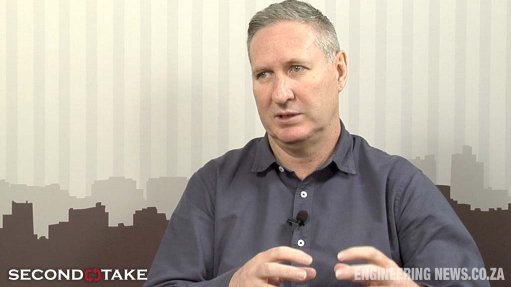
Saif CEO John Davies and NFTN project leader Adrie El Mohamadi discuss developments in the foundry industry. Camerawork: Nicholas Boyd. Editing: Darlene Creamer.
This video is licensed under a Creative Commons License
GET SELECTED VIDEO
Embed
Selected Video Download (10.44mb)


Pullout Quote
'We’ve got to be quite inventive in considering how we can cut electricity costs without impacting on the income of the municipalities' - John Davies