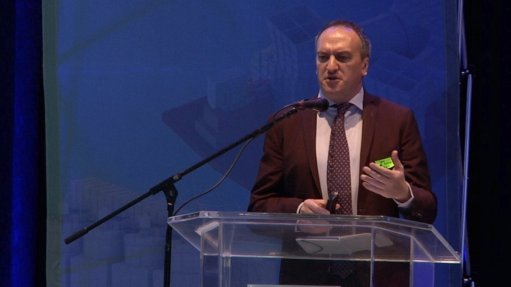
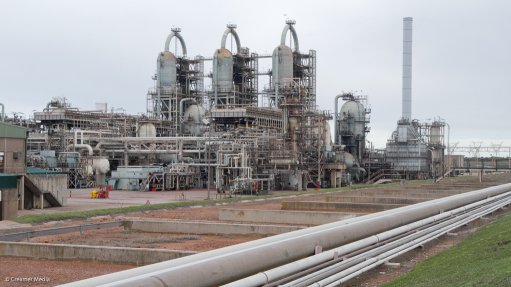
The Industrial Development Corporation’s (IDC’s) broad-based black economic-empowerment (BBBEE) transaction with regard to phosphate rock miner and phosphoric acid producer Foskor, would benefit in excess of one-million people, IDC CEO Geoffrey Qhena highlighted on Wednesday.
The IDC unveiled details of its sale of a 26% stake in Foskor to BBBEE partners, 15% of which would be sold to the Manyoro Consortium, comprising 12 consortia.
The remaining 11% would be sold to employees and local communities through special purpose vehicles (SPVs).
Qhena explained that it had received over a thousand bids after issuing a request for proposals for the deal in September last year.
Following a competitive bidding process, it had selected the consortium as a partner, owing to the fact that this would benefit people with disabilities, nonprofit organisations and education-focused groups, as well as ensure significant participation by women.
The development finance institution would provide a fully vendor financed funding package to the participants.
The Manyoro Consortium would provide a portion of equity as a contribution to the deal, while no equity contribution was expected from the employee and community SPVs.
Discounts on the acquisition price had also been offered to the participants. These were on average, about 20%, with the communities benefiting from a higher discount and the Manyoro Consortium to a lesser extent.
Minimum dividend flows would be distributed to all the beneficiaries in priority debt service, if any dividends were paid out.
Qhena explained that the IDC could not provide a transaction value at this stage, as it had linked the transaction price to that of Foskor’s planned JSE-listing.
Foskor had announced last year that it would list on the JSE in the third quarter of this year, but this was now an uncertainty, given the aftermath of the global economic crisis.
Qhena, once again, emphasised that if market conditions remained as soft as they were at present, the company would not list on the JSE this year.
If Foskor did pursue a listing before the end of the year, the acquisition price of the shares would be the Foskor initial public offering price. The IDC’s latest valuation of the company was R9,5-billion, said Qhena.
However, if it did not list by the end of the year, an independent valuation would have to be done to determine the price of the transaction.
Qhena noted that the IDC was still evaluating its options in terms of the listing, but said at least it had now concluded the BBBEE deal.
He highlighted that the BBBEE transaction was a model for other companies wishing to implement a sustainable BBBEE transaction.
MANYORO CONSORTIUM
Meanwhile, Foskor CEO Alfred Pitse explained that, prior to the transaction, it had already been committed to transformation. He highlighted that the company had spent 44% of its procurement costs with BBBEE participant in the 2009 financial year.
It would boost this to over 50% in the 2010 financial year.
Pitse noted that the Manyoro Consortium, which was split into strategic business partners (SBPs) and broad-based special interest groups, was a diverse consortium with a number of new BEE entrants.
The consortium would provide Foskor with strategic value-add and expertise.
Of the 15% interest in Foskor, the SBPs, which included the Makana Energy Consortium, Mgwali Investments, Palama, RSA Capital, Ufhata Consortium and Umanyolo Investment Holdings, would share a 67,1% stake.
The remaining 32,9% stake were divided among the special interest groups, comprising Awca Investment Holdings, Azara Consortium, Disability Empowerment Concerns, SBR, Phalimpopo and Podwala.
“We are grateful to be selected to participate in this opportunity and we look forward to a meaningful partnership with Foskor,” commented Manyoro Consortium chairperson Peter-Paul Ngwenya.
The consortium’s shares would vest in nine years.
EMPLOYEES AND COMMUNITIES
Meanwhile, Foskor’s employees, currently about 2 000, would share a 6% stake of the 26%, while provision would also be made for new employees to share in the scheme.
The remaining 5% stake would be split among the Phalaborwa Community Trust, which would be entitled to 50% of the shares, the Richards Bay Community Trust, which would be entitled to 40% of the shares and a third community trust, which would still be identified.
Each of these trusts would have its own board of trustees and project evaluation and approval processes to ensure that the incoming funds are invested properly.
The IDC would now own a 59% stake in Foskor, with Indian strategic partner Coromandel owning a 14% stake and Sun International India holding a 1% interest.