Creamer Media’s Engineering News Online
Advanced Search


We have detected that the browser you are using is no longer supported. As a result, some content may not display correctly.
We suggest that you upgrade to the latest version of any of the following browsers:
         
close notification
powered by
GOLD 1733.95 $/ozChange: -2.82
PLATINUM 1656.00 $/ozChange: 10.00
R/$ exchange 7.58Change: -0.02
R/€ exchange 10.06Change: -0.15
 
First phase of bulk water supply project completed
 
13th February 2009
TEXT SIZE
Text Smaller Disabled Text Bigger
 

Consulting engineering and project management company SSI's Lowlands Water joint venture (JV), successfully completed the first phase of the Lesotho Lowlands bulk water supply project during the last quarter of 2008, SSI group communications manager Robin Hayes tells Engineering News.

The Lowlands Water JV is headed up by SSI, with input from its Dutch parent company DHV, and includes consulting engineering partners Jeffares & Green, Lesotho-based GWC Consulting Engineers and German-based Fichter, as well as subconsultants, software and services company Intermap and Lesotho-based Sechaba.

The 18-month detail design phase included reviewing water demands in the area, reviewing the hydrology of river sources, confirming water demand and projected water requirements, conducting geotechnical and environmental surveys and consulting with public interest groups, as well as producing tender drawings and tender documents.

The detail design was conducted to meet the projected needs of the area up to 2020, and allows for possible expansion to meet water demands up to 2035.

Phase two of the project, the tendering and procurement phase, is scheduled to begin in the first quarter of 2009. Phase three, the construction supervision phase, is scheduled to start in the third quarter of 2009.

Included in the Lowlands Water JV is a national water sector information management system, which is being conducted by Intermap. This system tackles the widely different user requirements across and within Lesotho's water sector. These requirements include infrastructure management, data analysis and extraction, information management, service delivery monitoring, geographical information system analysis and map production.

The water scheme will provide treated bulk water to the Lowlands of Lesotho through several networks. The project will consist of about 740 km of pipelines and will encompass four river intakes, four treatment plants, 48 pump stations and 132 reservoirs for eight different zones drawing between 6 Ml a day and 75 Ml a day.

The water scheme has been initiated to tackle the increasing domestic, industrial and institutional water needs of the lowland districts of Butha Buthe, Teyateyaneng, Berea, Maseru, Morija, Mafeteng, Mohale's Hoek and Quthing in Lesotho. The project reflects one of Lesotho's United Nations-sponsored millennium development goals, which is to reduce the proportion of people without sustainable access to safe drinking water and basic sanitation.

The Lesotho Lowlands bulk water supply scheme follows the multibillion-dollar Lesotho Highlands Water Project, which began about 20 years ago. This project captures, stores and transfers water from the Orange River system to Gauteng in South Africa. Completion of the first phase of the Lesotho Highlands Water Project made Lesotho almost completely self-sufficient in the production of electricity. Further, it earns millions a year for Lesotho from the sale of electricity and water to South Africa, however, little provision for water was made for Lesotho itself in the project. Water is one of Lesotho's few natural resources.

Project Pipeline
Hayes comments that the bulk of SSI's activity is in public sector work, and that the company has not experienced any slowdown in these divisions, despite the global economic situation. The company's water and wastewater treatment project upgrades, its work in the industrial sector on electrical distribution design and clean rooms and building services, the project management division's 16 school projects, the transport division, SSI's ports, aviation and rail division's airport terminal upgrades, as well as the company's environmental division, Bohlweki all continue to thrive.


Edited by: Laura Tyrer
FULL Access to Mining Weekly and Engineering News - Subscribe Now!
Subscribe Now Login


Hide Comments  
 
This article contains no Comments


All comments must be approved by our editors, click here to read the editorial guidelines for comments. Please allow some time for our editors to approve your comment after posting.
 * Required Fields

image
image
 *


image
image
 *
 

image
image
 

Verification Image

image
image
 * Please enter the text you see in the above image.


ACCESSING WATER
The project is being undertaken to reduce the proportion of people without sustainable access to safe drinking water and basic sanitation
 
ACCESSING WATER The project is being undertaken to reduce the proportion of people without sustainable access to safe drinking water and basic sanitation
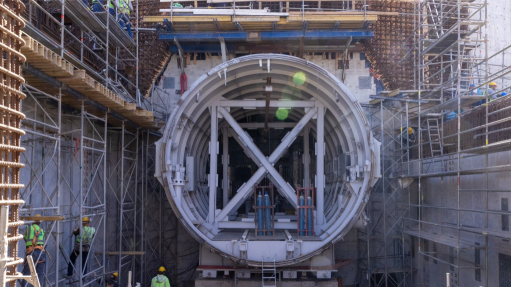
ELECTRICITY INDEPENDENT
The Lesotho Highlands Water Project has made Lesotho almost completely self-sufficient in the production of electricity
 
ELECTRICITY INDEPENDENT The Lesotho Highlands Water Project has made Lesotho almost completely self-sufficient in the production of electricity
 
Previous Play Next