Creamer Media’s Engineering News Online
Advanced Search


We have detected that the browser you are using is no longer supported. As a result, some content may not display correctly.
We suggest that you upgrade to the latest version of any of the following browsers:
         
close notification
powered by
GOLD 1360.10 $/ozChange: -5.72
PLATINUM 1455.00 $/ozChange: -6.70
R/$ exchange 9.40Change: -0.09
R/€ exchange 12.07Change: -0.07
 
Biometrics Technology
 
Finger vein, print scanner to improve transaction, access security
 
23rd September 2011
TEXT SIZE
Text Smaller Disabled Text Bigger
 

A finger vein and finger- print scanner, which uses optical image capturing of the print and near-infrared light capturing of the vein network, combines the two types of verification to increase accuracy and security, says French biometrics technology company Morpho VP for biometric terminals Hervé Jarosz.

The device maps the minutia of a person’s fingerprint, as well as the vein network in the second phalanx of the same finger. The company’s algo-rithms then compare the results with a database, either using the data to identify a person as belonging to a group, for example employees or technicians, or to verify a person’s identity when used in conjunction with cards, personal identification numbers and common security measures, which improves security and reduces the likelihood of fraud.

The device, known as the FingerVP, increases the accuracy and usability of fingerprint scanners as a means to secure access control, time attendance or verifying personal details to conduct a transaction.

The company has received awards from the US bench-marking organisation the National Institute of Stand-ards and Technology for both the accuracy and the inter-operability of its algorithms. The device has a false accept-ance rate of 0.0001% and a false rejection rate of less than 0.01%.

The false acceptance rate can be adjusted between 0.01% (10–2) and 0.00000001% (10–8), depending on the security level sought, but at a slightly increased rate of possible false rejection.

The company has had a presence in South Africa since 1995 and has met with sustained success in the market, owing to the country’s innovative and widespread use of bio-metric devices in a number of applications, such as access control in manufacturing and at sites, time attendance at workplaces, pension payment identity verification and retail transaction identity verification.

“For us, South Africa is one of the biggest countries in terms of adoption of biometrics and is well advanced in using these technologies in many environments with great variety and originality, including in many areas not currently adopted by other countries,” says Morpho VP for biometric terminals sales and marketing Marie Garmendia. The country ranks second to Malaysia and ahead of Argentina in its use of the company’s technologies.

Morpho foresees expanded use of the system in South Africa, owing to its relatively low cost, ease of use and matur-ity as a technology, specifically in securing physical access control, which is a common application in South Africa. It is also used for transaction identity verification in banks, and for retail, device access control, such as computers, hand-held devices, networks or databases, as well as in hos-pitals and other sensitive areas.

“We also design systems focusing on facial or iris recog-nition, multiple fingerprint scanners and integrated multilayer security systems using, for example, the contact-less card system. But fingerprint technologies remain the most mature biometric technology for commercial applications,” says Jarosz.

The Morpho FingerVP can be integrated into existing systems and can be programmed to provide access using only the print part of its scanning capability, while maintaining and expanding the existing database to include users’ vein networks when integrated into existing monomodal recognition systems.

It can also be used to estab-lish layers of security and access control at a company or site by using both fingerprint and vein recognition to control access to more sensitive areas.

The device has rapid acquisi-tion, taking one second to identify a person and less than one second to verify a person’s identity. Similarly, it easily acquires a new user, using three individual scans of a person’s finger to generate the data model for the new user in less than 20 seconds.

Commercial banks Nedbank and Absa were the first two companies to adopt Morpho’s technologies in 1995 and continue to use the company’s systems to verify pension payments and for transaction identity verification, notes Jarosz.

“Every year, we have new customers who use our bio-metric devices in new applica-tions.”

Garmendia notes that the company’s research and development and manufac-turing are located in France, and it has also developed technologies that can be used to quickly detect and identify explosives or drugs in airports or high-value places.

Local Alt-X-listed security technologies company Ideco is Morpho’s partner in South Africa and distributes the biometric terminals through its certified distributors. Ideco also offers training and has a certified service centre to support Morpho’s products in South Africa, concludes Ideco MD Marius Coetzee.

Edited by: Martin Zhuwakinyu


To subscribe to Engineering News's print magazine email subscriptions@creamermedia.co.za or buy now.

FULL Access to Mining Weekly and Engineering News - Subscribe Now!
Subscribe Now Login


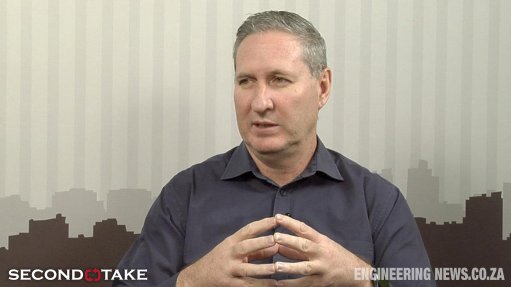
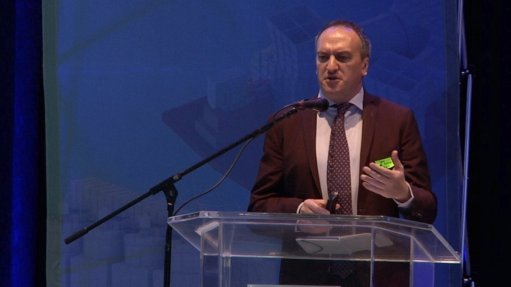
Morpho VP for biometric Marie Garmendia discusses the application of FingerVP in South African businesses. Cameraperson: Nicholas Boyd. Editing: Darlene Creamer.
This video is licensed under a Creative Commons License
GET SELECTED VIDEO
Embed
Selected Video Download (2.37mb)