By: Keith Campbell
8th April 2005
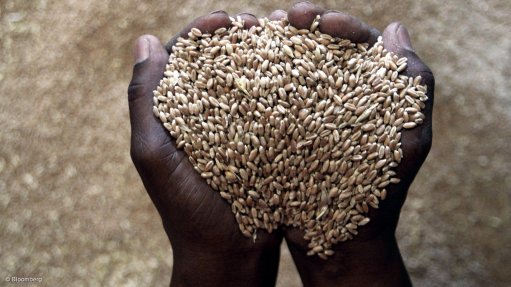
Oddly, despite the fact that the three countries are all leading members of the Group of 20 (G-20) developing economies, which was created to fight agricultural tariff barriers and export subsidies in developed countries (within the World Trade Organisation), agriculture had hitherto not been included as one of IBSA’s sectors for cooperation. “There are great opportunities for cooperation in agriculture,” points out Brazilian Ambassador to South Africa Lucio Amorim.
A common concern of all three countries is the encouragement of family agriculture, for example.
“There are also overlaps between the areas of agriculture and science and technology, for example biofuels,” he highlights.
(Brazil has been using alcohol pro-duced from plants as a source of fuel for motor cars for many years now and is currently developing biodiesel fuels as well.) The three countries have also com-mitted themselves to increase the IBSA Fund.
Originally launched with contributions of $100 000 from each country, giving a total of $300 000, the IBSA Fund was very small but, nevertheless, is busy developing its first development project in the West African state of Guinea-Bissau.
Now, each country will contribute $1-million, taking the fund up to $3-million.
“The fund is still small, but it is beginning to become significant and remains unique – it is countries of the South helping poorer countries of the South,” stresses Amorim.
An important step in strengthening the IBSA process was the agreement, at the Trilateral Commission, that each country would dedicate a senior official in the respective foreign ministries to IBSA matters – hitherto, IBSA issues have been handled by officials with other responsibilities as well.
The IBSA Trilateral Commission meeting was paralleled by a trilateral business forum, at which leading industry associations from the three countries signed a broadly-framed cooperation agreement, creating an IBSA business council.
For South Africa, the agreement was signed by Business Unity South Africa.
The next meeting of the IBSA business council will be in Brazil next year.
It should be stressed that the IBSA business council is a business body; none of the three governments are represented on it, although they facilitated its creation.
The hope is that the business council will develop joint positions on areas of importance to business with regard to the trilateral relationship and give input and advice to the IBSA governments in these regards.
Meanwhile, cooperation in the different sectoral areas, which include health, science and technology and defence, is developing slowly and at different rates.
This is because the three sides are still getting to know each other – and this mutual knowledge is the key function of IBSA, which is not a trade bloc, nor a defence alliance, nor a political alliance, nor does it intend to become any of these things.
It is simply a mechanism to develop mutual knowledge between three significant countries which, to date, have been very ignorant of each other, and to promote mutually-beneficial co-operation among them.
Even so, the Trilateral Commission approved comprehensive programmes of meetings for all the sectoral co- operation working groups.
The next significant IBSA sectoral meeting will be the second meeting of the three defence ministers, which will take place in Brazil next month.
Other sectoral meetings will follow during the year.
Another new area for cooperation agreed at the March Trilateral Com-mission was that of culture.
Brazil will host a trilateral music and dance festival by November this year; next year India will host an audiovisual arts festival; and at the beginning of 2006 South Africa will host an indigenous knowledge systems conference.
“The IBSA concept is spreading down slowly from the highest levels of government; but it is spreading,” affirms Amorim.
Edited by: Keith Campbell
To subscribe to Engineering News's print magazine email subscriptions@creamermedia.co.za or buy now.