Creamer Media’s Engineering News Online
Advanced Search


We have detected that the browser you are using is no longer supported. As a result, some content may not display correctly.
We suggest that you upgrade to the latest version of any of the following browsers:
         
close notification
powered by
GOLD 1356.65 $/ozChange: -9.17
PLATINUM 1446.50 $/ozChange: -15.20
R/$ exchange 9.46Change: -0.15
R/€ exchange 12.18Change: -0.18
 
ELECTRICITY
 
Eskom still pursuing mandatory savings 'safety net'
 
30th January 2012
TEXT SIZE
Text Smaller Disabled Text Bigger
 

State-owned power utility Eskom has reiterated its call for South Africans to urgently reduce electricity demand by 10%, or some 3 000 MW, adding that it is continuing to pursue plans to ensure that the energy conservation scheme (ECS) be made mandatory so as to improve savings certainty and enable it to ramp up planned maintenance.

Providing a power system update in Johannesburg on Monday, CEO Brian Dames said the system would remain constrained for the coming five years, while the maintenance backlog had become unsustainable. Savings were, therefore, needed to create "space" for the utility to implement its proactive maintenance schedule across all of its 58 units.

Eskom was still forecasting a 9 TWh shortfall for 2012, equivalent to the operation of a 1 000 MW power station.

Public Enterprises Minister Malusi Gigaba encouraged corporate South Africa, as well as private citizens, to take voluntarily steps to reduce their demand to ensure system stability and to create room for continued economic growth.

MAINTENANCE BACKLOG

He said catching up on maintenance was "no longer an option".

"Eskom has a highly developed maintenance policy, which is designed to ensure that areas at risk are addressed in order of priority through a consistent schedule of maintenance and inspection work across its fleet of power stations," Gigaba said, warning that any further deferral of maintenance would pose significant risks to the safety of assets and people, while placing security of supply in jeopardy.

Dames said Eskom required greater certainty on demand reductions and would, thus, continue to pursue a mandatory ECS in its negotiations with business and labour at the National Economic Development and Labour Council, or Nedlac.

These discussions had been under way for a number of years and business had continually raised objections to a mandatory scheme, saying it could result in the curtailment of growth and a reduction in jobs.

Dames stressed that such a compulsory scheme would only be deployed as a last resort “safety net”, while also welcoming the voluntary efforts that had already been made to reduce demand.

However, its top 250 customers had, thus far, only managed to reduce their demand by 1% against a 2007 baseline, even though Eskom's 95 leading industrial customers had achieved average savings of 6.9% against that baseline.

In fact, some mining companies had already breached the 10% savings level and would not be asked to make further mandatory cuts should it be agreed that the ECS be made compulsory.

Overall, Eskom's top customer grouping also included entities, such as the large municipalities, that had not made much progress in reducing demand.

Dames warned that 2012 would be “particularly tight”, owing to the fact that no new major supply would be introduced while demand was still increasing, albeit at a slower rate than initially anticipated.

Demand had returned to 2007 levels, with the summer daily peak of just over 30 000 MW and winter demand likely to peak at above 37 000 MW.

MEDUPI DELAY

Further, the first unit of the coal-fired Medupi power station, which was under construction in Limpopo, would not be introduced during 2012 as initially envisaged. In fact, Dames indicated that the first unit was currently only scheduled to be introduced late in 2013, but that efforts were being made to align the schedule to the first quarter of 2013 schedule outlined in the Integrated Resource Plan, or IRP, for electricity.

In the meantime, much of Eskom's attention had turned to the reliability of the existing fleet, much of which was approaching 30 years.

There was a need to accelerate maintenance efforts at a rate of around 10% of installed capacity during the summer maintenance peak. But owing to the supply constraints, Eskom had been failing to introduce outages as planned and was shifting maintenance out in a bid to keep the lights on. This was increasing the vulnerability of the system to unplanned outages in the longer term and was thus “unsustainable”.

Besides the focus on the ECS and its maintenance programme, Eskom was also pursuing a range of other demand- and supply-side interventions to shore up supply ahead of the introduction of capacity from Medupi and Kusile.

It was interrogating various importation options from the region, including the prospect of importing natural gas from countries such as Mozambique, possibly for use in its gas turbines at Mossel Bay and Atlantis, in the Western Cape. Currently these open-cycle gas-turbines (OCGTs) were fuelled using diesel and were, thus, a significant cost contributor.

On average Eskom produced electricity at a cost of 38c/kWh. But the cost of production at the OCGT plants was between 150c/kWh and 250c/kWh, depending on the diesel price.

The utility was also procuring all available power from non-Eskom sources, having secured 1 000 MW of such capacity from independent power producers and municipalities.

It was also moving ahead with demand-side management schemes and had entered into agreements with large customers to enable it to buy back power in times of system distress.

It was also in the final stages of implementing an innovative demand aggregation model and hoped to have some 500 MW of such buy-backs available by winter 2012.
 

Edited by: Creamer Media Reporter


To subscribe to Engineering News's print magazine email subscriptions@creamermedia.co.za or buy now.

FULL Access to Mining Weekly and Engineering News - Subscribe Now!
Subscribe Now Login


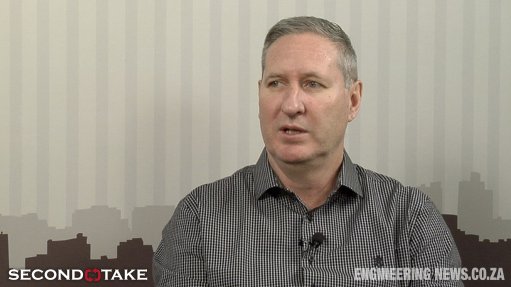
Eskom CEO Brian Dames on the need for a mandatory energy conservation scheme. Camera Work: Nicholas Boyd. Editing: Darlene Creamer.
This video is licensed under a Creative Commons License
GET SELECTED VIDEO
Embed
Selected Video Download (4.75mb)
 
Eskom CEO Brian Dames
 
Picture by: Duane Daws
Eskom CEO Brian Dames