Creamer Media’s Engineering News Online
Advanced Search


We have detected that the browser you are using is no longer supported. As a result, some content may not display correctly.
We suggest that you upgrade to the latest version of any of the following browsers:
         
close notification
powered by
GOLD 1360.03 $/ozChange: -25.90
PLATINUM 1447.00 $/ozChange: -39.50
R/$ exchange 9.59Change: -0.18
R/€ exchange 12.33Change: -0.25
 
 
Firm plans to enter local petrochemicals sector
 
7th September 2012
TEXT SIZE
Text Smaller Disabled Text Bigger
 

Following its success in the international petrochemicals sector, environmental management technology supplier Procon Environmental Technologies plans to enter the local petrochemicals sector this year, reports chief environmental engineer Jacques Steyn.

He points out that the company plans to put forward proposals to the South African Petroleum Industry Association’s Refinery Managers Environmental Forum committee regarding the benefits of using its Ultraspin oily water separator technology.

Procon states that the Ultraspin is able to remove at least 99.9% of oil from the waste stream, allowing refineries to comply with water discharge limits.

The company states that this technology also enables refineries to recover waste oil from the water stream for further processing.

On-Site Demonstrations
Further marketing by Procon in the local petrochemicals sector will entail offering on-site oily water technology tests and demonstrations for refineries and at the facilities, as well as showcasing its international case studies to the local market.

Steyn says the company has been in discussion with decision-makers at South African refineries about the implementation of its technologies and has conducted successful tests at petrochemicals companies Sasol, Engen and PetroSA for the last six years.

However, he points out that budget constraints, red tape and internal challenges faced by the refineries have delayed implementation discussions by almost a year.

Procon, however, reports that it did have a meeting with one of the refineries last month to discuss the possible implementation of its oily water separators at the refinery.

“By entering the petrochemicals sector through successful and proven installations at large firms like Sasol and Natref, we hope other local refineries will follow suit by implementing our environmental management technologies,” says Steyn.

Procon believes the tests and demonstrations at the refineries can prove the efficiency of the technology.

“The week-long testing and demonstrations conducted at the refinery, using our self-contained oily water separator trailer unit, yield results which can be analysed in determining the efficiency of our system,” says Steyn.

He states that few companies can initially provide refineries with refinery-grade and engineer-specified technologies. This, in turn, makes it time-consuming for the product suppliers to upgrade their products to meet the refineries’ specifications.

However, Steyn says the technologies marketed by Procon, which was initially a technology supplier to industrial oil rigs at sea, already adheres to the stringent requirements of oil refineries on a commercial scale.

By using the technologies, refineries will also be compliant with the National Water Act, the National Environmental Management Act and the ISO 9000, ISO 14001 and ISO 18000 standards.

The Australian-manufactured Ultraspin oily water separator uses hydrocyclone technology to separate oil from the water stream.

The hydrocyclone technology is able to remove 100% of free oil phase and 95% of 10 µm to 15 µm emulsified oil droplets.

Dissolved oils are also removed by using the hydrocyclone technology.

For cases requiring 100% oil removal, further filtration technologies can be added onto the Ultraspin hydrocyclone units to achieve clean water that complies with the limits for discharge into stormwater drains.

A unique feature and benefit of the Ultraspin is that the equipment has a low life-cycle cost, compared with similar technologies, owing to the static product design.

Steyn says the Ultraspin has a minimum life span of 30 years, as the only moving part requiring maintenance is the pump.

The Ultraspin has already been implemented and commissioned at the pumpstation of the water treatment facility of a large petrochemicals project. Procon reports that it has achieved an oil and grease discharge of below 2.5 mg/ℓ at the pumpstation.

Steyn says the test data gained from the pumpstation installation may further help Procon enter the market, as it proves that the company is able to achieve low average discharges at the pumpstation.

The company has successfully installed oily water separators at international oil and gas company ExxonMobil’s Altona oil refinery, in Victoria, Australia, and at the Singapore Refinery Company.

Procon has also completed installaions in Malaysia and China.

Edited by: Chanel de Bruyn


To subscribe to Engineering News's print magazine email subscriptions@creamermedia.co.za or buy now.

FULL Access to Mining Weekly and Engineering News - Subscribe Now!
Subscribe Now Login
 
 
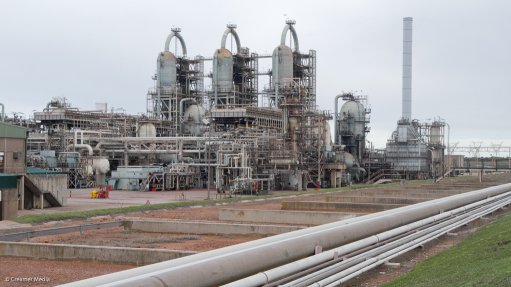
ENSURED COMPLIANCE By using Procon oily water separation technologies, refineries will be compliant with the National Water Act, the National Environmental Management Act and the  ISO 9000, ISO 14001 and ISO 18000 standards
 

ENSURED COMPLIANCE By using Procon oily water separation technologies, refineries will be compliant with the National Water Act, the National Environmental Management Act and the ISO 9000, ISO 14001 and ISO 18000 standards
 
SUCCESSFULLY COMMISSIONED A 25 m3/h Ultraspin system was installed at the pumpstation of the water treatment facility of a large local petrochemicals project
 

SUCCESSFULLY COMMISSIONED A 25 m3/h Ultraspin system was installed at the pumpstation of the water treatment facility of a large local petrochemicals project
 
 
Previous Play Next