Creamer Media’s Engineering News Online
Advanced Search


We have detected that the browser you are using is no longer supported. As a result, some content may not display correctly.
We suggest that you upgrade to the latest version of any of the following browsers:
         
close notification
powered by
GOLD 1389.94 $/ozChange: 4.01
PLATINUM 1478.00 $/ozChange: -8.50
R/$ exchange 9.46Change: -0.05
R/€ exchange 12.18Change: -0.10


MANUFACTURING INCENTIVE
 
Davies sets May launch date for new R5.8bn manufacturing incentive
 
2nd April 2012
TEXT SIZE
Text Smaller Disabled Text Bigger
 

South Africa’s newest R5.8-billion incentive scheme, which has been established to support the embattled domestic manufacturing sector, should become operational during the course of May, Trade and Industry Minister Dr Rob Davies said on Monday.

The rules governing access to the so-called Manufacturing Competitiveness Enhancement Programme (MCEP) would be released soon and the scheme would be open to all manufacturing enterprises not covered by sector-specific industrial financing support mechanisms. In other words, companies in the automotive, clothing and textiles and business process outsourcing industries would not be eligible.

Department of Trade and Industry deputy director-general Nimrod Zalk said the MCEP was also unlikely to support capital-intensive industries, firms in sectors with high levels of market concentration, or those that had been found guilty of anticompetitive behaviour. “We will seek to support initiatives that maximise employment and value-added potential,” Zalk said.

The department’s The Enterprise Organisation would administer the incentive, which was also one of the few new elements included in latest version of the Industrial Policy Action Plan, or Ipap3, also unveiled on April 2.

The larger action plan would also be deployed over the three-year fiscal period from April 1, 2012, through to March 31, 2015, with yearly revisions. It had been closely calibrated to the R845-billion public infrastructure programme and would seek to leverage industrial development opportunities on the back of general public sector procurements and the investments into power, transport and water infrastructure.

The focus of the MCEP was on supporting domestic manufacturing enterprises, many of which were still battling domestic and international headwinds, to upgrade their facilities, processes and products, as well as to initiate targeted skills initiatives.

During the 2009 recession, manufacturing shed 200 000 of the nearly one-million jobs lost over the period and Davies indicated that during the current phase, where many of South Africa’s key trading partners were either facing new recessionary conditions, or protracted periods of low growth, the MCEP was part of South Africa’s “proactive” response plan.

It was also intended to facilitate such upgrading notwithstanding the natural reticence arising from rising power and transport prices and the volatile currency, which a number of manufacturers argued was overvalued.

“There is a risk that we could repeat the situation of 2009, where there is a depressing effect on the South Africa economy arising from global conditions and that manufacturing could be disproportionately affected,” Davies warned.

Manufacturing Circle executive director Coenraad Bezuidenhout said the proposed May launch of the incentive was a welcome development.

The organisation was also thankful that the sector was receiving greater attention from government and that some resources were also being directed towards boosting manufacturing. But to replicate some of the sector-level successes would require closer collaboration between government and business, as well as full buy-in across government departments not only for MCEP, but also for a number of the procurement programmes.

Many of the MCEP’s design elements had been drawn from the Clothing and Textiles Competitiveness Programme (CTCP), which was currently helping to support 208 companies in the sector, employing 48 384 people.

As with the clothing and textile sector ahead of the introduction of the CTCP, many manufacturers were reluctant to invest to elevate their competitiveness over the medium term, preferring to “sweat their assets” until it reach a point where they were forced to close.

“Manufacturers must invest to raise competitiveness,” Davies averred, adding that the MCEP would offer grant funding to support such initiatives.

The grant funding was additional to the R102-billion in loan finance that would be disbursed by the Industrial Development Corporation in the coming five years to support the productive sectors outlined in the New Growth Path, including manufacturing, mining and beneficiation and agriculture and agroprocessing.

The MECP was also over-and-above the R21.7-billion 12(i) tax incentive for large manufacturing investments, and a range of sector and generic incentives on offer, such as the Automotive Production Development Programme and the support available for research and development programmes.

Edited by: Creamer Media Reporter


To subscribe to Engineering News's print magazine email subscriptions@creamermedia.co.za or buy now.

FULL Access to Mining Weekly and Engineering News - Subscribe Now!
Subscribe Now Login


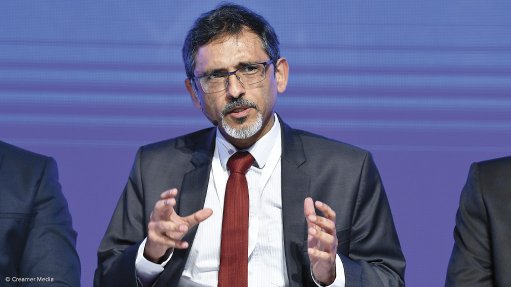
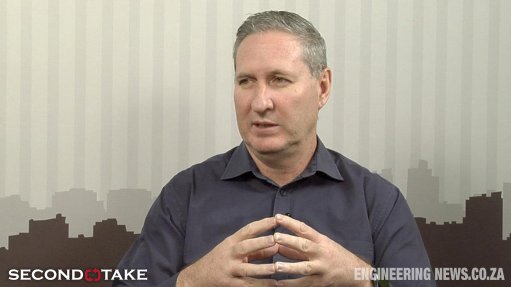
Trade and Industry Minister Dr Rob Davies and Department of Trade and Industry deputy director-general Nimrod Zalk on the Manufacturing Competitiveness Enhancement Programme. Camera Work: Nicholas Boyd. Editing: Darlene Creamer.
This video is licensed under a Creative Commons License
GET SELECTED VIDEO
Embed
Selected Video Download (11.5mb)
 
Department of Trade and Industry deputy director-general Nimrod Zalk, Trade and Industry Minister Dr Rob Davies and IDC CEO Geoffrey Qhena
 
Picture by: Duane Daws
Department of Trade and Industry deputy director-general Nimrod Zalk, Trade and Industry Minister Dr Rob Davies and IDC CEO Geoffrey Qhena