Creamer Media’s Engineering News Online
Advanced Search


We have detected that the browser you are using is no longer supported. As a result, some content may not display correctly.
We suggest that you upgrade to the latest version of any of the following browsers:
         
close notification
powered by
GOLD 1386.60 $/ozChange: -0.70
PLATINUM 1452.50 $/ozChange: -1.00
R/$ exchange 9.58Change: -0.03
R/€ exchange 12.38Change: -0.05
 
ENGINEERING PROFESSION
 
Cronin calls on ECSA to support enlargement of engineering pool
 
6th July 2012
TEXT SIZE
Text Smaller Disabled Text Bigger
 

South Africa’s newly appointed Public Works Deputy Minister, Jeremy Cronin, has appealed to the incoming Engineering Council of South Africa (ECSA) council, appointed this week, to work with government to develop the ‘pipeline’ of engineers by helping to deal with legacy and institutional constraints to the education and registration of engineering professionals.

In a frank address to ECSA members, Cronin described South Africa’s current ratio of one engineer for every 3 166 citizen as representing a real challenge, particularly in the context where infrastructure development had been identified by government as the main “countercyclical” economic growth measure.

By contrast, China has an engineer for every 130 of its more than one-billion people, while the ratio in India and Brazil was one to 157 and one to 227 respectively.

This “huge problem” was attributed partly to the educational shortcomings arising out of apartheid and the prevailing education backlogs, particularly in ensuring that the basic maths and science foundations were in place.

But the transition from graduation to the registration of engineering professionals remained an area of concern for government, which was fuelled, Cronin asserted, by the stop/start nature of workflow, some gatekeeping and, possibly, even by pockets of “unconscious racism” among those mentoring the new crop of graduates.

“There are anecdotal stories of white engineering graduates being rotated through the various requirements for registration, while a young black colleague . . . sits for years [without making similar progress],” Cronin warned.

It was also “not good enough” that only 25% of professionals in the built environment professions were black. “It’s not only not representative, but it also means that we are not tapping into a huge human resource in our country.”

He urged engineering professionals not to “fly false flags” of “talking about standards” that is really a “gatekeeping exercise” in a bid to keep the pool small and the rewards high for the profession. Nevertheless, ECSA had a duty to uphold professional standards, which were absolutely “vital” to ensure quality delivery.

LEGISLATIVE ENVIRONMENT

The Department of Public Works (DPW) felt that it was necessary to “reinvigorate, perhaps in a very different form” the Built Environment Professions Bill, which was strongly opposed by ECSA and a number of the other built environment statutory councils and was eventually withdrawn in late 2008.

“We need to coordinate and different professions in the built environment need to work together, while acknowledging the differences,” Cronin indicated.

The DPW, which met with the Council for the Built Environment earlier in the month, was ready to bring a mediator, in the form of Charles Nupen, to mediate between the council and the various built environment bodies that have hitherto opposed the creation of a super council.

The idea was to “surface” the tensions and find a way to deal with them in the interests of the professions, which were concerned with standards and quality, and government, and which had a role to play in regulating the professions.

“We can run into silly tensions, oppositions and antagonisms and fail together. Or, with our challenges, work together and succeed,” Cronin averred.

He indicated that any programme of legislative reform would be run in parallel with a turnaround strategy that was currently under way to “clean up the mess” within a department that was always in the news for the “wrong reasons”.

Cronin said internal disciplinary action was being pursued along with criminal investigations and prosecutions, with the DPW having lodged eight criminal charges against officials with the South African Police Service.

ECSA president Chris Campbell acknowledged the call for greater cooperation between the built environment professions, and welcomed the DPW’s recognition of the differences between the professions.

But Campbell stressed that there could be no generic mechanism to make them more equal, as such a process carried a number of risks.

ECSA also welcomed the fact that Public Works Minister Thulas Nxesi had appointed its new 50-member council, who were selected to provide a broad representation of all engineering disciplines and categories.

“We are pleased with the Minister’s appointments as this is in line with a decision ECSA took in 2010 that in order to be relevant to all our stakeholders – our role required us to perform beyond our mandate,” CE Oswald Franks said.

Franks added that the new council would work with government to ensure the engineering profession helped to address broader socioeconomic and developmental needs.

Edited by: Creamer Media Reporter


To subscribe to Engineering News's print magazine email subscriptions@creamermedia.co.za or buy now.

FULL Access to Mining Weekly and Engineering News - Subscribe Now!
Subscribe Now Login
 
 
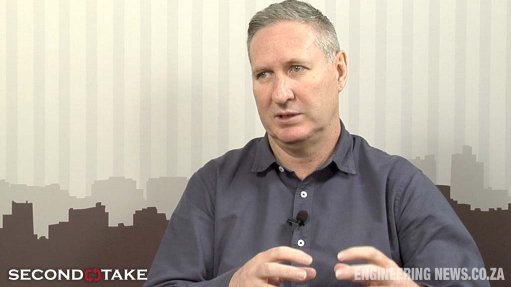
Public Works Deputy Minister Jeremy Cronin
 
Picture by: Duane Daws
Public Works Deputy Minister Jeremy Cronin