Creamer Media’s Engineering News Online
Advanced Search


We have detected that the browser you are using is no longer supported. As a result, some content may not display correctly.
We suggest that you upgrade to the latest version of any of the following browsers:
         
close notification
powered by
GOLD 1360.10 $/ozChange: -5.72
PLATINUM 1455.00 $/ozChange: -6.70
R/$ exchange 9.40Change: -0.09
R/€ exchange 12.07Change: -0.07


Criminalisation of the State
 
18th May 2012
TEXT SIZE
Text Smaller Disabled Text Bigger
 

Last month, not for the first time, I wrote in another publication about what I call the ‘deep State’. In the article, I explained that the deep State comes into being when there is a confluence of political, business, intelligence and criminal interests that are of a mutually reinforcing and beneficial nature.

In this article, however, I want to focus on a narrow but equally worrying aspect of the deep State. I am worried about how internal battles in the African National Congress (ANC) may lead to the criminalisation of the State and how such criminalisation may itself impose deeper levels of decline on the organisational, qualitative, strategic, moral, disciplinary and leadership dimensions of internal ANC dynamics. In fact, my main concern is that what I see as the criminalisation of some of our State agencies is part of a broader problem that both predates and is a product of the reconfiguration of the relationship between State power and party politics since the advent of democracy in 1994.

In addition, the reconfiguration of the relationship between State power and party politics seems to be giving birth to another tendency – the creation of political, security and intelligence networks that are based on the mutual interests of former apartheid Special Branch and intelligence operatives and their former liberation movement counterparts. All this is happening in the context of single-party dominance, a civil society movement that is only now beginning to wake up from two decades of slumber and a citizenry that is beginning to recover from the debilitating effects of being too reliant on the State and the party political space.

In short, single-party dominance and a demobilised citizenry, given a particular arrangement of political variables and configuration of political power, may be the greatest danger facing our democracy. Let me illustrate my point in the most alarmist of ways: those among us who are suspicious about the poli- tical motives behind the decision to review the work of the Constitutional Court and the Supreme Court of Appeals, whose own motives I will not go into for now, must bear in mind that there is no court on this planet that can defend our democracy should the day dawn when society has become so demobilised that a faction of autocrats in the dominant party decides not to review but to scrap our Constitution altogether.

We have two choices – we can either hold on tightly to our sense of South African excep- tionalism or, in the belief that the undemocratic things that have happened elsewhere can happen to us, begin to add to those voices that are expressing genuine concerns about things ignoble that seek to entrench themselves in our political culture.

I am being alarmist for a reason. My intention is to scare the country and members of the ruling party into realising that some of the things that are happening in the ANC and some of our security agencies have the potential to poison our political culture and lead to the materialisation of our worst political fears.

As it is, we are trying to build a new nation out of the ravages of apartheid. Apartheid and 46 years of the single-party dominance of the National Party imposed a State-led culture of political violence and intole- rance on our people. The violence of the eighties and early nineties between supporters of the ANC and of the Inkatha Freedom Party was part of this apartheid logic of violence.

I am highlighting this dynamic out of the fear that, if not in future, some factions in the current ANC battle for Mangaung may be tempted to rely on a thinly disguised ethnic agenda and the expertise of former apartheid operatives in a campaign against real and perceived political enemies inside and outside the ruling party. I am being this alarmist because, if the ANC fails in its attempts at organisational renewal, opposition parties remain weak in relation to performing the task of being agencies of restraint, we continue to rely too much on politicians and political parties and succumb to the exceptionalist impulse, the most backward among us will one day take control of the ANC and the State with dire consequences for us all.

Ordinarily, I should be fortifying my argument with examples and the names of those I believe exemplify that which has caused me to pen this missive. Perhaps, I am being cowardly but the reality is that I am too afraid to risk the coincidence of mentioning names and my computer being stolen, my house burgled and cars stolen under the most suspicious of circumstances and being shot at.

Do you remember the song by Sting, They Dance Alone? It was inspired by the disappearance of activists, intellectuals, journalists, students and lawyers who dared to oppose an authoritarian Latin American regime.

Edited by: Martin Zhuwakinyu


To subscribe to Engineering News's print magazine email subscriptions@creamermedia.co.za or buy now.

FULL Access to Mining Weekly and Engineering News - Subscribe Now!
Subscribe Now Login
 
 
Topics in this article
 
 
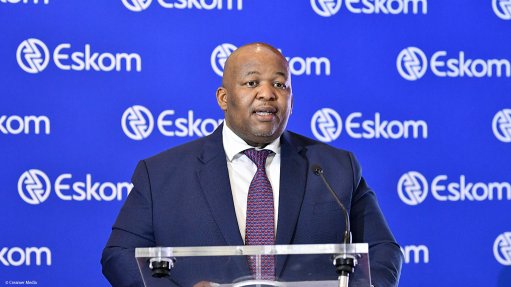
Political analyst Aubrey Matshiqi speaks about the criminalisation of the State. Camera work & Editing: Darlene Creamer. Recorded: 10.05.2012
This video is licensed under a Creative Commons License
GET SELECTED VIDEO
Embed
Selected Video Download (22.59mb)