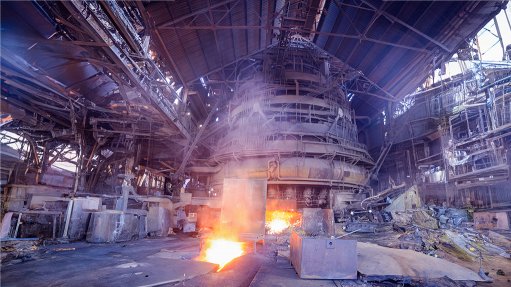
Lawyers for gold miner Harmony, which referred the complaint of excessive pricing against ArcelorMittal South Africa to the Competition Tribunal in 2004, expressed disappointment on Friday with the Competition Appeal Court's decision to uphold the steel producer’s appeal against the tribunal's 2007 finding against the company, which was accompanied by a record fine of R691,8-million.
In his 90-page judgement, Judge Dennis Davis set aside what was the tribunal’s first-ever excessive pricing finding, but did not entirely dispose of the matter.
Instead, it was referred back to the tribunal, to enable it to hear evidence on issues raised in the affidavit by Leon William Price, in an application dated 20 February 20, 2008; as well as to reassess the evidence already heard by the tribunal to determine whether the steel producer had indeed contravened the Competition Act through its pricing policies.
Cliffe Dekker Hofmeyr competition practice director Nick Altini, who acted for Harmony in the matter, said his client was “disappointed” both by the ruling and by the fact that it brought no resolution to what had already been a protracted dispute.
ArcelorMittal South Africa expressed a similar anxiety in its response to the judgement. While it naturally welcomed the court’s decision to set aside the tribunal’s findings, it described as “unfortunate” the fact that the court did “not bring these proceedings to a conclusion”.
It again stressed that the case related to a pricing practice of 2002, which the company no longer pursued, adding that, since January 2006, the import parity pricing model had been replaced by a system based on a basket of domestic prices from a range of international markets.
“Due to the economic downturn and the decrease of steel prices worldwide, it should be noted that average steel prices have come down significantly since September last year,” the company said in a statement. It made no reference, however, to its recent decision to raise prices again, by between 4% and 6%, as from July 1, 2009.
WHAT IS EXCESSIVE PRICING?
It appears that the Competition Appeal Court found itself at odds with the tribunal’s definition of “excessive pricing” and would like it to reassess whether the steel producer was indeed guilty of the offence under another more tightly defined definition.
In its ruling, the tribunal used “structural” and “conduct” tests to determine whether or not excessive prices had been charged by ArcelorMittal South Africa.
The first test hinged on the company being a so-called “super-dominant” firm, occupying a market that was “uncontested and incontestable”. The second involved an assessment of whether this super dominant position was used in such a way as to enable the steel company to charge excessive prices. The tribunal found against ArcelorMittal South Africa on both counts.
But the Competition Appeal Count felt that the Act also demanded that the tribunal determine the actual price of the good or service said to be priced excessively; the “economic value” of that good in monetary terms; whether the actual price was higher, and that difference unreasonable; and if the charging of the excessive price was indeed to the detriment of the consumers.
Therefore, the court ruled that the tribunal had “misconstrued its powers” and had come to its decision in a way that could not be “justified by the words on the Act”.
It agreed that there could be a “prima facie presumption” of a contravention by ArcelorMittal South Africa. However, the tribunal would have to reanalyse the evidence to determine whether the “specific” prices involved, namely the price of flat steel, was indeed excessive.
Most of this reassessment would be based on material and evidence already canvassed at hearings, which took place in 2006, but the court also wanted some new evidence to be heard. It was not immediately apparent when the tribunal would entertain this new hearing.
Altini said he had not yet received an indication from Harmony whether it wanted to continue, saying only that he was still awaiting instruction from his client.
The case was taken up when outspoken mining-industry personality Bernard Swanepoel was CEO at the gold miner, and it was far from certain whether Graham Briggs would be prepared to spend yet more time and money to continue with the protracted fight.
Indeed, Harmony first laid its complaint with the Competition Commission in 2002, and decided to make a direct referral to the tribunal in 2004, after the commission decided against a referral.
Extensive hearings were held in 2006 and the tribunal made what was considered a landmark ruling in 2007, which was followed by ArecelorMittal South Africa's appeal to the Competition Appeal Court in 2008.
To subscribe to Engineering News's print magazine email subscriptions@creamermedia.co.za or buy now.