Creamer Media’s Engineering News Online
Advanced Search


We have detected that the browser you are using is no longer supported. As a result, some content may not display correctly.
We suggest that you upgrade to the latest version of any of the following browsers:
         
close notification
powered by
GOLD 1343.78 $/ozChange: -30.74
PLATINUM 1412.00 $/ozChange: -14.50
R/$ exchange 10.21Change: -0.20
R/€ exchange 13.56Change: -0.16


Corruption, lack of business integrity continue to challenge consulting engineers
 
29th July 2011
TEXT SIZE
Text Smaller Disabled Text Bigger
 

Corruption and a lack of business integrity in South Africa remain a significant concern for consulting engineers, says consulting engineering firm SSI CEO Naren Bhojaram.

This view is compounded by global civil soci- ety organisation Transparency International’s ‘Corruption Perception Index’ report, which has found that, between 2009 and 2010, the business integrity of many African countries has deteriorated and corruption has increased.

“There is a significant amount of power within political structures and, despite the fact that the functions of municipal councils and local government are separate, politi- cal power is being manipulated to the extent that jobs are offered to unqualified friends, salaries are inflated and the local tender committees at government structures are pressured to award tenders to companies willing to pay a bribe,” he says.

SSI, when inviting tenders on behalf of a client, often provides a report examining the tender objectively, analysing the price, any manipulation of rates, and the capability and capacity of the contractor that will undertake the work, the firm states.

The report comprises the results of the company’s analysis, the methods used, SSI’s suggestions regarding which company to award the tender to and further options for the client, after taking into consideration all factors.

However, reports, whether submitted by SSI or other consultants, are often disregarded and the tender is awarded, amid bribery between the contractors and the committee, to unquali- fied and inexperienced contractors in under-the-table deals, says Bhojaram.

The best way to mitigate integrity or corruption issues in certain councils or government structures is to avoid participation in their processes.

SSI and Knight Piésold, a firm of consulting engineers and scientists, say they are in a position to decline work they believe might involve corruption; however, some smaller companies have not yet developed a stable customer base and may need to participate to survive.

Bhojaram believes another solution would be to name and shame individuals and companies knowingly involved in corrupt deals and to openly examine the results of any investigations undertaken.

This will assist the industry in avoiding deals with these companies and learning from the corruption issues many are faced with daily.

Political Will
Meanwhile, Knight Piésold MD Leon Furstenburg says political meddling in decision-making overrides proper engineering judgment in projects.

For example, the past few years has seen an initiative to place retired engineers at municipalities to rebuild the lost skills capacity. However, there is continual conflict between the decision-makers and the engineer directing what is required to move forward.

Further examples include the power crisis that South Africa inevitably faced in 2008, as well as acid mine drainage, both of which were studied and noted extensively for many years by engineers and specialists before the situation reached crisis point.

“However, the decision-makers, who were not necessarily the correct persons to mitigate the potential challenge, did not take action on the basis of disbelief, or were not sufficiently experienced or qualified to understand the engi- neers’ suggested prevention concepts,” he says.

Furstenburg feels the country’s preoccupation with renewable-energy sources will result in similar challenges. As South Africa’s power generation is predominantly coal or nuclear based, the country does not have the hydro adsorption or pumped-storage capacity or infrastructure required to regulate input from these forms of renewable- energy sources, for example.

Education is Key
Corruption and lack of political will to combat it are endemic and education can go a long way towards mitigating these issues, says Furstenburg.

Corruption and education are linked, and better levels of education and understanding of engineering would go a long way towards reducing the attractiveness of corruption.

However, the quality of education in South Africa seems to have deteriorated, he says.

Some universities have reduced entrance requirements and dropped the course requirements for engineering qualifications, as these have proven difficult for some students.

“It is not progressive to change what one believes is too difficult or time consuming,” says Furstenburg. “This results in university degrees that lack quality and have no international recognition. Education should remain at a level where it is helpful and relevant.”

Bhojaram adds that schools and universities are not producing entrepreneurial thinkers. Depth of thinking is lacking in graduates, as students are taught the theory of the subject matter, but not how to successfully apply it in a practical scenario.

“This is due to the fact that the schools do not have adequately qualified teachers. The best teachers are not being sourced, as their salaries are too low. Deterioration in the quality of university graduates has been seen over the past 10 to 15 years,” he says.

To mitigate this challenge, SSI employees coach potential matriculants every Saturday in applying the theory they have been taught in practical applications, Bhojaram concludes.

Edited by: Chanel de Bruyn


To subscribe to Engineering News's print magazine email subscriptions@creamermedia.co.za or buy now.

FULL Access to Mining Weekly and Engineering News - Subscribe Now!
Subscribe Now Login


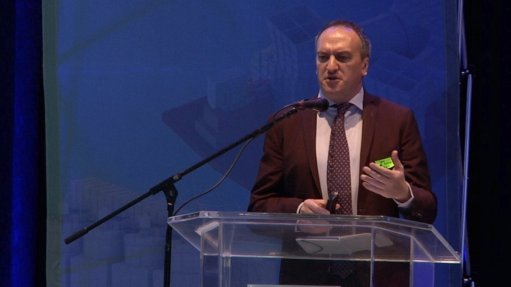
Knight Piesold MD Leon Furstenburg discusses education and corruption challenges in the consulting engineering sector. Camerawork: Nicholas Boyd. Editing: Shane Williams.
This video is licensed under a Creative Commons License
GET SELECTED VIDEO
Embed
Selected Video Download (3.15mb)