Africa must ensure that it improves its attractiveness to foreign direct invest- ment (FDI), including from other large emerging countries, if it is to sustain its growth and development, says Ernst & Young Africa CEO Ajen Sita.
However, to become more attractive, the continent must develop its human resources and infrastructure, he said at the media brief-ing of Ernst & Young and Oxford University School of Economics’ ‘Rapid Growth Market Forecast’ for January 2012.
“Governments compete for success and capital goes where the market is safe, oppor- tunities exist, skills exist and where infrastruc- ture exists. Just being part of a [rapid growth market] group does not automatically attract capital, so African countries need to grow their competitiveness,” he said, highlighting that Africa received only 4.5% of global FDI.
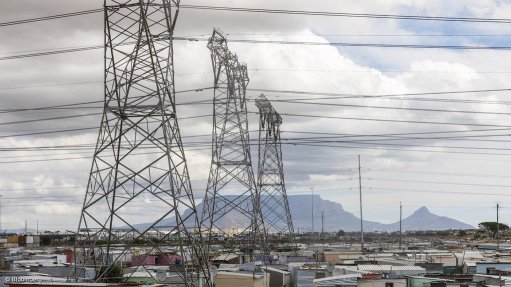
Infrastructure is important because trade flows where there is infrastructure. The main anchor weighing down some of the largest economies in Africa is ageing infrastructure in dire need of renewal, he explained.
Investing in infrastructure also helps to build a country’s middle class, which makes the country attractive to consumer companies, such as Unilever and Coca-Cola, both of which are already present in Africa, having identified the potential of the African middle class, emphasised Sita.
However, how could Africa compete against other emerging and rapid-growth markets? Many of these have large populations with a good education and high skills levels, enabling them to develop and sustain good manufac-turing capabilities at a low cost.
“Africa has natural resources, but how can we develop this as a strategic competitive advantage? We can use it to fuel rapid growth and mature markets and, thus, boost growth in Africa.
“However, if we develop infrastructure to provide increased connectivity and develop regional free trade zones to enable Africa to be a market for its own products and services, then this will benefit the development of a middle class and encourage the development of skilled labour,” averred Sita.
The continent’s population, approaching one-billion people, provided a market for products and services, but Africa should think beyond that as forming a supply of talent, which was why investment into education and skills development was critical, he explained.
“Education and skills development is something we know has been done well in some large countries, such as India, where it forms a key differentiator for investors looking for a large pool of skilled people. We believe more investment in human capital and development should be done across the continent because talent functions as a strategic resource, which will be a significant differentiator in the world economy,” said Sita.
Further, the need for infrastructure provided investment opportunities for some of the world’s largest companies to enter the conti-nent and participate in its growth.
Africa had demonstrated over a decade of strong fiscal discipline and good macro-economic policy and management. The continent had relative political stability in most regions and a number of years of successful and growing levels of democracy, said Sita.
Government debt is manageable and countries maintained some manoeuvrability in terms of infrastructure expenditure and reallocation of funds to different priorities within existing budgets.
India and China have each received more FDI than the whole of Africa, despite improve-ments and a decade of solid gross domestic product growth, he noted.
“We should be attracting more FDI. We believe it is because we are not doing enough to promote Africa and compete for capital – which means we must reposition Africa in the minds of investors,” he stated.
However, the challenge was what to do with improved growth and new wealth, he reiterated, highlighting that reinvesting in a domestic economy’s industries could help to sustain long-term growth rates.
“Resource-based economies have benefited from high global resource prices, but the question of sustainability now arises, especially in light of the debt crisis in Europe.”
Larger economies had large consumer markets that could provide a buffer against crises, such as the current eurozone crisis, something South Africa lacks. High consumer debt prevented South Africa’s market from thriving, and the management of the debt levels of consumers could promote a strong domestic economy, Sita said.
“We also focused on sustainability during our research into rapid growth markets and the sustainability of high growth rates. Many countries in Africa have had high single-digit growth for a decade or longer, which reflects a much deeper growth story,” concluded Ernst & Young Africa Business Centre director Michael Lalor.
To subscribe to Engineering News's print magazine email subscriptions@creamermedia.co.za or buy now.