By: Jade Davenport
4th November 2005
More significantly, physical security systems and IT-based security systems are rapidly converging to the point that corporate leaders are taking a keener interest in security solutions, as a viable value-adding proposition rather than a necessary operational cost.
It is in this context that Siemens Southern Africa’s CEO Pete da Silva recently took the decision to posi-tion the company’s security division at the forefront of its sustainable growth strategy, pre-empting the 6% economic growth that is anticipated within the next few years. The security sector is a key prioritywithin the Siemens group – to the extent that it is contained in the Siemens Building Technology (SBT) division of the Siemens group.
The SBT group, headquartered in Switzerland, is the international security division of the Germany-based electrical-engineering power-house, employing more than 40 000 people worldwide and contributing €700-million to the €75-billion yearly turnover of the Siemens group. With direct interest and involvement of Da Silva, the new management structure of SBT has been placed under the leadership of divisional MD Alvin Flaum, who oversees the effective administration of the new SBT departments, including business development, sales, andsolution offerings.
The local division of the SBT group is responsible for the security systems and solutions business within Siemens, using its global core competencies to create new valuedimensions for its customers by providing life-cycle services based on innovative electronic securitysolutions to protect people, property, business processes and assets.
The security solutions that areoffered by the SBT division are based on the combination of hardware and software systems that result from Siemens’ extraordinary research and developmentcapabilities.
The security systems includeaccess control and security monitoring, biometric access and door control, CCTV surveillance systems and digitalvideo-recording products, fire detection and prevention systems, all of which can be integrated into a single operational and monitoring platform, the Integrated Security Management’s Information System (ISMIS).
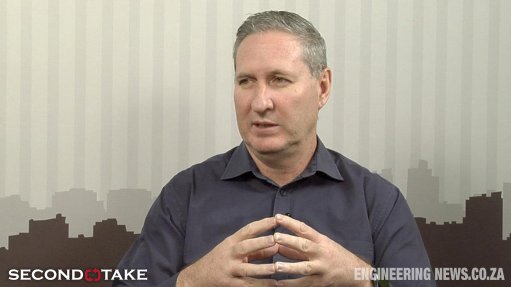
“While each of these system,individually offers security, the real strength lies in their ability to function as anintegrated total-security and building-management solution, with complete and comprehensive centralised control, administration, monitoring and reporting abilities,” Flaum tells Engineering News.
“This total-security concept of the modular approach allows for full integration at any time and at any stage of the implementation process.
“Once integrated, these tech-nologies work together seamlessly as a management tool, which is engineered, installed and commissioned by a team of experts within the SBT division.
Although it can be argued that most security systems that are available in the South African marketare becoming increasingly sophisticated, Flaum argues that it is Siemens’ unparalleled experience in the field of electrical engineering that provides the SBT group with a competitive advantage in the local market. “Siemens is one of the few engineering-based companies that competes in the South African security industry, which has provided the company with a superior understanding of the requirement of the security-solutions industry.
“Further, our engineering found-ation allows SBT to map our solutions with the needs of our customers and those needs that are derived from their business processes.
“We would like to see the company operate in market segments whereby we build and maintainsecurity solutions for engineered and value-solutions buyers.” A significant contributor to this growth strategy includes the company’s potential involvement in the 2010 soccer World Cup, in the form of stadium-security contracts.
“Siemens has vast experience and international references for security of stadiums, which is evidenced in the contracts we completed for the 2004 Athens Olympics and 2004 European Cup in Portugal,” explains Flaum.
“The company has also been awarded the security-solutions contracts for the 2006 soccer World Cup in Germany, the 2008 Beijing Olympics and the 2006 Asian Games in Qatar.” In addition to the prospectiveinvolvement in sports infrastructure security, the SBT group is also involved in various projects in the Southern African mining, telecommunication, power generation, and financial industries. Flaum concludes by emphasising that the priority of the SBT group is to implement security systems that interface with human-capitalmanagement systems to bettermanage organisations in order to facilitate an economic environment that is attractive for foreign direct investment.
Edited by: Jade Davenport
To subscribe to Engineering News's print magazine email subscriptions@creamermedia.co.za or buy now.