Creamer Media’s Engineering News Online
Advanced Search


We have detected that the browser you are using is no longer supported. As a result, some content may not display correctly.
We suggest that you upgrade to the latest version of any of the following browsers:
         
close notification
powered by
GOLD 1360.10 $/ozChange: -5.72
PLATINUM 1455.00 $/ozChange: -6.70
R/$ exchange 9.40Change: -0.09
R/€ exchange 12.07Change: -0.07


PROPERTY
 
Commercial and industrial properties could be headed for a boom
 
30th March 2011
TEXT SIZE
Text Smaller Disabled Text Bigger
 

South Africa’s commercial and industrial property sector might be set for a price boom by 2014/15, if the country was able to maintain sustainable growth over this period, industry experts said on Wednesday.

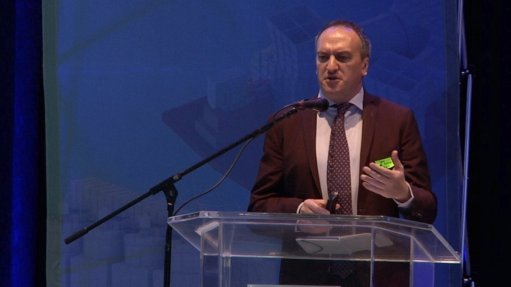
Speaking at the launch of the Rode’s property report, Erwin Rode said office and commercial renting prices had reached the bottom of a trough and were expected to climb in coming years if the country was able to maintain a financial recovery.

“Office and industrial spaces are currently dirt cheap and we anticipate that properties could significantly rise in value for many years to come.”

In 2010, office rentals showed a 6% year-on-year recovery, while the industrial property market had also started to smooth out, mostly on the back of a recovery in the country’s manufacturing sector.

However, Rode believed that the government’s New Growth Path, which has a strong emphasis on boosting the manufacturing sector, would not have a significant impact on the industrial property sector in the shorter term, or up to 2015.

FNB property economist and strategist John Loos said rising bond yields and a lack of progress in reducing commercial and industrial vacancies in 2010 suggested a rise in capital rates in 2011, which could see slow movement in these sectors during the year.

However, he agreed with Rode that improving fundamentals such as a slowdown in building activity and a decline in vacancy rates, could support strong growth by the next cycle of interest rate cuts, which he predicted could come round by 2014.

In comparison, the Rode’s report showed that residential properties had been highly overpriced for years and only showed a mild dip in historically high prices during the recession.

Rode pointed out that this indicated that housing prices were set to decline in real terms.

Loos added that the country’s consumers were saddled with extremely high debt burdens, which would become even heavier as inflationary concerns grow and interest rate hikes are set to come into play.

Current interest rates at 9% in South Africa were last seen in the 1970s. This had also assisted in the “mini recovery”, as Loos referred to it, experienced in the property market during 2010, compared with the previous year.

But, Loos warned that such a recovery could be short-lived as rising inflation pressures increase the risk of rates hikes by the South African Reserve Bank.

“We have seen global inflation of 33,7% in food prices and around 32% in oil prices, and Governor Gill Marcus has in recent months warned that this would also have an impact on South Africa’s economy. But, I do believe that the central bank will be mindful before hiking rates, and we expect a hike of about three percentage points by late 2011.

“All-in-all, 2011 looks set to be a year of slowing economic growth, on the back of rising commodity prices and increased central bank tightening, globally,” he added.
 

Edited by: Mariaan Webb


To subscribe to Engineering News's print magazine email subscriptions@creamermedia.co.za or buy now.

FULL Access to Mining Weekly and Engineering News - Subscribe Now!
Subscribe Now Login
 
 
Topics in this article
 
 
Discussion around South Africa's property market by industry experts Erwin Rode and John Loos. Editing: Darlene Creamer, Camera work: Nicholas Boyd.
This video is licensed under a Creative Commons License
GET SELECTED VIDEO
Embed
Selected Video Download (14.86mb)
 
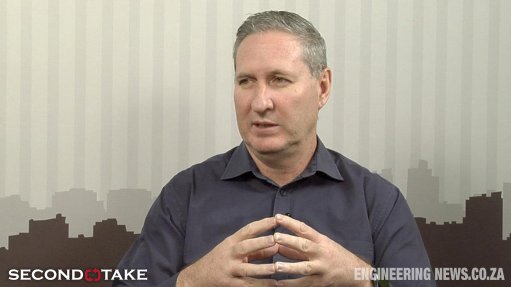
FNB property economist John Loos
 
Picture by: Creamer Media
FNB property economist John Loos