Creamer Media’s Engineering News Online
Advanced Search


We have detected that the browser you are using is no longer supported. As a result, some content may not display correctly.
We suggest that you upgrade to the latest version of any of the following browsers:
         
close notification
powered by
GOLD 1567.40 $/ozChange: -24.41
PLATINUM 1445.00 $/ozChange: -14.50
R/$ exchange 8.33Change: 0.00
R/€ exchange 10.57Change: 0.07
 
STEEL PRODUCTION
Coal shortfall may affect Mittal’s SA steel output if floods delay future Queensland shipments
 
12th January 2011
TEXT SIZE
Text Smaller Disabled Text Bigger
 

South Africa’s largest steel producer ArcelorMittal South Africa (Mittal) – which is currently ramping up production following the summer holiday slowdown, as well as following unplanned operational setbacks at Vanderbijlpark and Newcastle in December – is concerned that the Queensland floods could affect its coking coal supplies and, in turn, its first-half output, at a time when the pace of the domestic market recovery is outstripping expectations.

Cold hearth conditions in blast furnace D at Vanderbijlpark during early December resulted in a five-week unplanned stoppage, with production having been made up by the early return to service of blast furnace C, which had been switched off for seasonal factors, as well as by the electric arc furnaces. Start-up problems were also experienced at the Newcastle mill, following a planned 60-hour stoppage, also in December.

These operating problems have left the company with lower-than-usual in-house steel inventories, which are in the process of being rebuilt to meet rising demand.

In fact, chief marketing officer Sunil Kumar tells Engineering News that the company is anticipating that first-quarter sales may be as much as 10% better than its initial forecast of 850 000 t. The group is, therefore, seeking to materially ramp up production across its sites.

Capacity utilisation at Vanderbijlpark has already risen to 95%, with both blast furnaces C and D having been returned to normal operating levels – blast furnace D resumed operations on December 22.

COO Johan Fourie reports that efforts are also being made to ensure that Newcastle returns to full output levels, following the initial false start.

He says that capacity utilisation during the first quarter is expected to be 95% at Vanderbijlpark and 80% at Newcastle, owing primarily to the recent furnace problems, while Saldanha should operate at 95% and Vereeniging at 85% – a material improvement on the average utilisation rates of around 72% across the group in 2010.

PRICE INCREASE

Mittal also confirmed its first price increase since August 1, 2010, with Kumar indicating that the price of both flat and long products would increase by an average of 5%, or between R300/t and R350/t, from February 1, 2011. The price of some products, such as rebar and wire rod, will rise by about 7%.

He says that the increase comes amid rising prices elsewhere in the world, led by a strong recovery in US steel prices since late November. “At this stage, we are looking at a quarter-on-quarter price increase of close to $200/t in the US market, which is around a 20% increase,” Kumar revealed, adding that similar trends are filtering through to Europe and Asia.

“We are also seeing raw material prices shooting up, particularly scrap and iron-ore, as well as coking coal, because of the floods in Australia. There are also reports of likely shortages of coking coal, which could push steel prices up further,” he adds.

Fourie tells Engineering News that, while it has received information that the ship carrying coking coal destined for South Africa had been able to leave the affected Queensland harbour fully loaded by January 3, it is unclear how the floods could affect future shipments.

The JSE-listed steel group imports about 60%, or about 1,9-million tons, of its yearly coking-coal requirement and has also, in recent times, been warning of sharp price increases.

Reuters reports that Queensland’s Bowen basin coal district, where steelmaking coal is produced, is beginning to emerge from the deluge, but that the Commonwealth Bank of Australia has calculated that the floods could remove nearly 14-million tons of coking coal, or 5%, from world markets.

The bank estimates that the supply shortfall could drive contract coking coal prices 30% higher to $293/t in the second quarter from around $225/t in the first. Even prior to the floods, coking coal prices have been on a strong postrecession recovery, with spot prices rising 64% in the first half of 2010 to $220/t.

“We are exposed to the threat of interruptions by the floods in Australia,” Fourie says, adding that it will be monitoring developments surrounding its next shipment, which is scheduled for mid-February.

“Right now, we have no raw material constraint, but there is a possibility of a future shortage,” Fourie explains, stressing that the “pressure” is on its mills to improve output levels during the first quarter to rebuild inventories and alignment output with the stronger market demand.
 

Edited by: Creamer Media Reporter

To subscribe to Engineering News's print magazine email subscriptions@creamermedia.co.za or buy now.

FULL Access to Mining Weekly and Engineering News - Subscribe Now!
Subscribe Now Login


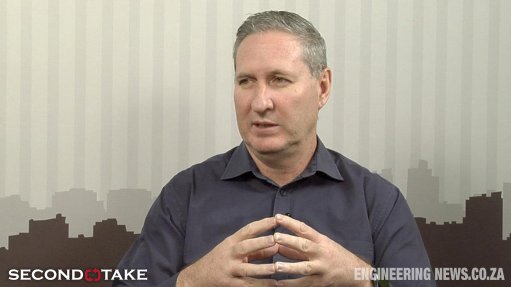
ArcelorMittal SA COO Johan Fourie
 
Picture by: Duane Daws
ArcelorMittal SA COO Johan Fourie