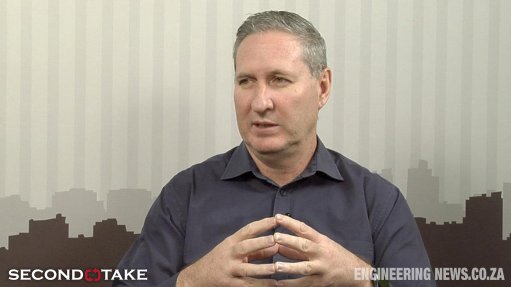
Achieving economic growth and tackling climate change were not divergent issues, and a number of countries were seeing them as an opportunity to re-orientate some of their industries, by getting “out of the old failing industries and into new growth areas of green technology”, said Council for Scientific and Industrial Research (CSIR) systems ecologist Dr Bob Scholes.
Climate change was topping almost every agenda across the world, as developed and developing nations sought to reach a fair global climate change agreement at the Copenhagen climate change conference in December this year. A number of technological solutions were being developed as a way of mitigating greenhouse gas (GHG) emissions, which were responsible for global warming.
Scholes said that the big drivers of the global economy in the first half of the century would be energy efficiency, and low energy intensity products.
“Our [South African] economy is currently not very well positioned for that. Historically we have very high emissions per unit of GDP [gross domestic product], we need to turn that around, and the only way to turn that around is to set challenging targets,” he added.
Scholes commended the Department of Environmental Affairs on the country’s long-term mitigation scenario (LTMS), which set out the South African ambitions on GHG emission reductions in the future. It was also considered positive that the Cabinet did not debate the issue and accepted the LTMS.
Ambitions in the LTMS stated that South African emissions could continue to increase, from the current level of about 440-million tons a year of carbon-dioxide equivalent, until 2020, which was when they would peak. After this, emissions would plateau for about a decade, and after that they would decline, reaching 30% below 2000 emission levels, by about 2050.
These ambitions “could set us ahead of the game in a new global economy”, said Scholes.
SOUTH AFRICAN ADVANTAGES
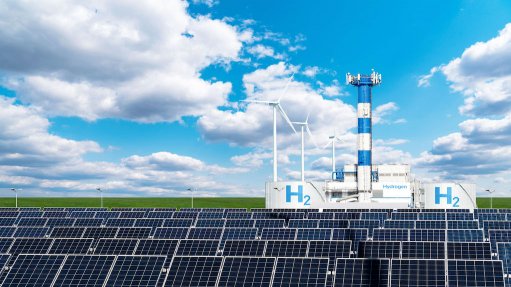
“To me, the big big opportunity is solar,” emphasised Scholes.
He noted that there were things that could be done for internal mitigation purposes, which may not give South Africa a big market position, but were economically feasible, such as a solar water heater (SWH) on every roof in the country. “We know that it is economically beneficial and it helps us, but it doesn’t necessarily mean we can become the world leaders in SWH – that niche is already taken,” he said.
“I think the only solution for a country like South Africa, is to pick a technology that we have got a comparative advantage in, and stick with it,” Scholes argued.
He said that South Africa tended to work on a number of technology options, but never got them to critical mass.
“I would choose solar, because we have a comparative advantage. We also have a comparative advantage in coal – at the moment that is a comparative disadvantage, but if we can turn that into an advantage, it would be good.”
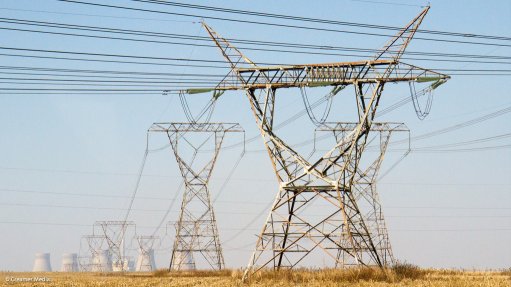
He felt that carbon capture and storage, underground coal gasification, and other advanced coal technologies should be a part of South African technology research because the country was dependant on coal for 90% of its electricity generation, as well as a portion of its liquid fuel, from Sasol.
“There are a small number of niche technologies that we could choose, but we need to pick one, it doesn’t matter which one, and stay with it,” Scholes reiterated.
He noted that the Department of Science and Technology (DST) was “making the right noises, and moving in the right direction. In principle the mechanisms for identifying the right technology, and funding them are headed in the right direction.”
Eskom has ambitions to include concentrating solar power (CSP) into the utility’s energy mix, and was considering a CSP plant in Upington, but stated that funding, at this stage, was an issue. Moving projects from the research and development phase, and into technical development required funding, which was difficult to access, although the utility was in discussion with various development banking institutions, as well as the DST.
7th August 2009
Edited by: Mariaan Webb
Topics in this article
| City | Company | Country | Industry Term |
| Person | Technology | ||
This article contains no Comments
All comments must be approved by our editors, click here to read the editorial guidelines for comments. Please allow some time
for our editors to approve your comment after posting.