Members of a coalition of civil society bodies, community-based organisations, labour unions and social movements that engage on energy issues, known as the South African Energy Caucus, have called for open discussions and engagement with government about South Africa’s energy future and security.
This was revealed during a workshop hosted by the Institute for Security Studies’ (ISS’) Corruption and Governance programme, in Cape Town, this week.
Several of the presentations delivered during the two-day workshop highlighted the fragmentation and confusion around energy planning in South Africa, the ISS reported, adding that participants raised concern about the exclusion of citizens in decision-making that will determine the country’s economic pathway for the next two to three decades.
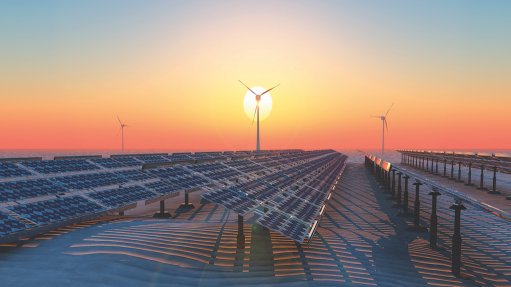
The participants noted that renewable energy technology was proven to be cost-competitive against coal and to be cheaper than nuclear, however, power utility Eskom’s new build projects focused almost entirely on coal and nuclear, with marginal attention to wind and solar.
“This is despite the very damaging impacts of burning coal on air quality and climate, the impact of coal mining on water security, the astronomical cost of nuclear technology, and the complete lack of capacity or technology to deal with nuclear waste,” the ISS said.
The development of nuclear energy in South Africa, whether through the Department of Public Enterprises or Eskom, will mean that taxpayers will fund the construction, maintenance and decommissioning of nuclear plants, which are the most expensive forms of energy generation known, the group said.
“Citizens are excluded from the decision-making process, despite being responsible for the high costs. There are also enormous concerns around the potential for corruption given that the potential deals run into trillions of rands, and the process is closed with decisions being made without consultation from civil society,” it stated.
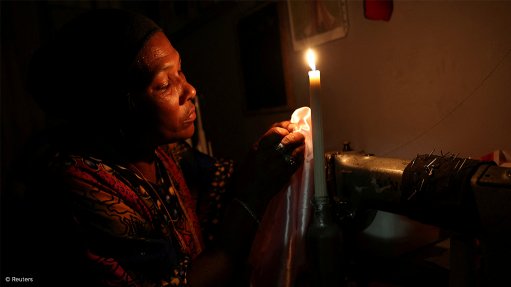
Further, it highlighted that over ten-million South Africans are still without access to electricity, while at least 25% of electricity is wasted because of inefficiency.
“If strong energy efficiency measures were implemented, an additional 20 000 MW of capacity would not have to be built, resulting in a cost saving of R600-billion to the economy. The total cost of Eskom’s New Build (mainly coal and nuclear) is R1,3-trillion – without energy efficiency,” the caucus highlighted.
While a significant part of the country’s electricity needs could be met by renewable energy technology, this has been vastly underfunded and under-researched by Eskom, the members added.
The group argued that many of these issues have arisen because of the fragmentation and lack of clarity around the role of government institutions in ensuring energy supply for the country.
These factors led to a suggestion from the group that there should be an open and challenging review of institutional planning and arrangements with regards to energy, the governance of Eskom, its commercialised status, and the development of the country’s energy future.
“The group considers it vital that civil society is directly involved in determining South Africa’s energy future, with engagement at all stages of development of the strategy and not only as part of an end process through public consultation,” the caucus said.
31st July 2009
Edited by: Mariaan Webb
Topics in this article
| City | Company | Country | Industry Term |
| Technology | |||
Readers Comments
I am in full agreement with the cut and thrust of this article. There are three major policy threads that need to be harmonized, and this would be best done in a structured public forum. These three policy threads are water, energy and food security. Why is this necessary? Simply because our energy constraints are defined by water, and in particular by the sulphur cycle that produces either acid mine draianage (AMD) or acid rain. Significantly acid rain, when it falls on certain soil types, causes aluminum toxicity in maize. One of the consequences of this toxicity is the failure of pollen tubes to develop properly, which in turn causes a reduced pollination and hence a reduced crop yield. The farmer is forced to add increased levels of limestone, which increase input costs and thus viability. We need to unpack these three independent policy threads and understand where they are connected and where they need to be better harmonized. Another key element not known in the public arena, is the geographic distribution of coal versus high yield agricultural land. SA hase very little high yield agricultural land, and where it does exist it is closely associated with coalfields. This means that by exploiting those coal fields without understanding the food security linkages we are inadvertently increasing our vulnerability to food production because of our single-minded focus on coal as the foundation of our national economy. This is a complex debate and it needs to be placed in an appropriately structured forum in my professional opinion. We also need to mandate national research instututions to do the GIS type of work needed to inform this policy debate in a way that ordinary people can understand.
Dr Anthony Turton on 01 Aug 09


.jpg)