Creamer Media’s Engineering News Online
Advanced Search


We have detected that the browser you are using is no longer supported. As a result, some content may not display correctly.
We suggest that you upgrade to the latest version of any of the following browsers:
         
close notification
powered by
GOLD 1360.10 $/ozChange: -5.72
PLATINUM 1455.00 $/ozChange: -6.70
R/$ exchange 9.40Change: -0.09
R/€ exchange 12.07Change: -0.07
 
TELECOMMUNICATIONS
 
Cell C boss sees merit in consolidation, calls for wholesale LTE network
 
18th October 2012
TEXT SIZE
Text Smaller Disabled Text Bigger
 

While a merger between the two smaller telecommunications players Cell C and Telkom's 8ta was not tabled, Cell C CEO Alan Knott-Craig said that consolidating with another, preferably local, company made sense.

The consolidation of two smaller telecommunications players into a stronger and bigger third operator would provide enough scale to compete better with MTN and Vodacom, while pushing down prices for consumers.

He noted that when an operator reduced prices, citing Cell C’s dramatic tariff reduction to a standard 99c a minute locally and to 50 other countries regardless of the network or time of day, margins become thinner.

“You need scale to drop prices and compete effectively. You can get scale by growing the business over the next three or four years, or you can try and achieve it quicker, and there is only one way [to do that] – consolidation,” he explained.

Responding to questions surrounding the 8ta-Cell C merger speculation, Knott-Craig told Engineering News Online that a potential merger with Telkom’s mobile arm would have “huge” benefits and balance the two parties’ shortfalls.

He commented that 8ta was a good company, with good assets, while Cell C, with its own expansive network, had gained some traction with the group hitting the ten-million subscriber mark this week.

Further, the government was examining options for Telkom after Cabinet rejected a potential strategic deal wherein South Korean firm KT Corp offered R2.6-billion for a 20% stake in the South African telecommunications group in June.

“The KT Corp deal was never going to be a good deal and they were dead right to dump that one,” he said, adding that no advantages would have been gained from the deal.

Knott-Craig was not concerned about government being a barrier to any new deal, particularly with a local company, saying that the State did not actually interfere as much as people believed.

However, he reaffirmed that any decision on a potential Cell C merger – locally or internationally – would need to be approved by its shareholders.

Dubai-based Oger Telecom holds a 60% direct shareholding in Cell C, as well as 15% indirect shareholding through its wholly owned subsidiary Lanun Securities. Black economic-empowerment partner CellSaf owns the remaining 25%.

No talks have been initiated, but if faced with a potential deal, Knott-Craig would prefer to partner with a local company.

Meanwhile, Knott-Craig stressed that the roll-out of long-term evolution (LTE) needed to be a national, collaborative effort if the industry was to deliver a fast, efficient and affordable LTE network to its consumers.

All the operators were working on their own roll-out of an LTE network, which he said was a good marketing ploy; but even though Cell C was in the better position, with the least number of customers and same amount of spectrum, it was still not the correct way of rolling out technology and lowering the costs.

“The operators are talking about activating hundred’s of sites out of a network of thousands of base stations, and they are built in high data-use areas, where many will jump at LTE, further reducing the [broadband] speed and possibly turning [customers] off the technology,” he explained.

The insufficient, slow roll-out of fibre connections to LTE-capable base stations, as well as limited spectrum and LTE devices and high costs – both to the consumer and operator, would hamper the performance and development of the latest broadband technology.

He believed that the industry, in a consortium, should develop one national LTE network, instead of four individual networks, and introduce the competition, in excess of 200 possible LTE service providers, for instance, on a regulated wholesale network.

This would result in a more personalised service and better quality for consumers, a properly built network and the efficient use of the right spectrum, which would not need to be divided and auctioned, and would lower the capital investment for operators.

Further, progressing to LTE Advanced on one network would be far easier and cheaper than on four different networks, Knott-Craig pointed out.

LTE Advanced specifications were close to completion and testable systems could be ready as early as 2013, becoming a reality in 2014.

He believed that the one national, wholesale network, assuming maximum footprint, which included rural coverage and a widely spread out network, would cost about R10-billion and take less than a year to build.

Edited by: Mariaan Webb


To subscribe to Engineering News's print magazine email subscriptions@creamermedia.co.za or buy now.

FULL Access to Mining Weekly and Engineering News - Subscribe Now!
Subscribe Now Login
 
 
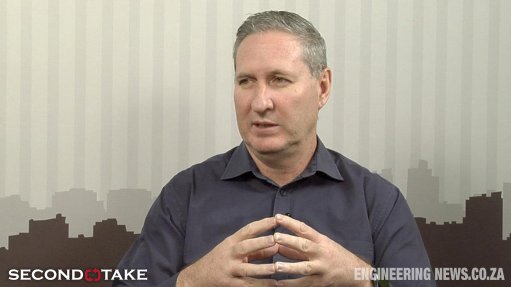
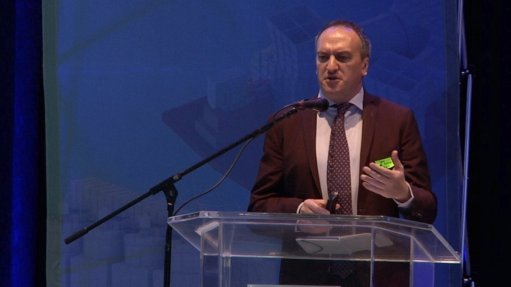
Cell C CEO Alan Knott-Craig
 
Picture by: Duane Daws
Cell C CEO Alan Knott-Craig