Creamer Media’s Engineering News Online
Advanced Search


We have detected that the browser you are using is no longer supported. As a result, some content may not display correctly.
We suggest that you upgrade to the latest version of any of the following browsers:
         
close notification
powered by
GOLD 1568.25 $/ozChange: -23.56
PLATINUM 1445.50 $/ozChange: -14.00
R/$ exchange 8.33Change: 0.00
R/€ exchange 10.57Change: 0.07
 
CARBON CAPTURE & STORAGE
CCS technology can help SA reduce emissions - Minister
 
29th September 2009
TEXT SIZE
Text Smaller Disabled Text Bigger
 

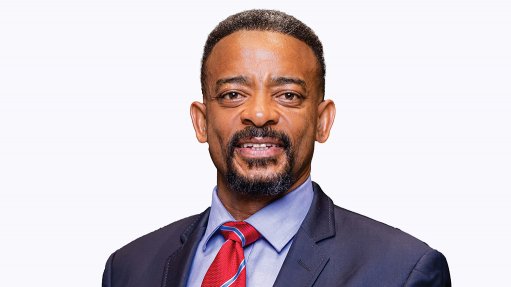
"We cannot neglect any technology that will assist us to address the matters of energy security and climate change," said Energy Minister Dipuo Peters on Tuesday, as she officially opened the South African Carbon Capture and Storage (CCS) conference.

She explained that although South Africa did not have binding greenhouse gas (GHG) emission mitigation targets under the Kyoto Protocol, the country has a long-term mitigation scenario, under which it committed to increase GHG emissions only until 2020, plateau those emissions until 2025, and then reduce emissions.

"The answer is CCS. We must wean ourselves off coal and onto nuclear and renewable energy," Peters said.

South African Centre for CCS head Dr Tony Surridge noted that for South Africa, CCS was a transitional technology, as the country moved from being heavily reliant on coal-fired power generation, to including more nuclear power and renewable energy technologies into the energy mix.

Peters highlighted that the achievement of the goals under the LTMS also included implementing energy efficiency, and renewable energy projects. "Renewable energies are being studied and implemented - although not fast enough," she added.

Surridge emphasised that the conference started from the premise that GHG emissions caused climate change, and Peters said that CCS was one of a suite of key technologies being relied upon to mitigate emissions.

The South African centre for CCS was currently establishing storage atlas, to identify geological storage sites for the captured carbon dioxide (CO2). This was expected to be completed by mid-2010, and would form the basis for future geological storage in South Africa.

Once the atlas is completed, a test injection site will be identified to determine the suitability of local geology as a storage medium, and this was expected to be completed by 2016. Next on the South African CCS road map was a demonstration plant by 2020.

International Energy Agency GHG research and development programme manager John Gale noted that, currently, the total anthropogenic CO2 being captured and injected worldwide, was about five-million tons a year. This would need to be increased significantly if future emission reduction targets were to be met.

The major plants in operation today, storing CO2 were: Snøhvit in the Barents Sea; Sleipner, also in the North Sea; Weyburn, in Canada; In-Salah, in Algeria; and Rangeley in the US.

Peters also highlighted that the mitigation of GHGs was a global matter requiring a global approach, with international cooperation. Thus, she welcomed the international experts in CCS research who were in attendance at the CCS conference in Johannesburg.

CCS is described as a fairly simple principle of extracting CO2 from exhaust emissions, and reinjecting it underground, where the fossil fuel originated. In practice, it is more complicated and CCS is broken down into four stages: capture, which separates CO2 from other exhaust gases, like nitrogen; compression and transport to the storage site through a pipeline; injection of the gas into a depleted gas or oilfield or deep saline aquifer; and monitoring and verification to ensure the CO2 stays buried.

CO2 can be captured from large single-source emission sites, such as power stations and synthetic fuel plants. In fact, South Africa's Sasol and PetroSA synfuels plants are said to be in a prime position for CO2 capture, as they already produce a stream of almost 95% concentrated CO2 through coal-to-liquids processes, bringing down capture costs.

Research is being done into capture from other industrial sources, such as cement production facilities.

Storage must be at depths below 800 m, as the CO2 becomes a supercritical liquid and occupies less space. It is not trapped in a cavernous space, but within porous rock, like a sponge. It is trapped underground by the cap rock, as well as by the capillary action of the ‘sponge' storage rock; and, in the case of deep saline aquifers, it is trapped by dissolving in the water; and, finally it is trapped through a process of calcification as the gas becomes part of the rock - the reaction takes time, but at this stage storage is permanent.


Edited by: Creamer Media Reporter

To subscribe to Engineering News's print magazine email subscriptions@creamermedia.co.za or buy now.

FULL Access to Mining Weekly and Engineering News - Subscribe Now!
Subscribe Now Login


South Africa Centre for Carbon Capture and Storage head Dr Tony Surridge and Energy Minister Dipuo Peters adress delegates at the opening of the South African CCS conference (29/09/09) Camera work: Nicholas Boyd; Editing: Darlene Creamer
This video is licensed under a Creative Commons License
GET SELECTED VIDEO
Embed
Selected Video Download (5.1mb)
 
Energy Minister Dipuo Peters
 
Picture by: Duane Daws
Energy Minister Dipuo Peters
 
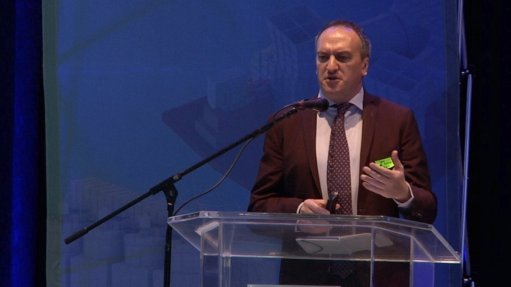
International Energy Agency greenhouse gas research and development programme manager John Gale
 
Picture by: Duane Daws
International Energy Agency greenhouse gas research and development programme manager John Gale
 
 
Previous Play Next