Creamer Media’s Engineering News Online
Advanced Search


We have detected that the browser you are using is no longer supported. As a result, some content may not display correctly.
We suggest that you upgrade to the latest version of any of the following browsers:
         
close notification
powered by
GOLD 1734.21 $/ozChange: -2.56
PLATINUM 1654.00 $/ozChange: 8.00
R/$ exchange 7.57Change: -0.02
R/€ exchange 10.02Change: -0.11
 
AUTO INDUSTRY
Catalytic converter industry and DTI at incentives impasse
 
5th August 2010
TEXT SIZE
Text Smaller Disabled Text Bigger
 

South Africa’s catalytic converter manufacturing industry and the Department of Trade and Industry (DTI) have reached an impasse on the level of incentives available to the sector, with the Catalytic Converter Interest Group (CCIG) hinting at contract losses and the closure of plants, should the DTI not increase its level of support.

However, the DTI has indicated that it is not able to expand on the offer already on the table under its new Automotive Production and Development Programme (APDP), kicking off in 2013, unless the industry upped its international competitiveness.

Catalytic converters are South Africa’s biggest automotive component export segment, at 44% of all components exported in 2009 by value. They are used in the exhaust systems of vehicles to reduce harmful emissions. The industry beneficiates South Africa’s abundant platinum-group metals resource.

The recession saw the local industry export 9,9-million catalytic converters in 2009, earning export revenues of R12,7-billion – 43% down on the peak in 2008 of 17,3-million units, earning R22,1-billion. The industry currently employs 4 319 people.

The catalytic converter industry currently receives incentives under government’s Motor Industry Development Programme (MIDP). However, this programme will be replaced in 2013 with the APDP, which features a new set of incentives.

Catalytic Converter Interest Group (CCIG) chairperson and Johnson Matthey South Africa commercial manager Paul Thompson says it is estimated that the industry has already “lost new business contracts worth in excess of R10-billion during the last 12 to 18 months, due to insufficient support under the APDP starting in 2013, and the protracted uncertainty regarding possible additional support measures”.

He adds that “significant replacement product sourcing decisions will be initiated in the next three to six months and, in the light of insufficient support, will be lost to South Africa. The impact of these lost contracts will only start to reflect in the figures from around 2011 to 2012”.

Thompson says the incentive regime for catalytic converters, as it stands, is “extremely low in comparison to what was and is currently enjoyed under the MIDP. This has and will continue to discourage new investments in replacement products, and probably result in the departure of a number of existing suppliers/manufacturers”.

He says that the industry is investigating ways to convince government that more support is needed.

He says that CCIG is concerned that there seems to be “little initiative” coming from government on the provision of additional support.

“The situation is grave and the size of the industry in South Africa will reduce considerably, and could potentially disappear completely, unless additional support for at least the geographic dislocation costs is forthcoming, and is announced within the next few months”.

Trade and Industry deputy director-general responsible for industrial policy Nimrod Zalk says there will indeed not necessarily be the same level of support “for certain type of components” under the APDP as was the case under the MIDP.

He says the DTI has been engaging CCIG on the incentives offered to the catalytic converter industry “for some time already”.

“We have made concessions to raise the support given to them.”

However, he adds that there is a limit to how far the department can go, and that “we have reached that limit now”.

Zalk tells Engineering News Online that while the MIDP has ensured growth in the exports of automotive components from South Africa, it has, however, also led to a concentration in the export of raw material intensive components, such as leather seat kits and catalytic converters.

“This was positive, yes, but it also revealed a weakness in the programme.”

Zalk says the MIDP made it “too easy” to only manufacture these more simpler components, “and not the more value-added components, which is why there is a limit to how far we can go”.

He adds that the DTI has repeatedly told the catalytic converter industry that it will meet the sector halfway, “and that we have done that”.

However, says Zalk, now the DTI requires the industry to show some competitive improvements under the APDP, in order to “bridge the gap”.

“They have indicated that they are doing a study on how to achieve this. But, to date, they have not put anything on the table on how they will raise their competitiveness and, until then, it is not appropriate for us to raise the level of support.

“This onus is on them to identify and put in place very clear and serious competitiveness raising programmes, instead of waiting for benefits which will undermine the coherence of the APDP programme,” emphasises Zalk.

Edited by: Creamer Media Reporter
FULL Access to Mining Weekly and Engineering News - Subscribe Now!
Subscribe Now Login


Hide Comments  
 
This article contains no Comments


All comments must be approved by our editors, click here to read the editorial guidelines for comments. Please allow some time for our editors to approve your comment after posting.
 * Required Fields

image
image
 *


image
image
 *
 

image
image
 

Verification Image

image
image
 * Please enter the text you see in the above image.


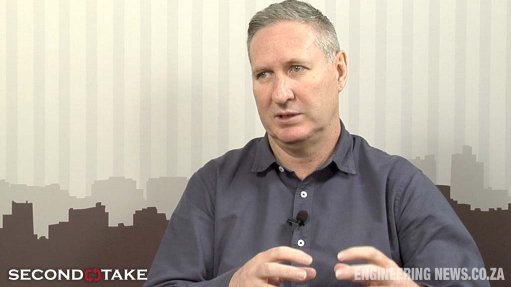
Trade and Industry deputy director-general responsible for industrial policy Nimrod Zalk
 
Picture by: Duane Daws
Trade and Industry deputy director-general responsible for industrial policy Nimrod Zalk