Creamer Media’s Engineering News Online
Advanced Search


We have detected that the browser you are using is no longer supported. As a result, some content may not display correctly.
We suggest that you upgrade to the latest version of any of the following browsers:
         
close notification
powered by
GOLD 1578.33 $/ozChange: -13.48
PLATINUM 1463.00 $/ozChange: 3.50
R/$ exchange 8.26Change: 0.07
R/€ exchange 10.55Change: 0.09
 
GREEN BUILDING
Built environment professionals urged to go beyond green building
 
9th March 2009
TEXT SIZE
Text Smaller Disabled Text Bigger
 

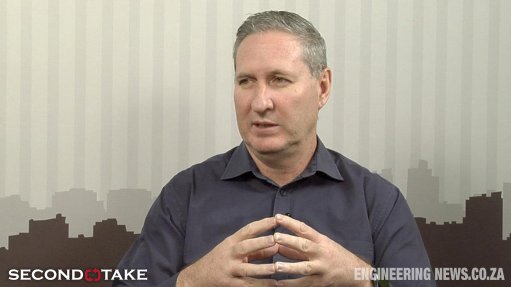
Increasingly popular ‘green buildings’ were viewed as a subset of sustainable construction, taking ecological accounting into consideration, however, built environment professionals needed to go further than this, and embrace “transformative buildings”, Council for Scientific and Industrial Research (CSIR) construction sector expert Llewellyn van Wyk argued.

Addressing delegates at a Council for the Built Environment (CBE) green building lecture at the University of Pretoria on Monday, Van Wyk stated that “if green buildings are to gain credibility, they must include, respect, and even have reverence for the multidimensional and evolving potential of the human experience, way beyond the indoor and external environment”.

He said that green buildings were a good start, but added that in developing nations, a green building could be an instrument of transformation, and, infrastructure should focus on growth that was economically sound; environmentally friendly; socially acceptable, locally desirable; and most importantly, growth that had a positive impact on the lives of the poor.

“I do believe that development, wherever it be, whatever it be, at whatever scale it may be delivered, must improve quality of life. I do not believe that the ‘do least harm’ approach is good enough,” Van Wyk reiterated.

“The promise of green building inherently has in it this notion of transforming a built environment, leading to a sustainable future,” he said, adding that sustainable development could be described as a process of change, not an event, where the exploitation of resources, the direction of investment, the orientation of technological development, and institutional change, were all in harmony.

PRINCIPLES OF TRANSFORMATIVE BUILDINGS

Van Wyk indicated that there were seven guiding principles that transformative buildings should strive for.

Firstly, ecological considerations with inherent flexibility, and offering a natural synthesis with the environment should be allowed for.

Secondly, a building should demonstrate an architecture of experience that makes reference to the building users, past, present, and future, and focuses on the emerging experience as a totality.

Thirdly, the building should seek opportunities to exercise human interaction with the natural environment.

Fourthly, the building should also encourage expression of specific culture in worship, taking note of symbolic aspirations, and having regard for the encouragement of openness to novelty.

Fifthly, an expression of own culture in art and all forms of creativity and openness to enrichment should be encouraged.

Sixthly, the ergonomics of the shelter should include a respect for privacy of individuals, and the facilitation of gatherings.

And, lastly, the ergonomics of social interaction within the community should facilitate multi-cultural meeting and expression and social interaction.

These should be in addition to the environmental principles of green buildings which take into account the life-cycle management of a building; land use and ecology; energy usage; water usage; materials used for construction; transport; and emissions, which improve building operation.

CHANGING MINDSETS

Van Wyk highlighted that a step-change in the quality of building design, which went beyond environmental concerns was required, and structures should be built to better serve the needs of the organisation and communities appropriate.

A delegate attending the lecture noted that when it came to commercial buildings, built environment professionals simply did not have the time and money allowing for sustainable building.

He said that often, professionals would like to deliver ‘green projects’ but were constrained by project owners trying to cut design times and costs involved with the project.

Van Wyk argued that clients posing constraints was not a valid excuse, particularly since it was property owners and managers, through the South African Property Owners Association, which drove the establishment of the Green Building Council of South Africa (GBCSA). Company boards were also taking decisions to implement green elements into building and construction.

Van Wyk added that architects should ask how they can drive the process, and be sure to implement green building from the design phase of a project.

It was also noted that significant skills transfer was required in this area, as there were some 53 000 built environment professionals in South Africa, but very few with expertise in the area of green building.

The GBCSA was trying to play a part in the up-skilling of built environment professionals, and since November 2008, has been running accreditation courses for the South African Green Star rating tool. The aim was to educate practitioners about green building.

Once accredited, professionals were expected to have a knowledge and understanding of the Green Star SA rating system, both in content and practical application during the building design and construction process. Project teams that included an accredited professional from the start of the project would be awarded two extra points toward their Green Star SA certification score.

Edited by: Mariaan Webb

To subscribe to Engineering News's print magazine email subscriptions@creamermedia.co.za or buy now.

FULL Access to Mining Weekly and Engineering News - Subscribe Now!
Subscribe Now Login