Creamer Media’s Engineering News Online
Advanced Search


We have detected that the browser you are using is no longer supported. As a result, some content may not display correctly.
We suggest that you upgrade to the latest version of any of the following browsers:
         
close notification
powered by
GOLD 1348.91 $/ozChange: -16.91
PLATINUM 1446.00 $/ozChange: -15.70
R/$ exchange 9.42Change: -0.10
R/€ exchange 12.08Change: -0.08
 
 
New project aims to improve black pipe resin
 
22nd January 2010
TEXT SIZE
Text Smaller Disabled Text Bigger
 

Polypropylene and high-density polyethylene (PE) manufacturer Safripol is undertaking a new project to improve the black pipe resin used to make high-density PE, says Safripol research and development director Mike Gradwell.

A new international standard, ISO 4427-1:2007, stipulates the requirements for PE mains and service piping systems, used to convey water for human consumption. It is applicable to PE pipes, fittings and joints, and to mechanical joints with components of other materials intended to be used under a maximum operating pressure of up to, and including, 25 bar and an operating temperature of 20 °C as the reference temperature.

As the standard requires increased properties in resisting slow crack growth, Safripol has licensed technology proven to meet the requirements for improved resistance to crack growth and rapid crack propagation in high-pressure water pipes for P100 pipe. “This will be a world-class resin,” says Gradwell.

Safripol commercial director Bernhard Mahl says that resins around the world currently have a design life of about 50 years, whereas the new standards seek a design life of 100 years. As testing takes 9 000 hours, or 13 months, the project should be completed toward the end of the year.

“The use of [high-pressure water] pipes in South Africa is extensive and the high-pressure water pipe market is growing strongly internationally. That is why it is important that Safripol is positioned at the leading edge of quality and performance,” says Safripol COO Geoff Gaywood.

Meanwhile, Safripol is funding research carried out by bio- polymer maker Plaxica at an international university to investigate low-cost processes for the production of new high- performance polylactic acid (PLA) polymers and technology to broaden their range of use. PLA polymer is a biodegradable, thermoplastic polymer obtained from renewable resources.

“The PLA products currently on the market have a limited applicability, and are expensive to produce and mediocre in performance. We are interested in technology that would give them a much broader range of use, at a cost that would make them competitive. Renewable resource-based products could have a lot of relevance in the next phase of global economic expansion and could potentially be a new development market [for the company],” says Gaywood.

Still on the environmental front, Mahl says that one of the biggest challenges currently facing the plastics industry is waste disposal and littering. “Plastics do not litter – people do,” he says referring to a slogan used by the Plastics Federation of South Africa (PFSA).

He mentions the Polokwane Declaration, which aims to stabilise waste generation and reduce waste disposal by 50% by 2012 and to have zero waste going to landfills by 2022. “The plastics industry, in cooperation with municipal governments, has to dispose of, separate, recycle and find an end use for waste. This will be a significant challenge for the industry for years to come,” he says.

Mahl explains that Safripol views environmental initiatives in a larger context than just its own polymers, preferring to deal with plastics as a whole. Consequently, the company supports the environmental initiatives under-taken through the PFSA and centred on active clean-up and awareness campaigns.

He considers the PFSA’s Fantastic Plastic competition to be the flagship campaign for the plastics industry. The competition is in its fourth consecutive year and is aimed at Grade 6 to Grade 12 learners, who research plastics as part of a school project. It focuses on creating awareness and understanding of the various properties of plastics as a material as well as national antiwaste campaigns.

The PFSA is also involved in a number of other environmental initiatives, including plastic-waste management and recyclables recovery at the 2009 Knysna Oyster festival, in conjunction with polyethylene terephthalate recycling company Petco and the Polystyrene Packaging Council, and the 2009 clean-up of KwaZulu-Natal’s 620-km coastline, where 51 000 kg of litter was collected.

Gradwell considers the negative perception that most people have of the packaging industry another challenge for the industry to deal with. The PFSA reports that 3,6-million tons of packaging and paper was consumed in South Africa in 2008. Of that total, 40,8 % was recycled. The PFSA also reports that packaging consumption by each person in South Africa is 25% to 30% of the consumption in Europe or the US.

“Very few consumers know how much packaging is recycled, because it is not obvious. As an industry, we need to be more communicative about what is being done,” says Gradwell.

“Plastic is probably one of the most versatile materials known to man. Plastics are used in phones, laptops, aeroplanes and modern surgery. Plastics are also an incredibly resource- efficient material, as only about 4% of oil is used [in production],” says Mahl.

“The plastics industry knows that it has a high-performance product, which would be very difficult to replace. This is one of the reasons why it continues to grow at the expense of most other packaging materials,” concludes Gaywood.

Edited by: Brindaveni Naidoo


To subscribe to Engineering News's print magazine email subscriptions@creamermedia.co.za or buy now.

FULL Access to Mining Weekly and Engineering News - Subscribe Now!
Subscribe Now Login


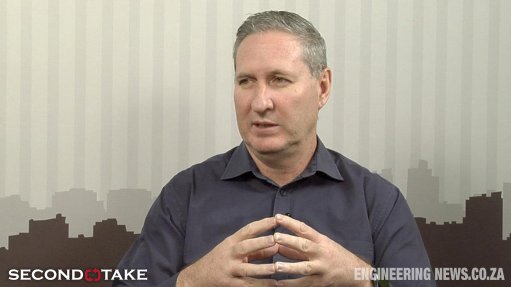
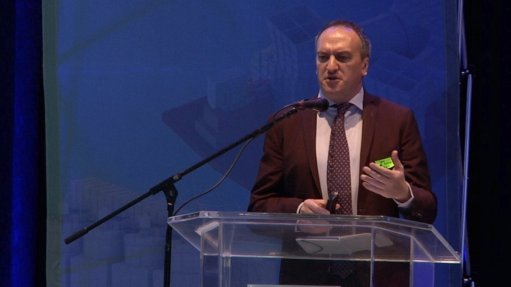
Safripol management discusses new products, plastics and the environment and research and development. 22.01.2010 Cameraperson: Nicholas Boyd. Editing: Darlene Creamer
This video is licensed under a Creative Commons License
GET SELECTED VIDEO
Embed
Selected Video Download (7.33mb)