Creamer Media’s Engineering News Online
Advanced Search


We have detected that the browser you are using is no longer supported. As a result, some content may not display correctly.
We suggest that you upgrade to the latest version of any of the following browsers:
         
close notification
powered by
GOLD 1360.10 $/ozChange: -5.72
PLATINUM 1455.00 $/ozChange: -6.70
R/$ exchange 9.40Change: -0.09
R/€ exchange 12.07Change: -0.07
 
RENEWABLE ENERGY
 
BMW to supply Rosslyn plant with electricity from waste
 
29th November 2011
TEXT SIZE
Text Smaller Disabled Text Bigger
 

BMW South Africa has partnered with the City of Tshwane on a waste-to-energy project at its Rosslyn plant, in Pretoria, with construction set to start in 2012.

At the end of last year, BWM investigated the technical and economic feasibility of supplying its Rosslyn plant solely by means of renewable energy, or in combination with the existing power supply.

The project is similar to a landfill gas programme, which is responsible for providing its Spartanburg plant in South Carolina, in the US, with around half of its energy requirements, BMW South Africa MD Bodo Donauer said at the company's sustainable future conference in Durban.

He told Engineering News Online that the company aimed to achieve self-sufficiency in future at its Rosslyn plant, which will be powered only by renewable energy.

"The waste-to-energy project is one of the steps we are taking to fulfill this aspiration, and without putting a timeline on when it will be done, we know we can achieve it," he commented.

Methane gas, converted from unusable organic waste at a landfill site in Onderstepoort, will be piped 8 km to Rosslyn.

Depending on the quantity supplied, the gas will be used to either produce electricity through gas generators or supplement the use of natural gas in the production process.

Initial indications are that there is enough green waste at the site to cater for about 40% of the plant’s gas requirements.

“This is a vital step in a process which will see all of the Rosslyn plant’s energy requirements supplied from renewable resources in the future,” he said.

Meanwhile, the leaps in efficiency demanded by climate change require both “evolutionary improvements to vehicles” and a “radical new approach”, Donauer said while announcing the group’s intention to become the first manufacturer to bring e-mobility to South African roads in 2012.

South Africa would get the opportunity to experience the Mini-E during a series of countrywide road shows in the first half of 2012.

Not only will these road shows provide the BMW group with information about local customer’s e-mobility requirements, but they would highlight some of the infrastructural hurdles South Africa needs to overcome to adopt e-mobility as a viable means of reducing carbon dioxide (CO2) emissions.

This information, he said would help develop and implement strategies to help the BMW group introduce the full range of BMW i models to the local market as soon as possible.

With the BMW i range of vehicles, the group was heading in a new direction premised on emission-free driving, cutting-edge materials and sustainable production.

“For the first time, we set sustainability targets right from the start of development through recycling. The result is that BMW i vehicles will have a significantly reduced CO2 footprint. In fact, it’s 50% less over the product lifecycle compared with a highly efficient combustion engine car today,” Donauer said.

He added that making a contribution towards climate change was not just about reducing vehicle emissions.

The company has reduced energy use and emissions by more than 30% at its plant in Rosslyn in Pretoria, saving more than R50-million in energy costs since 2006.

Further, the company has halved its base load requirements over the same period.

Also, when the company launches the new BMW 3 Series in March next year, it will have more than 25 local models, which emit less than 140 g of CO2/km.

Meanwhile, the BMW group also announced it would construct an HIV/Aids clinic in the Nyavini district in a public-private partnership with the KwaZulu-Natal Department of Health. The clinic, modelled on a similar clinic built by the BMW Group, in Soshanguve, in 2005, will also provide basic healthcare to the community, which is situated some 50 km from the nearest hospital.


Edited by: Mariaan Webb


To subscribe to Engineering News's print magazine email subscriptions@creamermedia.co.za or buy now.

FULL Access to Mining Weekly and Engineering News - Subscribe Now!
Subscribe Now Login
 
 
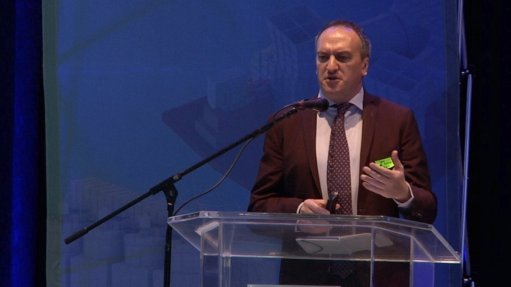
BMW South Africa MD Bodo Donauer
 

BMW South Africa MD Bodo Donauer