Creamer Media’s Engineering News Online
Advanced Search


We have detected that the browser you are using is no longer supported. As a result, some content may not display correctly.
We suggest that you upgrade to the latest version of any of the following browsers:
         
close notification
powered by
GOLD 1732.46 $/ozChange: -4.31
PLATINUM 1653.00 $/ozChange: 7.00
R/$ exchange 7.58Change: -0.02
R/€ exchange 10.03Change: -0.12
 
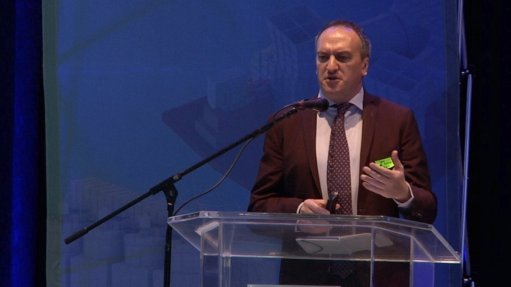
Dr Kemm is a nuclear physicist and is the CEO of Stratek Business Strategy Consultants. He also sits on the board of advisers of the Committee for A Constructive Tomorrow, based in Washington DC - stratek@pixie.co.za
 
TECH TRACK
Birds and bees still have something to teach mankind
 
24th April 2009
TEXT SIZE
Text Smaller Disabled Text Bigger
 

These days, scientists are getting to know much more about the birds and the bees.


Over the aeons of time that it has taken for our world of fauna and flora to evolve, some amazing abilities have come about in nature. Many are a puzzle to modern science.

This year is the celebratory year of Charles Darwin, and one can only marvel at the fact that he came to the realisation that plants and animals change with time.

Initially, he was puzzled by this evolution because, to him, there did not seem to be enough evolutionary time available. But, at that stage in history, science did not realise just how much geological time had actually passed on the planet. It turned out to be considerably more than was initially thought, and Darwin started to realise this when be came across the modern geology of the period that showed, besides other clues, the fossils of sea creatures sealed in geological layers hundreds of metres above sea level.

He started to realise just how much geological upheaval must have taken place, and just how long it had all taken to unfold.

Anyway, modern science is now finding out more about the birds and the bees in that modern science is now able to ask questions like: How do birds navigate?

It has been found that they use various methods, like using the magnetic field of the earth, spotting stars and knowing, somehow, about high-level wind patterns.

Modern science now knows how a gecko sticks to the ceiling. In fact, human gloves and shoes have now been made that work like the gecko’s feet. This development all indicates that science can ask the right questions of nature and then, by using modern knowledge, start to unravel the intriguing secrets.

In South Africa, Paul Collet and Ernst Thompson have found out some interesting information about honey bee construction techniques. It has been known that bees use a black sticky stuff to build around the entrance to their hives. They also use the same stuff to patch holes in the hive’s outer walls.

This black goo is called ‘propolis’ – from the Greek ‘pro’, meaning ‘in front of’, and ‘polis’ meaning ‘city.’

The bees use it to make security gates. It turns out that this stuff has antibiotic properties. The bees find the building material by harvesting small scabs from plants. When a nibbling insect damages a plant, or when the plant gets struck by something, it forms a protective scab filled with chemicals which kill or disable organisms that could enter the plant and damage it, such as bacteria, yeasts and viruses.

So the plant produces its own antibio- tics. The bees collect these scabs, and then work them into the black tarlike stuff that they then use to build ‘security gates’ around their hive entrance. So they have an anti- biotic gate, so to speak.

Well, Collet and Thompson have been smart, and they have taken this black propolis and turned it into an antibiotic product for the fish farming industry.

While fish farming can be a lucrative business, any disease in the breeding tanks can wipe out many fish chop-chop. A number of domestic and foreign regulations concerning the use of artificial antibiotics have also placed pressure on the aquaculture folks to find alternatives.

This is where the propolis product comes in. These guys have been producing the pharmaceutical under the name of Speelmanskop Apiary Products, and the product has performed well on various fish pathogens – so much so that they are achieving better results than with the traditional aquaculture antimicrobials.

Propolis is already being found in such diverse products as toothpaste, lip balm and chewing gum. So those birds and bees still have something to teach mankind. We are not finished with them yet.

Edited by: Martin Zhuwakinyu
FULL Access to Mining Weekly and Engineering News - Subscribe Now!
Subscribe Now Login
 
 
Topics in this article
Country Medical Condition Medical Treatment Operating System
Person  


Hide Comments  
 
This article contains no Comments


All comments must be approved by our editors, click here to read the editorial guidelines for comments. Please allow some time for our editors to approve your comment after posting.
 * Required Fields

image
image
 *


image
image
 *
 

image
image
 

Verification Image

image
image
 * Please enter the text you see in the above image.