Creamer Media’s Engineering News Online
Advanced Search


We have detected that the browser you are using is no longer supported. As a result, some content may not display correctly.
We suggest that you upgrade to the latest version of any of the following browsers:
         
close notification
powered by
GOLD 1394.50 $/ozChange: 8.57
PLATINUM 1492.50 $/ozChange: 6.00
R/$ exchange 9.45Change: -0.04
R/€ exchange 12.17Change: -0.10
 
ECONOMIC OUTLOOK
 
Bank warns of more risks as it cuts 2012 SA growth outlook to 2.5%
 
24th July 2012
TEXT SIZE
Text Smaller Disabled Text Bigger
 

The World Bank has lowered its gross domestic product (GDP) growth outlook for South Africa from 3.1% in November to 2.5% and has warned that the performance of Africa’s largest economy could be weaker still if the eurozone crisis deepened further.

The bank’s lead economist for South Africa Sandeep Mahajan said the 2.5% ‘base case’ – which is also below the 2.7% forecast by Finance Minister Pravin Gordhan in February – was premised on world GDP growth of 2.5% during 2012, a 0.3% contraction in the eurozone and lower growth in the key emerging markets of China, India and Brazil.

Earlier, Gordhan indicated that growth was likely to fall short of the 2.7% forecast of February, after the South African Reserve Bank, which cut interest rates on July 19, trimmed its growth forecast to 2.7%, from 2.9 percent.

Governor Gill Marcus warned that risks to the country’s GDP projection were to the downside, particularly if the economic stagnation in the eurozone intensified.

South Africa, the World Bank warned, was vulnerable to both the slowing economies of Europe, which consumed many of its industrial products, as well as to a slowdown in the rate of expansion in China, which consumed many of its commodities.

The country was particularly sensitive to changes in the eurozone's outlook, with Mahajan indicating that for every one percentage point change in the territory’s GDP South Africa’s GDP adjusted by 0.8 of a percentage point.

The strong correlation meant that the downside risks to South Africa associated with a decline in the eurozone beyond that which was currently being projected were material.

To illustrate this vulnerability, bank had developed two downside-risk scenarios: the first assumes a severe credit squeeze in one of two eurozone members, with limited contagion; while the second was premised on a “disorderly resolution to the crisis”.

The model shows that, under the first scenario a further 1.5% percentage points would be shaved off South Africa’s already fragile growth. Under the second, the simulation indicated that 2.2 percentage points could be lopped off the country’s growth outlook.

However, the downside risks were not limited to the resolution of the economic crisis in Europe. Mahajan warned that lower commodity prices, precipitated by any further cooling of the Chinese economy, represented a major potential threat.

The bank showed that a 20% fall in nonoil commodity prices would shave 1.7 percentage points off South Africa’s growth rate. Under the model “South Africa is among the ten countries to be hit most by the drop in commodity prices”, the bank’s biannual ‘South Africa Economic Update’ indicated.

Under the baseline scenario, the report expected South Africa’s GDP growth to recover to 3.5% by 2014, which Mahajan described as the new growth base for the coming 15 years.

The figure fell well short of the 7% highlighted as necessary by the South African government to deal with the country’s chronic unemployment rate, which currently stood at above 25%.

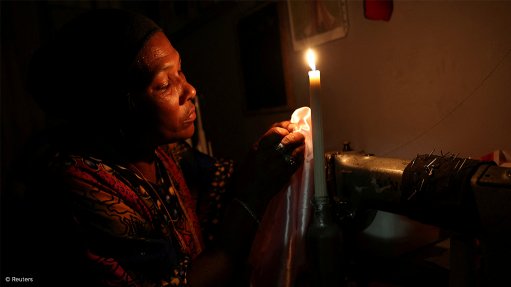
Mahajan concurred that it would be insufficient to generate the jobs needed to deal with the problem, but said the outlook was constrained by South Africa’s prevailing power shortages.

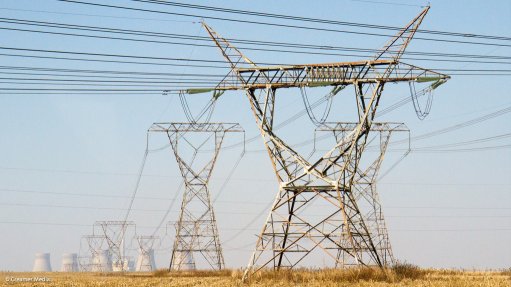
“An important constraint on a faster pickup in growth is likely to be bottlenecks in electricity supply, which is already rubbing against peak demand and will continue to do so until fresh large-scale generation capacity comes on board and Eskom’s demand-side management measures for greater energy efficiency take firmer root,” the report noted.
 

Edited by: Creamer Media Reporter


To subscribe to Engineering News's print magazine email subscriptions@creamermedia.co.za or buy now.

FULL Access to Mining Weekly and Engineering News - Subscribe Now!
Subscribe Now Login


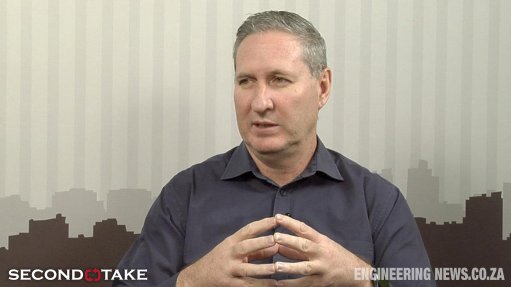
World Bank lead economist for South Africa Sandeep Mahajan on the bank's downward revision of the country's growth outlook. Camera Work: Nicholas Boyd. Editing: Darlene Creamer. Recorded: 24.7.2012.
This video is licensed under a Creative Commons License
GET SELECTED VIDEO
Embed
Selected Video Download (8.91mb)
 
World Bank lead economist for South Africa Sandeep Mahajan
 
Picture by: Duane Daws
World Bank lead economist for South Africa Sandeep Mahajan


Facts