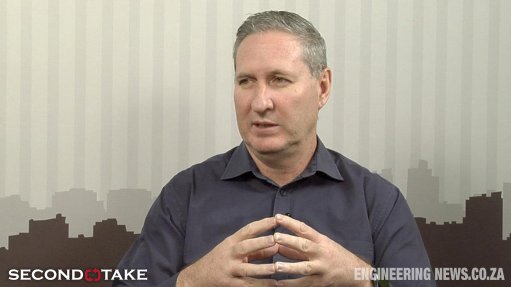
The South African Institute of Tribology (SAIT) urges South African industries to adopt a ‘back-to-basics’ approach when it comes to lubricating machinery.
The organisation reports that preliminary results of a study that it has undertaken point to a worrying disregard for the importance of the lubrication of industrial machinery.
“Tribology is vital to keep the economy’s wheels turning. The SAIT has completed a research project for the Department of Science and Technology that identified three categories of South African industries, based on their tribological practices,” president John Fitton says.
The first category comprises a number of industries where tribological excellence is practised, owing to correct knowledge and asset management skills, while the second category includes industries that are doing the right things, based on advice from others and not personal knowledge. Thirdly, there are industries that are ‘tribologically lost’, spending a lot of money, effort and time on repairing equipment that could otherwise have lasted longer, he explains.
Fitton explains that tribologi- cal malpractice may result in frequent equipment downtime, increased maintenance costs, lower production and overall reduced lifetimes of equipment. “The cost figures of the benefits of adequate lubrication can be calculated, but most industries are not focused on tribology and are not tracking the related costs.”
Lubrication usually entails a small part of an industry’s budget, about 0,6% of the overall operating expenses, often disappearing among larger expenses, notes Fitton.
He cautions that manage- ment often makes the mistake of only looking at the short-term cost of buying better and more-suitable lubricants for machinery, overlooking the possible benefits for the machinery and the company.
He says that industries frequently aim to reduce the cost of lubricants and filters, not realising that they are potentially compromising their equipment. He believes that persons responsible for lubrication are typically among the lowest-paid workers but, ironically, they perform one of the most important roles in equipment performance.
“Tribology needs to get into the boardroom. A mindset change needs to occur at management level to understand the value of adequate lubrication and the maintenance of lubrication systems,” Fitton notes.
An example of the importance of adequate lubrication is a plant in South Africa, which uses large white metal bearings. The company was replacing about ten bearings a month at significant cost. The remanufacturing company servicing the plant went as far as to put up an additional production line, just to service the specific client.
Fitton says that the company eventually decided to install the correct oil filters for the machinery and succeeded in reducing the amount of failed bearings to about ten a year. “This translates to a yearly saving of between R4-million and R5-million for the business – the result of following basic lubri- cation principles,” he says.
Inadequate Training
The institute believes that lubri- cation malpractice has its roots in a lack of training on the subject at tertiary level. Tribology is not being covered in any tertiary courses, which is a problem. Even government does not require tribology as a necessary module for any technical qualification, undermining its importance in the operational field.
However, this is not a problem unique to South Africa. Fitton believes that too many businesses and tertiary institutions across the globe miss the knock-on effect that improper lubrication can have on a business.
The institute’s primary function is to share information about tribology, which is the study of friction and wear and how to reduce them. The Sait is engaging tertiary institutions to solve this problem and is liaising with the various governmental educational programmes in order to get tribology added to the curricula.
Meanwhile, the Sait reports that it is undertaking a number of training courses at various centres across the country during the year to assist industry in adopting better lubrication practices.
The institute presents courses for artisans, up to plant man- ager, senior supervisor and engineer levels. “While it is encouraging to see an increasing number of attendees to our courses, from across Africa, attendance remains low,” Fitton notes.
Although some of the latest developments in oil technology are taking place on a molecular level, it is basically pointless to try to implement these if a company’s fundamental lubrication principles are not in place. One does not need to understand the internal workings of oil – just its basic application principles, he says.
Education in lubrication principles is needed from management level down to operational personnel, such as drivers, who check the oil dipsticks of engines.
Another important practice that is often overlooked when a lubrication-related failure takes place is root cause analysis, the importance of which cannot be underestimated.
“It is important to change the nature of maintenance cycles whenever possible by seeking to understand why failures take place. Was it owing to human error, machine error, or operating conditions in the plant?
“By identifying the root causes of recurring failures and also by applying predictive maintenance, rather than responsive maintenance, one is able to prolong the lifetime of plant equipment, while reducing the total cost of ownership,” he concludes.
To subscribe to Engineering News's print magazine email subscriptions@creamermedia.co.za or buy now.