Creamer Media’s Engineering News Online
Advanced Search


We have detected that the browser you are using is no longer supported. As a result, some content may not display correctly.
We suggest that you upgrade to the latest version of any of the following browsers:
         
close notification
powered by
GOLD 1368.07 $/ozChange: 0.98
PLATINUM 1443.00 $/ozChange: 5.00
R/$ exchange 10.01Change: -0.05
R/€ exchange 13.40Change: -0.09
 
Data Centres
 
Availability, cost balance key data centre considerations
 
22nd June 2012
TEXT SIZE
Text Smaller Disabled Text Bigger
 

The level of data availability required by a company must be balanced against the cost of ensuring high availability, including electricity costs, says market research firm Frost & Sullivan Africa Information and Communication Technology (ICT) Business Unit head Chantel Lindeman.

“Mission-critical workloads demand high availability, which comes at a substantial cost in terms of energy. Green information technology (IT) initiatives grapple with power usage effec- tiveness and centre infrastructure efficiencies to increase the energy efficiencies throughout the complete life-cycle of a data centre.”

However, consideration for reducing energy intensity, including the use of free cooling and renewable-energy sources, must be balanced against the availability required by a company.

A company can store critical data in a Tier III or Tier IV data centre, which has full redundancy and failover capabilities, while nonessential, or less time-sensitive, data can be stored at a Tier II or Tier III centre, which will reduce costs for the company and improve the efficiency of data centre use, says systems integrator Business Connexion Cloud Infrastructure Services GM Johan van Huyssteen.

“Virtualisation of services, including software-as-a-service and managed servers, as well as colocating servers with other companies, can dramatically reduce the costs to companies. South Africa has enough data centre capacity to last until 2020, owing to good investments in these centres, but many are costly to maintain and underutilised, presenting opportunities for companies to locate servers at single sites to reduce costs,” he says.

Further, Frost & Sullivan market research on South African data centres, published in Novem- ber, showed that there had been continuous consolidation of these centres by South African companies, while there was also a growing dependence on third-party services for non-business-critical functions. There are also a number of companies that colocate their centres at a single site to share electricity and maintenance costs.

Electricity costs to cool down data centres are between 40% and 60% of total operating costs, driving the uptake of virtualised data centre servers, especially among small and medium-size enterprises.

“Cloud storage, virtual server and desktop, remote backup and hosted exchange are promising shared cloud service segments as traditional product lines are maturing,” he notes.

“Virtualisation solutions are a key technology trend as they offer significant efficiencies and cost savings to companies of all sizes,” he adds.

Data centre revenues have grown and were pre- dicted to be sustained at 9.6% a year, but revenues from core data centre services, compared with overall revenues, will decline by 2016 as hosted, managed and virtualised services become more commoditised.

Virtual desktop functions and software-as-a-service are predicted to grow by 30% and 23% a year respectively by 2016. The three key drivers for hosted, managed or virtualised services are cost-reduction pressures, application mobility and ease of implementation, notes Van Huyssteen.

For manufacturing, basic hosting is effective for large data collection but it requires good connectivity so that the plant is able to access data, and a guarantee of security is important, he says.

“Reliability is a key factor for owning a data centre, especially for critical process data. However, service providers can still be regulated according to compliance criteria for security.”

Edited by: Martin Zhuwakinyu


To subscribe to Engineering News's print magazine email subscriptions@creamermedia.co.za or buy now.

FULL Access to Mining Weekly and Engineering News - Subscribe Now!
Subscribe Now Login
 
 
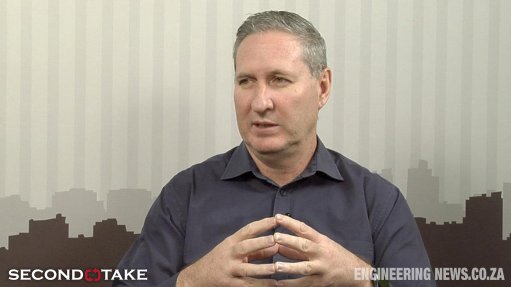
CHANTEL LINDEMANConsideration for reducing energy intensity must be balanced against the availability required by a company
 

CHANTEL LINDEMANConsideration for reducing energy intensity must be balanced against the availability required by a company
 
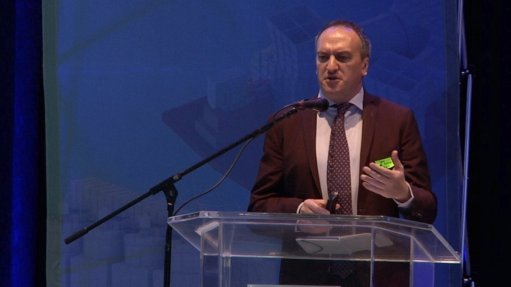
JOHAN VAN HUYSSTEENCompanies can choose to streamline their operations around core competencies and decide to co-locate their data servers to create high power density data centres
 

JOHAN VAN HUYSSTEENCompanies can choose to streamline their operations around core competencies and decide to co-locate their data servers to create high power density data centres
 
 
Previous Play Next