Creamer Media’s Engineering News Online
Advanced Search


We have detected that the browser you are using is no longer supported. As a result, some content may not display correctly.
We suggest that you upgrade to the latest version of any of the following browsers:
         
close notification
powered by
GOLD 1368.44 $/ozChange: 1.35
PLATINUM 1438.50 $/ozChange: 0.50
R/$ exchange 10.01Change: -0.05
R/€ exchange 13.41Change: -0.10
 
NUCLEAR BIDS
 
Areva, Westinghouse submit bids for Eskom's big nuclear expansion
 
31st January 2008
TEXT SIZE
Text Smaller Disabled Text Bigger
 
Rival nuclear vendors Areva of France and Toshiba's Westinghouse, of the US, confirmed on Thursday that they had submitted bids to South African power utility Eskom, which initiated an "invitation to negotiate" with the two companies in November last year.

In a statement, Areva said it had formed a consortium comprising South African engineering and construction group Aveng, French contractor Bouygues and the world's leading nuclear-energy utility EDF, also of France.

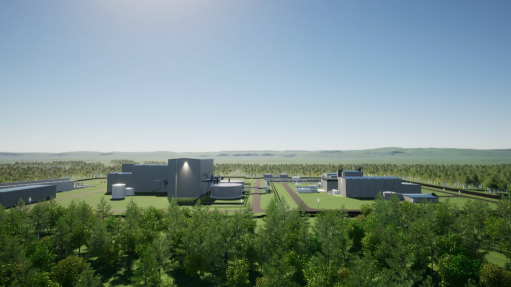
Areva South Africa chairperson Dr Serge Lafont told Engineering News that its submission related to the so-called ‘Nuclear-1' programme, which could involve the construction of a two-unit nuclear power plant, with a capacity of between 3 000 MW and 3 500 MW.

The project's capital cost is estimated to be between R100-billion and R120-billion, but this figure could not be confirmed.

Lafont said it also planned to submit a second bid later this year for the possible ‘fleet' strategy by Eskom, which might result in the construction of 20 000 MW of nuclear capacity by 2025.

Meanwhile, Westinghouse CEO Rita Bowser confirmed with Engineering News that it too had submitted a bid on Wednesday, a day ahead of the January 31 deadline, and that Eskom had confirmed acceptance of the bid on Thursday.

She said that its consortium comprised Westinghouse, South African engineering contractor Murray & Roberts and US construction group Shaw.

Bowser indicated that it had decided to make a combined bid, covering both Nuclear-1 and the larger fleet strategy, but that it refrained from making a formal statement given nondisclosure stipulations.

Areva would offer its so-called third-generation EPR technology, which is currently under construction in Finland and France, while Westinghouse will be offering its latest-generation AP1000 pressure water reactor, which is likely to be built in the US and China.

In its statement, Areva says it is proposing a "global partnership" between South Africa, Eskom and its French-heavy consortium covering the construction of EPR reactors and the joint development of a South African nuclear industry.

"The second element of the partnership relates to the long-term development of South Africa's nuclear industry. Areva plans to invest alongside national players. In addition, the group offers its expertise in all aspects of the nuclear fuel cycle," the company said.

Meanwhile, Engineering News has reported previously that Westinghouse also planned to make material "localisation" commitments.

In fact, Bowser said that exploration of domestic manufacturing opportunities was a key focus, given that these are likely to be a critical adjudication factor in any upcoming Eskom tender.

Eskom itself has a stated ambition of maximising the local content of its capital programme, and has incentivised its management in a way that embeds local content as a key performance indicator.

The utility has also applied to participate under the so-called Competitive Supplier Development Programme, which will allow it to pursue local content opportunities without the constraints associated with the National Industrial Participation Programme, or NIPP.

Both companies have already moved to deepen their domestic footprints, with Areva having already taken a 51% stake in Lesedi, a black economic-empowered energy services company, while sustaining key skills in the country to service Koeberg, South Africa's only nuclear facility at present. The French group also has uranium exploration and development interests the country through a mining enterprise known as Uramin.

Westinghouse, meanwhile, recently acquired South Africa's IST Nuclear (ISTN) in a bid to materially increase its domestic presence. The company has since been rebranded as the Westinghouse Electric Company South Africa.

Bowser insists that similar localisation programmes have been pursued in China, Korea and Spain, where local manufacturers have actively participated in domestic build programmes, and have been integrated into the larger Westinghouse supply chain.

Eskom and government have committed to adding a significant level of nuclear capacity to its power system in a bid to sustain low operating costs, while reducing its carbon footprint.

Five sites are being considered, including Oyster Bay, Peraly Beach, Bantamsklip, the current Koeberg site, and Kleinzee, and environmental-approval processes are under way.

There is likely to be stiff opposition from some antinuclear and environmental groups, which believe the technology to be fundamentally flawed and dangerous. Others have argued that Eskom has simply not given the same level of attention to other carbon-free alternatives, such as large-scale wind and solar power before embarking on an atomic-energy course.

However, Eskom argues that, while nuclear is expensive to build, it is vastly cheaper to operate, and, at this stage, provides the only true low-carbon alternative to coal.

Edited by: Terence Creamer


To subscribe to Engineering News's print magazine email subscriptions@creamermedia.co.za or buy now.

FULL Access to Mining Weekly and Engineering News - Subscribe Now!
Subscribe Now Login