Creamer Media’s Engineering News Online
Advanced Search


We have detected that the browser you are using is no longer supported. As a result, some content may not display correctly.
We suggest that you upgrade to the latest version of any of the following browsers:
         
close notification
powered by
GOLD 1745.85 $/ozChange: 9.08
PLATINUM 1650.16 $/ozChange: 4.16
R/$ exchange 7.58Change: -0.02
R/€ exchange 10.03Change: -0.12
 
PROPERTY DEVELOPMENT
Signs of life in South Africa’s property market
 
28th August 2009
TEXT SIZE
Text Smaller Disabled Text Bigger
 

The economic slowdown, higher interest rates and tougher lending criteria have all led to a huge drop-off in the property development industry.

Selected building statistics of the private sector, as reported by local government institutions and released by Statistics South Africa in May, this year, indicated that the value of recorded building plans passed by the bigger municipalities (at current prices) from January to the end of May 2009 decreased by 24,4% (R8 525,4-million).

In the first four months of 2009, the annualised decrease was 30,4%. The largest decrease was reported for residential buildings (44,0%, or R7 723,4-million), followed by additions and alterations (4,7%, or R423,9-million) and nonresidential buildings (4,5%, or R378-million).

The real value of buildings reported as completed to the bigger municipalities (at constant 2005 prices) from January to the end of May decreased by 3,2% (R527,9-million) compared with the figure for the period January to May 2008. This was owing to a decrease in the real value of residential buildings completed (16,7%, or R1 534,2-million).

However, increases were reported for additions and alterations (18,7%, or R634,4-million) and nonresidential buildings (10,1%, or R371,9-million).

Recovery Optimism
In spite of the downward spiral in the property development industry, a glimmer of hope is showing a possibility of green shoots of a recovery.

National house prices have risen by 250% since 2000 and are only 3% down from their peak in February 2008.

Addressing the Rode Conference 2009, held last month, in Johannesburg, Lightstone MD Anthony Miller said that the affordable housing market was still showing positive inflation of 14%, but the inflation rate was coming down rapidly and there were signs that prices were bottoming out in other segments.

“The average value of transfers has held up well over the last few years, with the recent drop a function of a relative increase in low-end volumes and Deeds Office effects,” explained Miller.

The proportion of bonded transactions had dropped to about 50% by mid-2009.

Tsunami of New Developments
University of the Witwatersrand School of Construction Economics and Management head Professor Francois Viruly concurs that the property development industry has been through a few years of high-level development in all sectors in South Africa.

“The downturn in the property cycle has had a negative impact on the demand for space. The issue at the moment is whether the downturn will be V-shaped, U-shaped or W-shaped.

He pointed out that what we were seeing in South Africa was a strong correlation between GDP growth and the returns in the commercial property market. The issue was that the uptick in construction activity could take a while, because the country needed to map out some of the extra space floating in the market.

There was a risk that the development sector started too early, or too late, in the property cycle, but that would be influenced by investor perceptions and the risk appetite of financial institutions.

“Looking ahead, I expect the development sector to start showing some improvements in the second quarter of 2010 as market fundamentals start to improve. We need to be careful that we do not have a scenario where we have a tsunami of new developments entering the market once conditions improve.”

He stressed that it was important that the upturn and development activities took an upwardly systematic approach, with supply not surpassing demand. In the previous cycle, the recessionary conditions were prolonged because of the supply of developments that entered the market once property fundamentals improved.

“We expect a lag of up to a year between the economy improving and development activi- ties happening. I believe that there are green shoots of recovery and, at the moment, property developers are looking for opportunities. When asset prices drop, it is an opportune time to acquire land and put plans in motion because it will take two to three years before a new deve- lopment reaches the market.”

2010 Impetus
The largest listed commercial property fund, Growthpoint Properties, says it has observed that, from the third and fourth quarters of last year, the market showed stress as a result of uncertainty specifically related to the international economic crisis.

“There was little commitment owing to the international economic crisis filtering through our economy. As South Africans, we would have been naïve to believe that it was not going to affect us, in one form or the other. I think our banking sector’s fundamentals protected us. In the first and second quarters of 2009, we started to see the culmination of difficulties that occurred in the third and fourth quarters,” said Growthpoint Properties Industrial Portfolio divisional director Tyrone Govender.

He added that the company started to observe higher bad debts and higher ratios of corporate failures in the industry, which resulted in an increase in vacancies. In spite of this, Growthpoint’s vacancy rates were low.

Govender noted that, after the elections in April, there was a resurgence. Companies were committing and taking up space and some recovery was witnessed in various business units. Even though this was slow, it was notable that there was an element of recovery and a generally positive attitude.

Growthpoint Properties said that, as we moved to the third and fourth quarters of this year, there would be a buoyant period because of the 2010 FIFA World Cup, which would create further impetus for the economy to grow once again.

“It was a nervous time when the economy was depressed and we started looking at our priori- ties, scenarios and landscapes again to digest what was happening. We had been through three- to four-year growth in the property sector. One had to prepare for the downturn.”

Govender said the company had opted to consolidate and look at ways to help its clients weather the storm. One of the ways was partnering with clients and becoming a one-stop shop for all their property requirements, which contributed to its growth and put it in good stead to face a recovery. When the upturn came, Growthpoint Properties would capitalise on its strong ties with clients.

He said that the industrial sector had strong fundamentals and would outperform the office and retail sectors. There was pressure in terms of how the general economy was doing, which would affect the industrial performance. Govender argued that it was a difficult and telling period in the property cycle, and one could never time the absolute beginning and end of a property cycle.

“What we are experiencing is that we need to prepare ourselves and the business for how we deal with the cycle and the various elements.”

The sector affected first was retail, because it was directly correlated to the economy, consumers and their spend. The interest rate reductions from the South African Reserve Bank would, no doubt, have an effect because it put more disposable income into the pockets of consumers. However, consumers would opt to liquidate their debts rather than spend on various consumables.

“The signs over recent weeks have been a stabilisation. One will only see a change in spending patterns in the festive season. The vacancies have increased and might still increase, as a lag effect of what has happened over the recent quarters, but I do not think that we are in for any major shocks. Growthpoint’s portfolio is well positioned within the retail, office and industrial sectors to capitalise on the fact that we are not experiencing any other major risk.”

Building Cost Margins Coming Down
Old Mutual Investment Group Property Invest- ments property development executive Brent Wiltshire acknowledged that, relative to the property development cycle, the company had observed that building cost margins were starting to come down substantially, auguring the development of a better environment because of lower demand.

“The green shoots are seen in the fact that the cost is coming down, but the challenge, then, is to lease space. The decision-makers of companies are still in recession mode when it comes to taking up leases and, only once they start to make growth decisions to move premises or upgrade, are we going to see some developments,” stated Wiltshire.

He added that 2009 had been tough and that capital constraints had been a challenge. Even though there were developments in the pipeline, the potential for the property sector had been hampered by the difficulty in getting final signatures on deals, where the deals were capital related.

“The biggest threat is that people continue to maintain a wait-and-see attitude, as opposed to gearing for growth. The lower business confidence is, the less likely people will make decisions, be proactive or even make informed decisions for future growth,” says Wiltshire.

He noted that the biggest opportunities were in the larger flagship projects, which took two or three years to develop, through getting a good building price and hoping that, when it came off the ground, the property cycle had changed and the demand for space could have increased.

“Vacancy rates are said to worsen until mid-2010 and will start recovering thereafter.”

Upswing Depends on Micro and Macroeconomic Factors

Listed property fund Redefine Properties group property development manager Mike Ruttell said that property was now at the lower end of the cycle after a sustained period of growth.

Lower interest rates would provide stimulus to the economy through reduced cost of capital for property developments; however, lending institutions were expected to adopt more conservative lending criteria, which would definitely temper the level of new development going forward.

“Currently, we are in a lag situation before green shoots of recovery for the property industry appear and we believe that, if likely, recovery will be off a fairly low base. Retail sales are at extremely low levels, and indus- trial output is constrained because of reduced demand for goods and services. New commercial development is almost nonexistent and many existing projects under construction are being completed only to lie vacant. Although the interest rates have been reduced, it will take time for the resultant positive effects to filter through into the greater economy,” explained Ruttell.

He stressed that an upswing in the property industry would only be felt over the next 12 to 24 months or even longer, depending on micro- and macroeconomic factors. He said that Redefine was focusing on its day- to-day business of lease renewals, strategic acquisitions, disposal of property and refurbishment of existing properties, as opposed to greenfield developments being undertaken where the opportunity existed.

“We see continued development in our portfolio as being tenant driven with the days of speculative development gone for the meantime. As a result of the merger, we have over 400 properties on our books, and we seek to analyse and improve these properties. We will continue to examine new greenfield land purchase opportunities carefully; however, these will have to be very well priced and in key nodal development locations for us to take the step of initiating any purchases,” affirmed Ruttell.

His reference was to the merger between Redefine, ApexHi Properties and Madison Property Fund Managers Holdings, which was approved by the Competition Tribunal last month. Under the agreement, Redefine would acquire all the linked units of both ApexHi and Madison, and would, upon completion of the agreement, solely control both companies.

V-Shaped Recovery
Property loan stock company Hyprop Invest- ments CEO Mike Rodel said that international indicators were starting to show green shoots of recovery, and there was talk of a V-shaped recovery, but, at this point, South Africa was lagging behind. “It is still early days to make specific pro- jections around the timing and pace of recovery, and whether the green shoots showing are sustainable,” stated Rodel.

In the current situation, Hyprop would continue its focus on premium quality shop- ping centres and, since there were limited new retail development opportunities in South Africa, its primary focus would be to increase the performance of its existing portfolio. With current development activity expand- ing Canal Walk, Hyde Park and The Glen Shopping Centre, all due for completion before the end of 2009, the development focus would move onto opportunities at The Mall of Rosebank.

Edited by: Martin Zhuwakinyu
FULL Access to Mining Weekly and Engineering News - Subscribe Now!
Subscribe Now Login


Hide Comments  
 
This article contains no Comments


All comments must be approved by our editors, click here to read the editorial guidelines for comments. Please allow some time for our editors to approve your comment after posting.
 * Required Fields

image
image
 *


image
image
 *
 

image
image
 

Verification Image

image
image
 * Please enter the text you see in the above image.


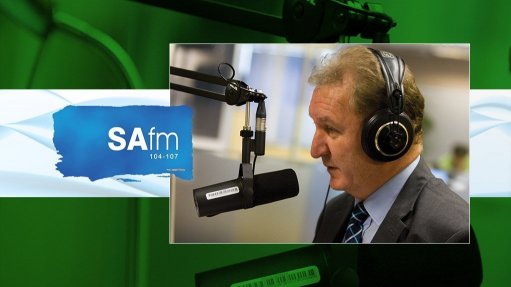
FRANCOIS VIRULY The downturn in the property cycle has had a negative impact on the demand for space
 
FRANCOIS VIRULY The downturn in the property cycle has had a negative impact on the demand for space
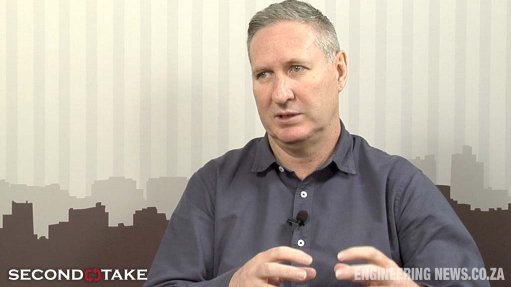
TYRONE GOVENDER The 2010 FIFA World Cup will create a further driving impetus for the economy to grow
 
TYRONE GOVENDER The 2010 FIFA World Cup will create a further driving impetus for the economy to grow
MIKE RODEL It is still early days to make specific projections around the timing and pace of recovery
 
MIKE RODEL It is still early days to make specific projections around the timing and pace of recovery
 
Previous Play Next