South African steel producer ArcelorMittal South Africa (AMSA) is considering a range of power generation opportunities across its operations, which could collectively produce up to 200 MW of electricity.
The company currently has the capacity to produce 80 MW and requires some 650 MW to produce at its yearly nameplate capacity of eight-million tons .
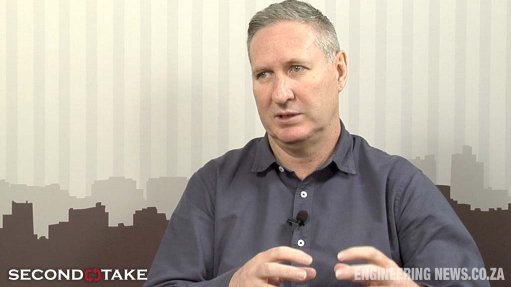
But COO Johan Fourie tells Engineering News that the company is seeking to create headroom for future output growth, while remaining within the 90% power-use envelope that was imposed on it and other energy-intensive businesses during Eskom's 2008 load-shedding crisis.
Owing to the economic crisis, the company has cut back on production and has, thus, not been constrained, in 2009 and 2010, by this power restriction. But there is an expectation that the markets will eventually recovery to precrisis-type levels, by which time power rationing could become a serious impediment.
During the six months to June 30, 2010, AMSA operated at a capacity utilisation of 76%, which was materially higher than the capacity utilisation rate of 66% during the corresponding period of 2009. Liquid steel production rose 28% period-on-period to around three-million tons during the interim period, while dispatches climbed 31% as companies restocked.
Fourie tells Engineering News that the group is still assessing the economics of the different power projects, "some big, others small", adding that not all the opportunities would necessarily prove viable.
The various power generation options at its Vanderbijlpark, Newcastle and Saldanha works have also being ranked, with some "low-hanging fruits" having been identified at the Saldanha and Vanderbijlpark works.
This modelling takes account of Eskom's current tariffs, as well as possible future prices, so as to assess the economics and timing of the investments as opposed to continuing to buy in the power from the utility.
The opportunities relate mostly to the use of flared coke-oven and blast-furnace gases to generate steam to drive turbines. But at Saldanha AMSA has commissioned a consultant to conduct a feasibility study to assess the possibility of converting waste heat from the Midrex process into electricity.
"All the projects combined could produce about 200 MW," Fourie reveals, but he emphasises that this total output will be derived across a large number of projects.
Another key driver is the company's aspiration to reduce the carbon-dioxide (CO2) emissions arising from the South African plants. The bigger ArcelorMittal Group, which is the world's largest producer of steel, has made a commitment to reduce its CO2 emissions by 8% by 2020, against the baseline set in 2007. ArcelorMittal's global emissions dropped to 164-million tons in 2009, owing to the curtailment of production in line with the economic crisis, having produced 223-million tons in 2008.
"We are working very hard on this," Fourie reports, adding that the first new capital expenditure on power-related and emission-reduction products could be made within "the next year".
"Within the next year, we should issue some enquiry documents and we might even progress to the point where we begin to place orders," Fourie reveals.
Any expenditure will be incremental in nature and the projects are likely to be phased in over time, rather than pursued as a single package.
Fourie refused to be drawn on the expected investment values, saying only that the "cheaper options would be pursued first".
AMSA is also still assessing whether the projects would be done in-house, or with partners, with Fourie indicating a personal preference for a solution that enables the company to concentrate on steel production rather than power generation.
Given that the main drivers are greater self-sufficiency and reduced emissions, it is also unlikely that the projects would hinge on AMSA securing power purchase agreements with Eskom, or any new system operator. However, it is possible that some of the power might be sold into the grid.


.jpg)