Since the introduction of the renewable-energy feed-in electricity tariff in April, the local power utility has received enquiries relating to connecting 3 000 MW of wind-generated power from the Western Cape and 600 MW from the Eastern Cape to the national power grid, reports the African Wind Energy Association (AfriWEA).
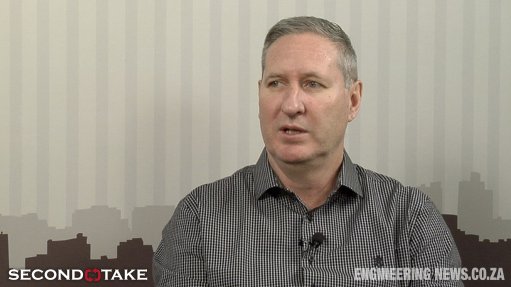
AfriWEA president Hermann Oelsner says that there are a number of large wind farms in North Africa, but that there has been little implementation of wind-power generation projects in sub-Saharan Africa. At present, South Africa has only one commercial wind farm with four turbines, each with 1,3-MW generation capacity.
By comparison, Germany currently has 22 000 wind tur- bines installed that produce the equivalent power of half of all South Africa’s fossil fuel and nuclear power stations. Oelsner says that South Africa has three-and-a-half times more land and a seven-times-longer shoreline than Germany. He adds that this comparison shows the significant potential in South Africa for wind-power generation systems.
Oelsner believes that, in addi- tion to large wind farms contributing to the national power grid, renewable-energy generation could grow through the development of off-grid applica- tions and small wind-power generation oppor- tunities in residential areas.
“There is significant potential for communities and tourism locations in terms of off-grid applications of wind generation, but implementation is subject to the State finding a way to support the tariffs, as well as transferring ‘free electricity’ systems to off-grid electricity users. This should be treated with the utmost urgency,” says Oelsner.
Smaller residential wind-power generation, which would allow users to generate their own wind power and sell the excess back to the municipal grid, requires support from local municipalities. Oelsner says that munici- palities are reluctant to encourage this system as they will then sell less electricity, which will reduce their income.
“Financing of municipal infrastructure costs have to be modified not to rely on making a profit from electricity sales because, with energy saving measures and the increasing competitive- ness of home-generated electricity from solar and wind, municipalities will sell less electricity,” he says.
A lack of support for wind- power generation from local utilities in Africa and a lack of coordination between national Ministries and different tiers of government are some of the challenges facing the renewable- energy industry. Further, the industry is also challenged by decreased capital available for investment in renewable-energy projects resulting from the global financial downturn.
However, Oelsner says that there are some positive impacts as a result of the downturn as wind turbine suppliers have reduced their prices and have more-efficient delivery times, which has reduced the lead time for the implementation of wind farms by two years. He adds that international investors are also seeking new markets for renew- able-energy projects, which could extend to Africa.
Leading in Africa
Oelsner says that North Africa is leading the continent in terms of functioning wind-power capacity and that South Africa has the potential to become a significant player and the gateway for renew- able-energy infrastructure in sub-Saharan Africa. There are a number of large wind farms that are close to implementation in Kenya, Tanzania and Ethiopia.
Further, Oelsner says that, should the additional 3 000 MW of generation in the Western Cape come to fruition, a recent study showed that up to 1 000 MW of that power could be exported to the northern areas of South Africa.
He says that developing wind-power generation infrastructure in poorer countries would contribute positively to the growth of clean energy on the continent. “Most of the poorer African countries do not have their own fossil fuel resources and their only way of developing electricity generation is to use renewable-energy sources,” says Oelsner.
Wind power is a viable option in Africa, whereas several other renewable-energy sources, such as hydropower, are vulnerable to unstable variables, such as drought, he says.
AfriWEA functions as a network to support wind energy applications and other renewable-energy options in Africa. The association aims to refrain from interfering in local politics, but to assist countries by keeping its members informed about industry trends and develop- ments, and promoting education and training and organising conferences and workshops.
AfriWEA is hosting the Wind Power Africa 2010 conference and renewable-energy exhibition in Cape Town, in May, next year.
To subscribe to Engineering News's print magazine email subscriptions@creamermedia.co.za or buy now.