Growth in South Africa’s aluminium industry has recovered slowly since the 2008/9 economic crisis, but volumes have not yet returned to pre-2008 levels, highlights Aluminium Federation of South Africa (Afsa) executive director Mark Krieg.
He states that certain industries that are supplied by the aluminium sector, such as packaging and consumer durables, continue to grow steadily, in line with the country’s gross domestic product.
However, growth in the automotive industry is worrying.
“The international automotive industry is showing signs of slowing, following several good years. The aluminium casting industry, which supplies the automotive sector, is also under pressure, as aluminium scrap is the main feedstock of the industry. It is losing volume owing to the cost of scrap. Scrap metal is exported by South Africa at an export parity price,” he says.
Krieg adds that the local automotive industry is important for the aluminium sector and that the industry and government have ambitious plans to double output in the next few years.
“The aluminium content in automobiles is increasing because aluminium weighs one-third of what steel weighs, so there is a clear weight advantage, which saves costs, fuel and carbon emissions,” he notes.
Further, Krieg states that the building industry is recovering slowly after building projects came to a halt, following the eco- nomic downturn in 2008/9. The recovery of this industry will impact positively on South Africa’s aluminium industry, as it is a key player in the building sector.
Meanwhile, he notes that administrative costs and stealth taxes for industry will increase, keeping pressure on the remaining manufacturers to be competitive with respect to imports.
“The effect is to turn South Africa from a manufacturing country into a consuming country, as it is already more of a consumer than a manufacturer,” he explains.
Krieg adds that global developments play a significant role in influencing South Africa’s aluminium industry.
“It is not anticipated that Europe will soon emerge from the current economic difficulties it is facing, but there is optimism in the US. The slowdown in China is likely to impact on countries that are reliant on commodity exports; however, as has previously been found, a reduced scrap aluminium price could offer opportunities for local producers to develop and pursue new markets,” he states.
Afsa works with the relevant government departments, such as the Department of Trade and Industry, to keep the interests of aluminium high on the agenda.
“We continue to profile and benchmark Afsa members and bring business opportunities to their attention. We will also pursue the designated product route to secure market opportunity for local suppliers and oppose lobbies that seek a moratorium on local content,” he says.
Environment
Krieg says the production of primary aluminium is energy intensive. However, 50% of the total aluminium used in manufacture, on average, is recycled aluminium, which halves the energy used in its production. Remelting secondary aluminium takes 5% of the energy used to produce primary aluminium,” he notes.
He adds that different processes have been developed over the years to combat aluminium’s carbon footprint, such as building new plants that are equipped with new technology to reduce energy use.
“A lot of work has been done by organisations like the International Aluminium Institute, in London, which has put initiatives in place to promote the recycling of everyday aluminium products, such as aluminium cans,” says Krieg.
He states that the recycling of aluminium is one way of reducing the manufacturing process’s impact on the environment.
Challenges
“Imports are a big challenge facing the industry. The proposed export duty on metal scrap has not been implemented, with various parties having [identified] numerous obstacles and raised concerns,” Krieg points out.
Further research on the scrap-metal value chain and the industries that depend on scrap metal has been proposed.
He adds that aluminium scrap-metal exports to countries such as India and China have increased by 26% to 41 000 t. The consequence of exporting aluminium scrap is that local foundries and smelters are closing down.
Education and Skills
Krieg says a large skills gap is emerging in the industry, as it is in others, as older people are retiring and the knowledge they have is not disseminated widely enough among the next generation of welders, apprentices and artisans.
The sector education and training authorities are doing a lot by developing the necessary curricula and training material through the Quality Council for Trades and Occupations processes, especially with regard to apprentices and tradesmen.
“Welding courses are offered by the Southern African Institute of Welding, which is where we refer welders to learn welding skills pertaining to aluminium and to develop their practical and theoretical skills,” he says.
Opportunities
Krieg says there are many opportunities for the aluminium sector in State-owned Transnet’s and Eskom’s infrastructure development programmes.
“Transnet wants to expand and revitalise its railway system. This is good news for the aluminium industry, as aluminium is a key product in the production of railway rolling stock.
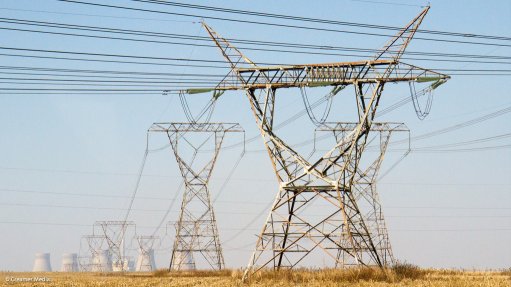
“There is also strong growth in the electricity industry. Eskom plans to build more power stations, including nuclear power stations, and 5 000 km of overhead transmission lines, which can be supplied by the South African aluminium industry,” explains Krieg.
He states that government is developing various large infrastructure projects to create jobs for South African companies.
“My concern is that many of these job opportunities may not be realised and that South Africa will not benefit from these projects. All the products in the aluminium industry can be imported, so if we don’t work together with State-owned companies and business to build and develop skills and capabilities, the industry will not benefit.
“Many of these government infrastructure projects have deadlines regarding their completion. If South African labour and services are not up to the task, State-owned companies will import what they need because there won’t be another option, and I see that as a concern,” Krieg says.
He adds that a major challenge facing role-players in the industry is to stay in business and continue investing.
“We encourage our members to take part in programmes such as the Manufacturers Competitiveness Enhancement Programme, which is a new grant scheme that was put in place by government in July.
“It is focused not only on acquiring new equipment for factories, but also on assisting companies in clean-up initiatives and ways to streamline factories to make them more environment friendly.
“There is a lot of opportunity – industry players have to make use of it,” he concludes.
To subscribe to Engineering News's print magazine email subscriptions@creamermedia.co.za or buy now.