Creamer Media’s Engineering News Online
Advanced Search


We have detected that the browser you are using is no longer supported. As a result, some content may not display correctly.
We suggest that you upgrade to the latest version of any of the following browsers:
         
close notification
powered by
GOLD 1595.19 $/ozChange: 8.14
PLATINUM 1468.50 $/ozChange: 13.00
R/$ exchange 8.28Change: 0.09
R/€ exchange 10.57Change: 0.05
 
RENEWABLE ENERGY – 2
Ageing power infrastructure 
an opportunity for renewables
 
30th October 2009
TEXT SIZE
Text Smaller Disabled Text Bigger
 
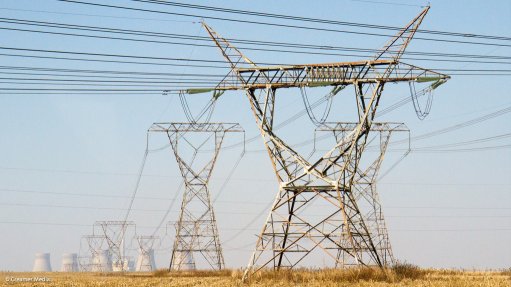
Many of the world’s conventional power plants were getting old and in need of replacement, and this was a distinct opportunity for renewable energy, emphasised International Solar Energy Society (ISES) president Monica Oliphant.

She noted that, in the European Union alone, some 450 GW of electricity generating plant was set to go offline by 2015.

For the world to reach its climate-change-linked emissions 
reduction targets, there needed to be an awareness of where the emissions originated from, and there should be a high penetration of a range of renewable energy 
sources, with the right source 
chosen for a specific location.

Addressing delegates at the World Solar Congress in Johan-nesburg, earlier this month, she said that this process was “well under way”, but current renewable-energy growth rates needed to continue, and infrastructure to be put in place, because existing transmission and distribution networks were inadequate to cope with future growth of renewable-energy technologies.

Oliphant noted that there was currently about 280 GW of 
installed renewable-energy 
(excluding large hydro) capacity worldwide, and, in 2007, and 2008, grid-connected solar photovoltaic (PV) experienced growth rates of 73%, while PV production 
increased by 86%. Solar water heating increased by 15% over the same period, while wind power capacity increased by 29%; 
ethanol production went up by 24%, and biodiesel volumes also increased by 33%.

She noted that the global 
financial crisis did have a negative impact on the renewable- 
energy market, although recovery was visible, and it was expected that the market would still generate investments in the region of $100-billion in 2009.

Identifying where emissions originated was an important starting point, and Oliphant 
stated that 75% to 80% of the world’s greenhouse-gas emissions was generated in cities.

Solar cities, she further 
explained, were cities striving to be powered exclusively by renewable energy, and they committed to yearly emissions reductions that were at levels consistent with the need to stabilise emissions.

She added that transitioning to a sustainable solar city hinged on good policies, and strong commitments from governments. A strong commitment from the community was also important, and a mindset of cooperation needed to be encouraged, while education for all ages was vital to the success of a solar city.

Oliphant further gave examples of solar cities, and these included 
Freiburg in Germany and the Canary Islands in Spain, which combined three programmes of energy efficiency – wind, hydro and solar power – for generation, and a gradual conversion to clean fuels. She noted that in Iceland, while power was 100% derived from fossil fuels in the 1970s, today, the country had 62% power from geothermal, 20% from hydro, 16% from oil, and 2% coal.

Another example she gave was the Thisted municipality in Thy, Denmark, where over 100% of the electricity, and more than 80% of the heat is fossil fuel free. Here, the renew-
able energy is derived from sun, wind, geothermal power and 
biomass.

Solar cities were doing “a good job” of starting off the process of conversion to renewable 
energies, said Oliphant, but added that they must be monitored to understand how much further they needed to go to reach the climate change turn-around goal of 2 t of carbon 
dioxide per capita.

Edited by: Martin Zhuwakinyu

To subscribe to Engineering News's print magazine email subscriptions@creamermedia.co.za or buy now.

FULL Access to Mining Weekly and Engineering News - Subscribe Now!
Subscribe Now Login