Creamer Media’s Engineering News Online
Advanced Search


We have detected that the browser you are using is no longer supported. As a result, some content may not display correctly.
We suggest that you upgrade to the latest version of any of the following browsers:
         
close notification
powered by
GOLD 1370.72 $/ozChange: -4.37
PLATINUM 1466.50 $/ozChange: -6.00
R/$ exchange 9.59Change: -0.04
R/€ exchange 12.32Change: 0.01
 
 
Afsa calls for development of a national manufacturing strategy
 
23rd September 2011
TEXT SIZE
Text Smaller Disabled Text Bigger
 

The Aluminium Federation of South Africa (Afsa) has expressed concern about the flood of imports facing South African manufacturers, which it says is eroding the value of the R55-billion-a-year local aluminium sector.

Afsa executive director Mark Krieg notes the strong rand has resulted in imported goods being cheaper than locally manufactured goods in many sectors. Many businesses are unable to withstand this competition and close down, which contributes to the deindustrialisation of South Africa.

The federation has assessed different ways for companies to improve their ability to compete against imports; however, this is difficult, as imports from countries such as China are incentivised by at least 13%. “For many engineering companies, that is their whole profit,” says Krieg.

He believes there is an uneven playing field in the aluminium industry, owing to the export incentives on overseas products coming into the country.

Afsa is concerned that it has taken too long for government to recognise the severity of the impact of imports on local companies, as this has resulted in many companies closing down, with subsequent losses in jobs and potential export opportunities.

Local foundries will have to work towards becoming more competitive, and the only way for them to become more competitive is to invest in new equipment, says Krieg. “The adoption of technology would drive down costs, but this requires large amounts of investment. It is difficult for local businesses to justify large amounts of spending in the current economic climate.”

Other countries have bigger markets and have made greater technological advances that enable companies operating in those countries to lower their costs.

The ability of the Far East to produce products effectively and efficiently at a lower cost is another threat to manufacturing industries in western countries, says Afsa.

In these countries, people are prepared to work for lower wages. Further, these countries often incentivise exports, as well as the raw materials used by companies. This provides industries with greater economies of scale, which results in more productive industries.

“In China, the total foundry industry is able to produce 40-million tons of casting a year. One foundry alone employs over 375 000 people. South African companies have to be more flexible and look for opportunities in niche markets, where their ability is valued,” says Krieg.

Afsa fully supports free market principles, but states that trade must not only be free but also fair and sustainable, which is not the case.

He explains: “Some countries have export duties on their scrap metal while other countries have resorted to banning the exportation of scrap metal because they recognise the importance of scrap metal as a strategic resource.”

Krieg feels the export of scrap is an important topic that Afsa has been dealing with for the past 11 years. He says the federation has been lobbying government for control over the export of scrap metal for years.

He emphasises it is important that Southern African governments support local manufacturing industries.

Plans to build new power generation plants and plans to renew State-owned Transnet’s rolling stock are some of the major economic stimuli that could benefit the local aluminium industry.

All the products and expertise needed for these projects can be imported; however, the challenge at hand is to manufacture such products locally, which will assist in growing the manufacturing industry, increase economies of scale and generate investment, says Krieg.

There are initiatives that have been set up through the Department of Trade and Industry’s Industrial Policy Action Plan to support the aluminium industry. One such initiative is the National Foundry Technology Network (NFTN), the culmination of a government and industry association-led effort to develop a globally competitive South African foundry industry.

NFTN project leader Adri El Mohamadi says that, because foundries are seen as possible job creators, it is important for government to have input in this industry.

NFTN provides many services to aluminium foundries, including skills development and technology transfer innovation, which involves upgrading the foundry industry by focusing on specific subjects, such as energy or waste management, which will help to improve the industry’s competitiveness.

It also aims to ensure that information sharing takes place between foundries.

Afsa has been impressed by the success of the NFTN programme and has proposed that a similar scheme be set up for the welding industry. “Welding is a scarce skill vital for a successful fabrication industry if it is to be capable of producing safe, high-quality fabrications such as structures, vessels and vehicles,” says Krieg.

Edited by: Chanel de Bruyn


To subscribe to Engineering News's print magazine email subscriptions@creamermedia.co.za or buy now.

FULL Access to Mining Weekly and Engineering News - Subscribe Now!
Subscribe Now Login
 
 
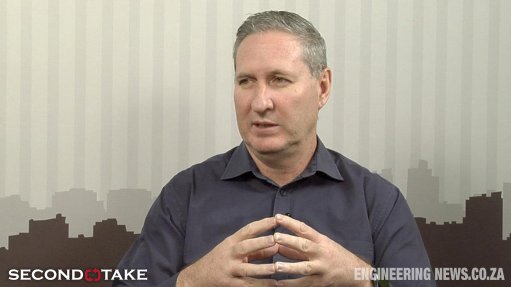
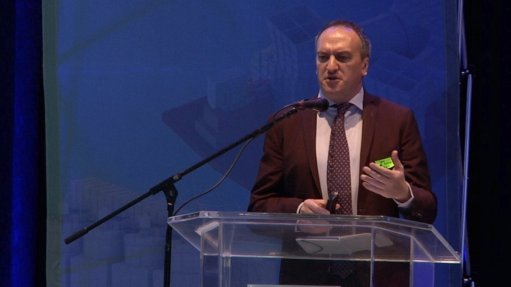
MARK KRIEG Using technology would drive down costs, but this would require large amounts of investment
 

MARK KRIEG Using technology would drive down costs, but this would require large amounts of investment
 
CONSOLIDATION Many manufacturing companies are closing down, with subsequent losses in jobs and potential export opportunities
 
Picture by: Bloomberg
CONSOLIDATION Many manufacturing companies are closing down, with subsequent losses in jobs and potential export opportunities
 
 
Previous Play Next