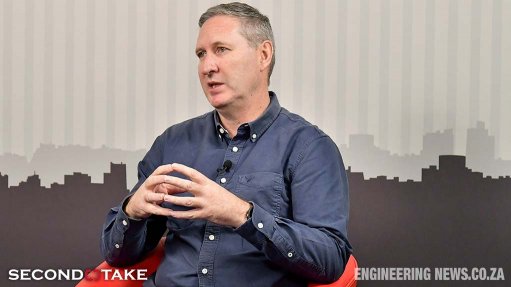
If South Africa failed to implement sustainable human settlement solutions, the effects would be felt for a long time, Minister in the Presidency responsible for the National Planning Commission Trevor Manuel said on Wednesday.
Speaking at the International Housing Solutions affordable housing conference, in Johannesburg, he pointed out that the events at the Marikana mine, in Rustenburg, revealed the socioeconomic issues faced by South Africans and indicated that a paradigm shift was required.
While South Africa has made some progress in building a better life for its citizens, the nation has not achieved its core responsibilities and aims, including that of delivering reasonable, adequate shelter.
Manuel said South Africa needed to develop adequate, appropriately positioned housing infrastructure, allowing communities access to education, water, electricity, health services, affordable public transport networks and employment opportunities.
He pointed to the fact that, while three-million people have been housed since 1994, many were located far away from the country’s “economic hubs” and remained in poverty, owing to inadequate land use and spatial planning.
Further, an inability to deal with poverty, inequality and unemployment would continue to widen the gap in the housing market.
Currently only 15% of households in South Africa had access to bonds, another 60% qualified for subsidised housing, and the remaining 25% did not qualify for a subsidy or a bond.
Manuel added that the fact that only 15% of individuals in South Africa were able to take care of themselves independent of the State was a “failure of mass proportions”.
Planning around population shifts was also critical as it was expected that, by 2030, over 11-million people would migrate to urban areas, which about 30-million South Africans already occupied.
University of Cape Town Professor Francois Viruly agreed that urbanisation would create a challenge in housing, citing the expectation that over 10-million people would migrate to Gauteng alone over the next 30 to 40 years.
The National Development Plan, which Manuel tabled with President Jacob Zuma in August, highlighted the critical area of human settlement development, as well as a number of other key drivers of change in the country, and outlined strategies moving forward.
The plan looks at how to transform where people live, how government could break the pattern of building “soulless little boxes” and instead facilitate the development of communities.
But Manuel said that collaboration, partnerships and alliances were required to ensure success.
Despite the interests of the State and business not always being aligned – the former to improve quality of life for citizens and the latter to drive profits – the country could drive the changes together, the Minister added.
Elias Masilela, the CEO of the Public Investment Corporation, which has invested R2.6-billion in, besides others, low-cost housing projects and private equity for housing developments, said South Africa’s development could fall further behind other emerging nations if the country did not invest in, and plan for, housing infrastructure, water, electricity and transport systems.
He highlighted that, despite efforts by South Africa’s government to supply adequate housing for its citizens, a backlog of between 2.1-million and 2.5-million subsidised houses remained, while 12-million people still required adequate housing.
Currently, about 12.8% of South African households lived in Reconstruction and Development programme subsidised houses, while 13.5% of households had at least one person on the waiting list for subsidised housing.
FinMark Trust housing finance theme coordinator Kecia Rust said that about 60% of the South African population earned less than R3 000 a month and were eligible to apply for subsidised housing.
The Department of Human Settlements aimed to eliminate the backlog by 2030 and has committed R16-billion a year to fund housing projects.
To subscribe to Engineering News's print magazine email subscriptions@creamermedia.co.za or buy now.


-lr1.gif)