Every Friday morning, SAfm’s AMLive’s radio anchor Gillian De Gouveia speaks to Martin Creamer, publishing editor of Engineering News and Mining Weekly. Reported here is this Friday’s At the Coalface transcript:
De Gouveia: We see India’s hunger for South African coal growing somewhat.
Creamer: Yes, India is not only set to buy coal from South Africa, but it is also on the prowl to buy some of our coal assets. That is the news coming out of India, especially from NTPC, which is like the Eskom equivalent, the biggest coal-fired power producer there. They are keen to get more coal and the Indians are talking about getting 22% more coal.
I think they imported 18-million tons last year, probably going to 22-million tons this year. Also, they want to get their hands on assets and they describe South Africa as their preferred destination.
They’ve come from Australia where they didn’t like the prices. They also said that there were a lot of bilateral initiatives between our government and India, which is smoothing the way for them. They are looking at putting far more coal-fired power into the system.
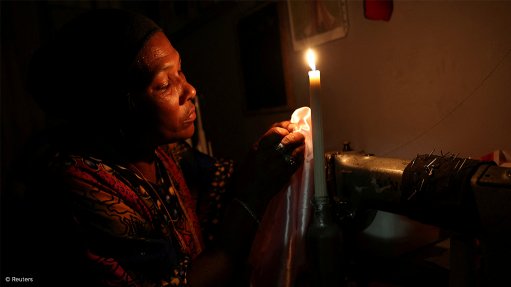
Of course, there are more than a billion people in India and only half of them actually get electricity at the moment. The government has pledged that everybody will have access to electricity and most of it, they say 60% of it, will come from coal-fired sources and about 33% from hydro.
So, they are really looking for coal and you can see the new power stations are being built close to the coast, which means that they are going to import a lot of that coal. Although they have about 260-billion tons of coal themselves, this coal is in the surface area, which has dense forests which provide a lot of livelihoods for people.
So often you find that they can’t get licenses to mine that coal, which increases their dependence on imported coal from South Africa as they are describing the preferred destination. Some of the deals that they have done in Indonesia have changed, their benchmark price has changed, which means some of them have fallen flat.
De Gouveia: Is it necessarily a good thing for South Africa when we look at electricity, power, can South Africa afford to let go of those assets?
Creamer: Well, some people say no, but the reply from the coal miners is that the way you mine coal these days you have got to have that export element, that is your sweetener and enables you to give the lower prices to the domestic market. So that is the market mix that they need.
De Gouveia: Moving on to another topic now, greener building techniques. How is South Africa doing in that regard?
Creamer: Greener building techniques, people say that they are beginning to gain traction across South Africa.
You see it now with a lot of the engineers and architects, that they are actually putting recycled steel into buildings, looking at paint which is low-volatile paint, the wood that they use they want stewature programmes from their forestry area. Also, it is renewables.
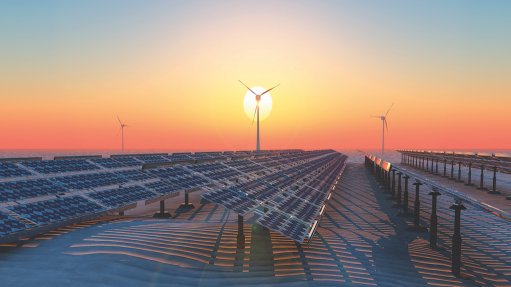
They are looking for sun energy for the electricity side of these buildings, solar water heating for your internal water and then recycling of the waste. But, a new thing that is coming in is actually a green lease. We see this with the first building to get five stars, the five star green building is the Aurecon head office in Cape Town.
Aurecon is quite a big consulting engineering company. They have also got a green lease, so it means that the maintenance of the building has also got to be environmentally friendly on an ongoing basis.
The model, they say, is the Masdar City initiative in Abu Dhabi. That is the modern way of dealing with all the renewables and making sure that your building is deep green. But the complaint there is that this big city, where there is a lot of research and development going on, a lot of the researchers who are linked to the Massachusetts Institute of Technology are actually the first residence in the city.
They say the draw back there was that it wasn’t done in a blighted area. You shouldn’t choose the nice virgin set of ground to do these things, you should go into a blighted area and make it better. That is the only negative with the Masdar City, which is seen as a shining example of what green building will be all about.
De Gouveia: Do you know at all whether there are any sweeteners in place when it comes to the green leases to motivate more people to actually get their hands on that?
Creamer: Well, I think the example of Nedbank City actually going ahead with the green building cost slightly more. So it is still costing a little bit more, but I think with time that should change.
De Gouveia: If we look at the issue of gold and a US presidential decision taken by America many years ago, we see that there is still some kind of impact and I find it quite interesting the story involving Nixon. Tell us about that.
Creamer: There was this drastic US presidential decision taken by America 40-years ago in 1971. Today it is allowing gold to reclaim its ancient status as an anchor of monetary stability. The President there was Nixon and, of course, Richard Milhaus Nixon was determined to get to the White House, come what may.
He would sweep across anything in his path and when he noticed that this linking the gold standard was in his path he then conspired to sweep it away and get rid of the Bretton Woods agreement. What had happened with the Bretton Woods after the war was that all the main currencies like the pound, Deutsche mark and Francs where linked to the dollar and then the dollar was fixed to gold.
The Americans then called the shots, they were “the standard”. Now we’ve seen them become the sub-standard, because they have lost their AAA rating. But, they were the standard and everybody had to look to this system in dealing with currency. It created a lot of stability, the Bretton Woods system. The Americans fixed the price of the gold for a long time at $35/oz.
But, what was happening in America after the war was they were finding competition from the Japanese and, although they were selling all their automobiles and everything was going fine, they all of a sudden had competition from the Germans and Japanese. So they didn’t necessarily want dollars, they wanted Deutsche marks and Yen, this was putting pressure on the dollar, which was then hit further by the Vietnam war.
So you had these dollars spread all over the place and inflation was setting in. Because the Americans were fixing that gold price, gold was actually moving up because of the inflationary situation and in London where they were marketing it, dentists were buying gold at $40/oz. Above that $35 the Americans got such a fright, because in terms of this agreement if you wanted gold for your dollar you can go to the Americans and you exchange it for gold. If there had been a run then the Americans would have gone badly bankrupt.
So, Nixon decided to come off this and this is what has resulted in the economy still in Greece, Ireland and the US, this coming off of the gold standard and people now saying should we go back to it. Well, it is going to be impossible to go back to it, because if you do the maths you’ll find that there is not enough gold to underpin the currencies of the world.
People are saying that perhaps they could do a basket of different valuables to try and create some stability that takes away this dizzy market cycle business that is actually upsetting a lot of us. Even in South Africa you see businesses and mines close here because they can’t deal with the currency issue.
De Gouveia: Thanks very much. Martin Creamer is publishing editor of Engineering News and Mining Weekly, he’ll be back with us at the same time next week.
To subscribe to Engineering News's print magazine email subscriptions@creamermedia.co.za or buy now.


lr1_2.gif)